US National Security Experts Support Preservation of JCPOA
According to a bipartisan group comprising over one hundred American national security experts, the United States’ withdrawal from the JCPOA will yield no gains for the country. The group has issued a statement laying out its reasons.
The New York Times has reported on a statement from a bipartisan group regarding the JCPOA that includes over one hundred American national security experts, including 50 retired military officials as well as four former US ambassadors to Israel.
The diplomatic and military figures who signed and released this statement are from both the Democratic and Republican parties and have long records of activity and decades of experience in foreign policy.
This cross-partisan group addressed America’s approach to the nuclear agreement with the Islamic Republic and the JCPOA in its statement; an agreement that Donald Trump, President of the United States, has referred to as “the worst deal” in American history.
The group adopted the name “National Coalition to Prevent Iran’s Access to Nuclear Weapons” and presented 10 arguments in favor of preserving the JCPOA in its statement. According to this group, the US withdrawal from the JCPOA will not result in any achievements for the country.
Inspections by UN experts, maintaining close relations with European allies, and the possibility of reaching a nuclear agreement with North Korea are among the points that this group has mentioned in its statement.
Trump’s Need to Adhere to US Commitments
In the statement from this group, which includes representatives from both major parties, it is stated: “President Trump must honor his commitment to the nuclear agreement with the Islamic Republic. This will bring significant benefits and will strengthen America’s leverage in negotiating with North Korea and Iran as well. Moreover, this action strengthens America’s credibility in keeping its word and enhances American influence in executing its strategic role in the world.”
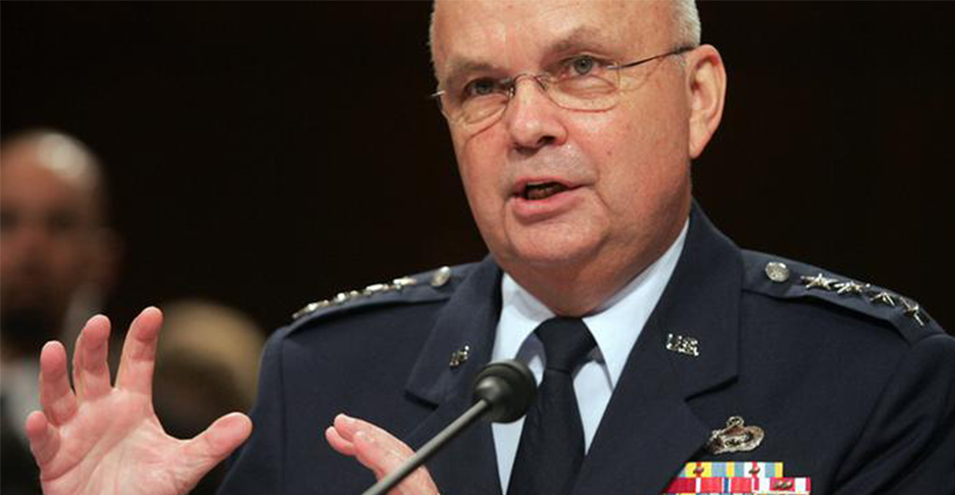
Ryan Crocker, former US ambassador to Middle Eastern countries including Afghanistan, Syria, and Lebanon, Brent Scowcroft, former US National Security Advisor, Michael Hayden, former director of the US National Security Agency and CIA, and William J. Fallon, former commander of US Central Command, are among the prominent signatories of this statement.
It is reported that Donald Trump, President of the United States, may make a decision regarding US withdrawal from the JCPOA within the next two months.
Trump believes that the JCPOA (Joint Comprehensive Plan of Action) has not prevented the continuation of the Islamic Republic’s controversial missile programs, has not stopped this country’s “destabilizing” actions in the region, and has not provided appropriate time limitations for Iran’s nuclear activities.
According to a US Congress resolution, the president must make decisions about suspending nuclear sanctions against the Islamic Republic during 120-day periods. Trump last extended the suspension of sanctions on the 22nd of Dey (January 13) of the previous solar year. However, he stated that he had likely done so for the “last time” and repeating it would require modifications to the JCPOA.
Iran’s Readiness to Deal with Various Scenarios
According to Abbas Araghchi, Deputy Minister of Foreign Affairs of the Islamic Republic, Iran has been preparing itself for various scenarios regarding the JCPOA for months.
On Monday (6 Farvardin / March 26), he stated that European countries and the EU’s foreign policy chief, Federica Mogherini, have repeatedly said that the JCPOA is a security agreement and directly concerns regional and international security, and the consequences of any disruption to it for the international community would be “grave.”
Although European countries emphasize the importance of preserving the JCPOA, the positions of Britain, France, and Germany in recent weeks have, at least regarding the Islamic Republic’s regional role and Iran’s ballistic missile programs, drawn closer to Donald Trump’s positions. Despite growing concerns, they believe that Iran’s missile program should be examined separately.
The nuclear agreement with the Islamic Republic and the 5+1 group was signed in 2015. Under this agreement, important sections of Iran’s nuclear program were suspended in exchange for the gradual lifting of nuclear sanctions.