Violence Against Women in Iran: From Legal Discrimination to State Repression
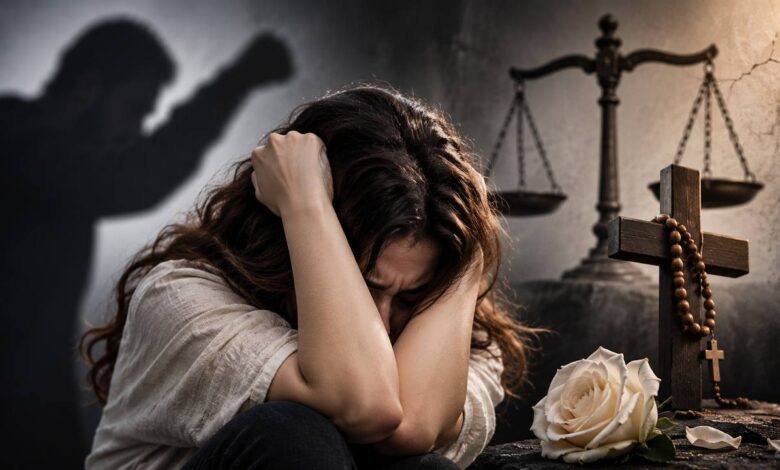
November 25, the International Day for the Elimination of Violence Against Women, reminds us of a bitter and multifaceted reality in Iran: women who not only risk becoming victims of violence at home and in society, but also face a legal and governmental structure that, in many cases, reinforces discrimination rather than protect them, and restricts their freedoms. For Christian women, particularly those who have converted to Christianity, these pressures can be compounded, applied simultaneously on the basis of both gender and religious belief.
The International Day for the Elimination of Violence Against Women is observed every year on November 25, a day to recall the right of women and girls to live free from fear, violence, and discrimination. The United Nations states that violence against women remains one of the most widespread human rights violations in the world, with approximately one in three women experiencing some form of physical or sexual violence during their lifetime. This year’s United Nations campaign theme emphasizes ensuring justice for survivors, supporting victims, and ending impunity for perpetrators of violence.
However, in Iran, the problem is not merely individual violence or abusive behavior within the family; much of the discrimination against women is rooted in laws and official policies. A structure under which women do not enjoy equal rights with men in areas such as marriage, divorce, child custody, and inheritance cannot claim to ensure equal security and dignity for them.
Human Rights Watch stated in its 2026 World Report on Iran that women and girls continue to face severe legal discrimination and violence. The report also notes that Iranian law does not specifically criminalize domestic violence and marital rape, and the government has failed to effectively prevent and respond to sexual and gender-based violence. Child marriage remains possible under conditions approved by a judge.
One of the most glaring examples of structural violence against women in Iran is the imposition of mandatory hijab. The government, using law enforcement, judicial, and security apparatus, has turned women’s clothing into a matter of surveillance, threat, and punishment. Detention, fines, vehicle impoundment, business closure, employment and educational restrictions, and digital surveillance are among the tools used in recent years to enforce the hijab mandate.
Human Rights Watch’s report shows that even with the suspension of the enforcement of the so-called “Chastity and Hijab” law, the government has not abandoned its mandatory hijab enforcement policies and continues to use existing legal and monitoring tools to control women’s clothing.
The “Woman, Life, Freedom” movement and protests following the death of Jina (Mahsa) Amini in custody of the morality police demonstrated that a large segment of Iranian society is no longer willing to accept government control over women’s bodies, clothing, and personal choices. Nevertheless, women’s civil resistance has been met with security crackdowns, physical violence, and judicial punishment.
Government violence against women is not limited to forced clothing restrictions. Flogging, detention, intimidation, harassment during interrogation, and violent treatment of female protesters have been documented in human rights reports. When the institution that should protect citizens from violence itself perpetrates violence, victims face a serious barrier to accessing justice.
Domestic violence is not limited to physical assault. Threats, humiliation, insults, control of movement, sexual coercion, depriving women of financial resources, and preventing economic independence are also forms of domestic violence.
In Iran, the lack of adequate and effective legal protection, weak support mechanisms, and discrimination in family laws can make women more vulnerable to violence. The British government’s June 2025 report on the status of women in Iran notes, among other things, the absence of specific criminalization for so-called “honor killings” and reduced sentences for some perpetrators of such murders. The report also cites estimates of hundreds of cases of women and girls being killed by family members annually—statistics that are likely undercounted due to the lack of transparent data recording and publication.
When the law does not provide sufficient protection against domestic violence, when women’s economic and social independence is restricted, and when discrimination in family relations is officially recognized, a victim may face serious obstacles even in leaving an abusive environment.
Among groups facing multilayered pressures, Christian women, and particularly citizens who have converted to Christianity, hold a unique position. They may simultaneously face gender-based discrimination and restrictions resulting from religious belief—a situation referred to in human rights literature as intersectional or compound discrimination.
The British government’s 2026 report on Christians in Iran, citing the World Watch List of Open Doors, warns that Christian women, particularly those who have converted from Islam to Christianity, are vulnerable to detention, verbal harassment, and sexual harassment during interrogations. The report also notes the continuation of sexual harassment during interrogations despite its contradiction with the Islamic Republic’s own criminal laws.
Documented cases illustrate the extent of these pressures more clearly. The report references the case of a Christian citizen woman who, following activities related to her Christian faith, was sentenced to 17 years in prison in 2025. Another woman who had converted to Christianity faced severe prison sentences following arrest and trial. A Catholic Christian woman was initially sentenced to six months imprisonment, 74 lashes, and confiscation of her mobile phone, and after a subsequent arrest, received a sentence of 9 years and 8 months in May 2026.
These reports extend beyond prison sentences. The British government’s report documents cases where imprisoned Christian women were deprived of adequate medical care or faced serious health problems in unsuitable prison conditions, including following transfer to Qarchak Prison. In one case, an Armenian Christian woman reported sexual harassment by an interrogator and insults for not wearing mandatory hijab.
These cases demonstrate that for some Christian women, asserting the right to worship, holding religious gatherings, and adhering to personal religious beliefs can lead to detention, interrogation, harassment, and deprivation of social rights. They face discrimination not only as women but also as members of a religious minority and, in some cases, specifically due to change of religion, encountering simultaneously multiple forms of discrimination.
On the International Day for the Elimination of Violence Against Women, we cannot speak of domestic violence while ignoring the role of discriminatory laws, government policies, and official institutions. The fight against violence becomes meaningful only when women enjoy the right to choose their clothing, freedom of thought, physical and psychological security, economic independence, and equal access to justice.
Article 18 expresses solidarity on this day with the women and girls of Iran, particularly those facing pressure and harassment due to their religious beliefs and peaceful activities, and emphasizes the necessity of eliminating all forms of discrimination and violence against them.
No woman should be threatened, humiliated, assaulted, detained, or punished because of her gender, clothing, religious belief, or lifestyle choices. No government should, in the name of law, religion, or public order, violate women’s dignity and fundamental freedoms.
Ending violence against women is impossible without ending legal discrimination, holding perpetrators of violence accountable, and recognizing women’s equal rights.