Violence Against Women in Iran: From Legal Discrimination to State Repression
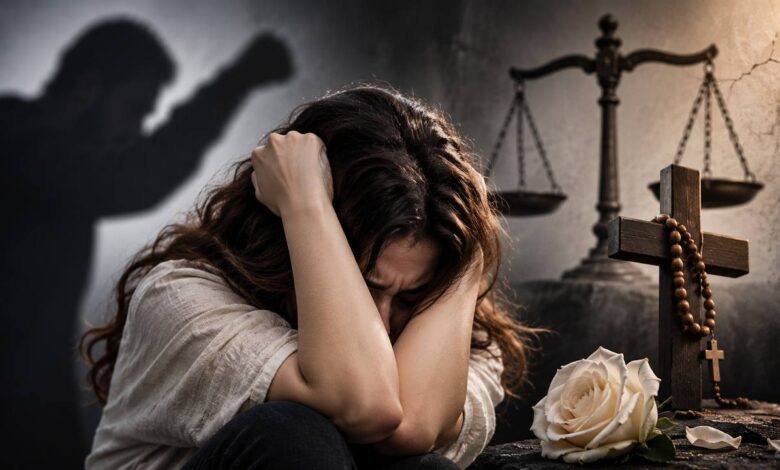
November 25, the International Day for the Elimination of Violence Against Women, reminds us of a harsh and multifaceted reality in Iran: women who not only risk becoming victims of violence at home and in society, but also face a legal and governmental structure that, in many cases, reinforces discrimination and restricts their freedoms rather than protecting them. For Christian women, particularly those who have converted to Christianity, these pressures can be compounded, applied simultaneously on the basis of both gender and religious belief.
The International Day for the Elimination of Violence Against Women is observed each year on November 25, a day to recall women’s and girls’ right to live free from fear, violence, and discrimination. The United Nations states that violence against women remains one of the most widespread human rights violations in the world, with approximately one in three women experiencing some form of physical or sexual violence during their lifetime. This year’s campaign theme and focus of the United Nations emphasizes ensuring justice for survivors, supporting victims, and ending impunity for perpetrators of violence.
However, in Iran, the problem is not merely individual violence or abusive behavior in the home; much of the discrimination against women is rooted in laws and official policies. A structure under which women do not enjoy equal rights with men in areas such as marriage, divorce, child custody, and inheritance cannot claim to ensure equal security and dignity for them.
Human Rights Watch, in its 2026 World Report on Iran, emphasizes that women and girls continue to face severe legal discrimination and violence. The report also notes that Iranian law does not specifically criminalize domestic violence and marital rape, and the government has failed to effectively prevent and respond to sexual and gender-based violence. Child marriage remains possible under conditions permitting a judge’s approval.
One of the most glaring examples of structural violence against women in Iran is the enforcement of compulsory hijab. The government, using law enforcement, judicial, and security apparatus, has turned women’s clothing into a matter of surveillance, threat, and punishment. Detention, fines, vehicle impoundment, business closures, employment and educational deprivation, and digital surveillance are among the tools used in recent years to enforce the hijab.
The Human Rights Watch report shows that even with the suspension of enforcement of the law known as the “Chastity and Hijab” law, the government has not abandoned its policies of enforcing compulsory hijab and has used existing legal and surveillance tools to control women’s clothing.
The “Woman, Life, Freedom” movement and protests following the death of Jina (Mahsa) Amini in police custody demonstrated that a large segment of Iranian society is no longer willing to accept government control over women’s bodies, clothing, and personal choices. Nevertheless, women’s civil resistance has been met with security crackdowns, physical violence, and judicial penalties.
Government violence against women is not limited to forced clothing restrictions. Flogging, detention, threats, harassment during interrogation, and violent treatment of female protesters are documented in reports by human rights organizations. When an institution that should protect citizens from violence itself perpetrates violence, victims face a serious barrier to accessing justice.
Domestic violence is not limited to physical assault. Threats, humiliation, insults, controlling movement, sexual coercion, depriving women of financial resources, and preventing economic independence are also forms of violence within the family.
In Iran, insufficient and ineffective legal protection, weak support mechanisms, and discrimination in family laws can make women more vulnerable to violence. The British government’s June 2025 report on the situation of women in Iran noted, among other things, the absence of specific criminalization of so-called honor killings and reduced sentences for some perpetrators of such crimes. The report also cites estimates of hundreds of cases of women and girls being killed by family members annually—a figure likely underestimated due to the lack of transparent record-keeping and information dissemination.
When the law fails to provide adequate protection against domestic violence, when women’s economic and social independence is restricted, and when discrimination in family relations is officially recognized, a victim may face serious obstacles even in leaving a violent environment.
Among groups facing multifaceted pressures, Christian women and particularly those who have converted to Christianity hold a special position. They may face simultaneous gender discrimination and restrictions arising from religious belief—a situation referred to in human rights literature as intersectional or compound discrimination.
The British government’s 2026 report on Christians in Iran, citing the World Watch List, warns that Christian women, particularly those who have converted from Islam to Christianity, are vulnerable to detention, verbal harassment, and sexual harassment during interrogations. The report also documents the continuation of sexual harassment during interrogations despite its contradiction with the Islamic Republic’s own criminal laws.
Documented cases illustrate the extent of these pressures. The report references the case of a Christian citizen woman who, following activities related to her Christian faith, was sentenced to 17 years in prison in 2025. Another woman who had converted to Christianity faced severe prison sentences following detention and trial. A Catholic Christian woman was initially sentenced to six months imprisonment, 74 lashes, and confiscation of her mobile phone, and after a second arrest, received a sentence of 9 years and 8 months in May 2026.
These reports extend beyond prison sentences. The British government’s report documents cases where imprisoned Christian women have been denied proper medical care or faced serious health problems in unsuitable prison conditions, including following transfer to Qarchak Prison. In one case, an Armenian Christian woman reported sexual harassment by an interrogator and abuse for not wearing compulsory hijab.
These examples demonstrate that for some Christian women, claiming the right to worship, religious gatherings, and adherence to personal faith can lead to detention, interrogation, harassment, and deprivation of social rights. They face simultaneous forms of discrimination not only as women but also as members of a religious minority and, in some cases, due to religious conversion.
On the International Day for the Elimination of Violence Against Women, we cannot speak of domestic violence while ignoring the role of discriminatory laws, government policies, and official institutions. Fighting violence against women is meaningful only when women enjoy the right to choose their clothing, freedom of thought, physical and mental security, economic independence, and equal access to justice.
Article 18 expresses solidarity on this day with the women and girls of Iran, particularly those facing pressure and harassment due to their religious beliefs and peaceful activities, and emphasizes the necessity of eliminating all forms of discrimination and violence against them.
No woman should be threatened, humiliated, beaten, detained, or punished because of her gender, clothing, religious belief, or lifestyle choices. No government should, in the name of law, religion, or public order, violate women’s dignity and fundamental freedoms.
Ending violence against women is impossible without ending legal discrimination, holding perpetrators of violence accountable, and recognizing women’s equal rights.