Violent Arrests and Relentless Silencing of Dissenting Voices in the Islamic Republic of Iran
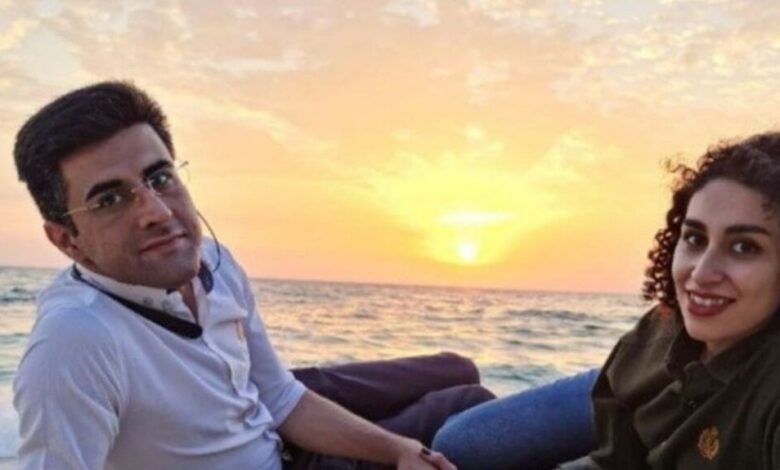
From the violent arrest of Dr. “Ahmad Rahimi” and “Sohila Hosseini”, to the persecution and punishment of students, Kurdish citizens, and labor activists, these incidents indicate an increase in systematic repression by the Islamic Republic government.
In the context of the intensifying wave of repression in Iran, numerous reports of widespread, violent arrests conducted outside legal procedures reveal that the Islamic Republic government not only shows no tolerance for dissenting voices, but is increasingly determined to silence any form of protest, even at the symbolic and individual level.
An examination of a collection of recent arrests paints a disturbing picture of systematic human rights violations and complete disregard for the basic principles of justice and the rule of law.
One of the most prominent cases is the arrest of Dr. “Ahmad Rahimi”, a former university professor, and his wife “Sohila Hosseini”, an artist in the fields of painting and video editing. This couple was violently arrested on March 18, 2026 (27 Esfand 1404), following a raid by security forces on their private residence in Mashhad, and was transferred to an unknown location.
Dr. Rahimi, who has a history of teaching at reputable academic institutions, had previously resigned from his position during the “Woman, Life, Freedom” movement in protest against repression. This action clearly demonstrated his professional and ethical commitment to truth and freedom of expression, a commitment that has now come at a heavy price for him and his family.
This case is only part of a broader pattern in which even scientific and cultural elites are not spared from the blade of repression. In circumstances where physicians and academics are committed by their professional principles to preserving human life and dignity, the government’s treatment of them demonstrates that no position—not even that of science and humanitarianism—is immune to the prevailing logic of security. Previous reports have also shown that physicians and medical personnel have faced threats, arrest, and even suspicious deaths during protests for providing aid to the wounded; a matter that has raised serious concerns about the deliberate targeting of this sector.
In another example, “Reza Dalman”, a 24-year-old student at Sharif University of Technology, was arrested solely for a symbolic act (hanging a toy mouse on a tree on the eve of the New Year). This action, which would be difficult to characterize as a security threat, was reported with the cooperation of “student Basij” and led to the arrest of this student. Such treatment demonstrates that the government fears even the smallest signs of discontent or political satire and quickly resorts to suppressing them.
Simultaneously, the process of arbitrary arrests continues in Kurdish-populated areas. “Hoyar Dehabi”, a 21-year-old youth from Mahabad, was arrested violently without a court order at the home of his relatives. He had previously been arrested during protests and has a history of political convictions. Additionally, “Jalal Alavi”, another citizen from the region, was arrested without being informed of charges or following legal procedures. The continuation of these actions in ethnic areas demonstrates the government’s doubled security approach toward these regions.
In Kermanshah, “Manouchehr Aghabeigi”, a member of the board of directors of the Teachers’ Trade Union Association, was arrested and transferred to an unknown location. Concerns about his health, particularly given his heart condition, have raised serious fears for his life. However, the responsible authorities have provided no clarification regarding his situation.
The common thread in all these cases is the lack of transparency, families’ lack of access to information, arrests without court orders, and the use of violence. This pattern clearly demonstrates that the objective is not the enforcement of law, but rather the creation of an atmosphere of fear and the prevention of any form of protest, even in its most basic forms.
Overall, what emerges from these reports is an image of a system in which repression has become the primary tool of governance; a system that targets not only political activists, but also university professors, students, artists, and teachers, and in its pursuit of silencing every dissenting or opposing voice, spares no measure, even at the cost of human lives.