When King Charles III’s Joint Prayer with the Pope Stirs a New Storm in Britain
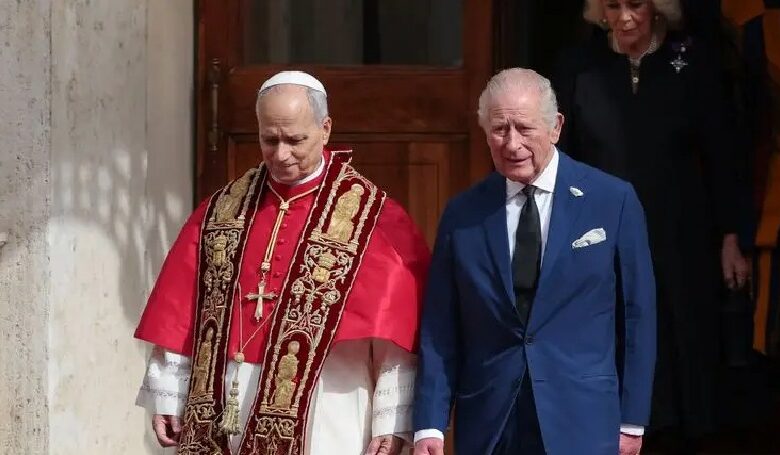
Leaders of the historic Orange Order faction in Northern Ireland have sent harsh letters to King Charles III, calling his attendance at a joint prayer ceremony with Pope Leo XIV a “breach of coronation oath.”
Senior leaders of the Protestant Orange Order group sent formal letters to King Charles III to protest his participation in a joint prayer ceremony with Pope Leo XIV. This group, which has roots in the Reformed Protestant tradition, stated in their letter that the King’s presence at this ceremony constitutes “a breach of coronation oath and disrespect for religious commitments.” An event that has revived centuries of religious tensions between Protestants and Catholics.
According to the Irish Times, the letter, signed by leaders in Northern Ireland and Scotland, urged the King to return to his covenant with God and maintain his position as Defender of the Protestant Faith. The formal statement indicated that many members of the Orange Order family were deeply disappointed by the King’s decision.
In part of the letter from the “Markethill” chapter in Northern Ireland, it stated: “His Majesty swore an oath to be a Defender of the Protestant Faith. Unfortunately, we have now witnessed the weakening of this oath, first through accommodation with Islam and now by kneeling before a church whose priests absolve the murderers of our brothers and sisters.”
These protests intensified after King Charles III participated in a joint prayer ceremony with Pope Leo XIV on October 23, 2025, in the Sistine Chapel in the Vatican—the first time in approximately 500 years that a reigning British monarch has attended a religious ceremony with the leader of the Catholic Church.
To understand the sensitivity of this matter, one must return to its historical roots:
In 1534, King Henry VIII founded the Anglican Reformation by separating the Church of England from the Pope and Rome. Since then, the British King or Queen has been not only the political leader of the country but also the Head of the Church of England. As a result, every monarch takes an oath at their coronation to protect the Protestant faith. This oath is enshrined in the Coronation Oath Act of 1688 and is considered a formal commitment before God and the people.
The Orange Order fraternity organization was founded in 1795 following bloody conflicts between Catholics and Protestants in Northern Ireland. The group’s name derives from King William III of Orange, the Protestant Dutch-origin British monarch who defeated the Catholic army of King James II in the famous Battle of the Boyne in 1690—a battle that symbolizes in the collective memory of Protestants the victory of Reformed faith over Roman dominance.
Every year on July 12, Orange Order members celebrate this victory with street parades; an event that still causes religious and political tensions in some areas of Northern Ireland.
From the Orange Order members’ perspective, King Charles III should be a successor to the tradition of William of Orange, not an interlocutor with the Pope. Therefore, his recent meeting with the leader of the Catholic Church is seen by them as a symbolic retreat in religious and national identity.
In contrast, advocates of inter-church dialogues argue that this action represents reconciliation, Christian unity, and mutual respect between the two major branches of Christianity—a move consistent with the convergent spirit of the new King.
British religious analysts believe this event is not merely a ceremonial matter but reflects a greater crisis in Britain’s religious and royal identity. As British society becomes increasingly secular, maintaining titles such as “Defender of the Protestant Faith” faces practical challenges.
An analyst in The Guardian wrote: “The King wants to be a symbol of unity for all Christians, not just the followers of the Church of England. But this very effort can be seen by traditionalists as a betrayal of religious oath.”
Although King Charles III’s meeting with Pope Leo XIV appeared to be a symbolic gesture for Christian unity, it has in essence reactivated the historical divide between the two religions.
On one hand, the Orange Order sees it as a threat to Reformed faith and a sign of forgetting the Protestant heritage, while on the other hand, many Anglican clergy interpret it as a step toward religious peace and Christian dialogue.
Ultimately, the issue may not be merely about a prayer in the Vatican, but rather a more fundamental question about the role of religion, monarchy, and religious identity in twenty-first century Britain.