When War Changes Beliefs; A New Narrative of Conversion to Christianity in the Middle East
Recent reports from South Korea and the Middle East show that a number of citizens from Syria, Lebanon, Iraq and Turkey consider war, violence by extremist groups, and spiritual experiences as key factors in changing the course of their lives; a subject that has coincided with widespread discussions about religious freedom in the region.
While the Middle East continues to face war, humanitarian crises and widespread refugee waves, recent reports from international Christian media indicate an increase in the conversion of some former Muslims to Christianity; a phenomenon that, according to church activists, is seen more than anything among war victims and migrants.
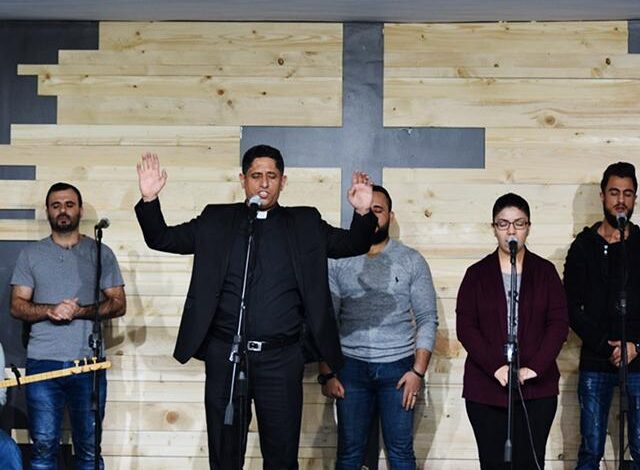
The news network CBN News recently reported on a meeting of a group of newly Christianized citizens in Seoul, South Korea; people from Syria, Lebanon, Turkey and Iraq who say that the experience of war, disillusionment with religious extremism and also personal spiritual experiences have led them toward Christian faith.
At this meeting, Priest “George Hossni,” who has been engaged in evangelical activities among Middle Eastern Kurds for more than five decades, said: “Every time a war occurs, a new wave of conversion to Christianity emerges. People have become tired and hopeless from violence and from beliefs that they think are causing these destructions.”
He also described the performance of political leaders and extremist groups as one of the important factors in changing the outlook of some people in the region, and said that many war victims are now raising serious questions about the relationship between violence and religion.
An important part of these narratives goes back to the Syrian civil war and the wave of refugees after 2011. According to this report, many Syrian refugees, after entering Lebanon and other countries, established close contact with Christian centers and churches for the first time.
Hossni explained that street teams affiliated with Christian centers were active among Syrian refugees; people who were mostly homeless, jobless or without financial resources living in very difficult conditions. He claims that these activities over the past years have led many of these citizens to convert to Christianity.
Other reports in recent years have also been published about the increase in conversion of some Syrian war victims to Christianity. Some international media have written that a number of residents of war-torn areas have turned to local churches after experiencing the violence of ISIS.
In one of these narratives, a person who was detained by ISIS for a period said: “After what I witnessed with my own eyes of violence, I became doubtful about my previous beliefs.”
One of the topics that is repeated in many of these reports is the issue of “dreams” and personal religious experiences; a topic that has been seen repeatedly in the narratives of Middle Eastern citizens.
A priest who had previously been imprisoned in Syria described in an interview with CBN that during solitary confinement, after severe physical pain and complete hopelessness, he had a dream of a fair-skinned man touching his body with olive oil. He says that person told him: “You are my beloved and I love you very much.”
He also said that before his imprisonment, he had read a book by Billy Graham and the closing prayer of that book had a profound impact on him.
Such narratives had previously been circulated among some Syrian, Iranian and Iraqi migrants. Western Christian media in recent years have repeatedly reported on individuals who claim to have seen Jesus Christ in dreams or visions and say that this experience changed the course of their lives.
Despite the continuous publication of such narratives, experts in religious affairs believe that providing accurate statistics about religious conversion in the Middle East is very difficult; especially because many individuals do not reveal their new beliefs due to security concerns or social pressures.
Some Western research institutions have also emphasized that claims related to widespread religious conversion in the Middle East remain a subject of debate due to the lack of independent and verifiable statistics.
However, observers say that what cannot be denied is the increase in personal narratives about disillusionment with religious extremism, humanitarian crises and the search for new spirituality among a segment of Middle Eastern war victims.
Church leaders who participated in the Seoul meeting also believe that churches should prepare themselves for a new wave of conversion to Christianity; a wave that, in their view, requires more than ever before, education, spiritual support and social security.