What happens if Iran does not accept Netanyahu's four conditions?
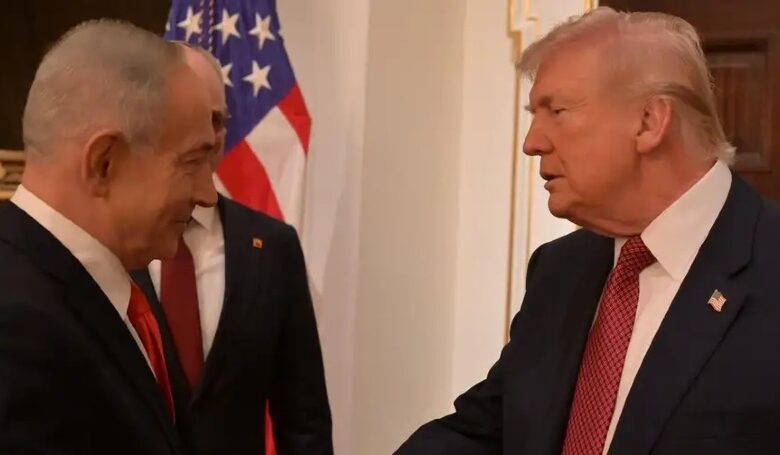
On the eve of the Iran-US talks in Geneva, Netanyahu announced four Israeli conditions for any agreement with Iran, including the complete dismantling of the nuclear infrastructure and limiting the range of missiles to 300 kilometers. But will Iran accept such conditions?
On the eve of the second round of Iran-US talks in Geneva, Israeli Prime Minister Benjamin Netanyahu announced four Israeli conditions for any agreement with Iran: the complete withdrawal of enriched uranium, the complete dismantling of the nuclear infrastructure, limiting the range of missiles to 300 kilometers, and ending support for "proxies."
Iranian officials immediately responded with a "less tense" tone than in the past, speaking of "flexibility in the nuclear program in exchange for the lifting of sanctions" and even discussing negotiations over some economic incentives for the United States.
Before his trip to Geneva, Iranian Foreign Minister Abbas Araqchi emphasized that "Iran's missile capability is a national security red line" and will not be negotiated.
Iranian officials also consider uranium enrichment to be their right and do not agree to completely dismantle the nuclear program or transfer enriched uranium to a third country.
Deputy Foreign Minister Majid Takht-Ravanchi emphasized the Islamic Republic's readiness to be flexible in its nuclear program in exchange for the lifting of sanctions, citing the possibility of diluting highly enriched uranium as an example of this flexibility, but he clarified that Tehran will never accept zero enrichment.
He also said that Israel's direct entry into the negotiations could create new political and diplomatic challenges, especially at a time when the talks are at a critical stage.
"Sanctions will remain even if Iran accepts Israel's conditions"
But the main question is: Will Iran accept the conditions of Israel and the United States, and what will happen if it does not?
Farzaneh Roustaei, an analyst of Iran and the Middle East, believes that the "Iran crisis" is too complex to be easily resolved and can even be considered largely "unsolvable."
According to this expert, even if the Islamic Republic accepts Netanyahu's conditions, it will still face the obstacle of sanctions, because not all sanctions are within the control of the US President and some of them are under the supervision of Congress, and their lifting will take time.
Roushati considers the fulfillment of Netanyahu's four conditions practically impossible and emphasizes that the Islamic Republic will not accept them due to the consequences of such acceptance, as accepting these conditions could even lead to the end of the system. In his view, resolving the nuclear, missile, and proxy crises is only possible if the political structure is fundamentally changed and "regime change" occurs.
Rousati also describes the economic situation as an emergency, saying that declining oil revenues and financial pressures have put the government in a bind.
This expert believes that the negotiations could be an attempt to buy time against serious military threats rather than leading to a lasting agreement. He believes that if diplomacy fails, the US and Israel will likely launch limited attacks lasting a few days or weeks, an action that could also change Iran's internal equations.
Alireza Ardebili: Iran is not seeking immediate reconciliation
Alireza Ardebili, a political analyst and director of the analytical website "Tribune," believes that evidence shows that the Islamic Republic is not seeking immediate compromise in the current circumstances.
According to this expert, the assessment of the Sovereignty Think Tank is based on the ability to withstand another joint blow from the US and Israel, and if a compromise is to be made, it is preferable to do so after demonstrating the ability to manage the crisis and demonstrate deterrence, including by hitting the interests of the other side.
And regarding the consequences of a possible US and Israeli attack on the Islamic Republic, he says that if the goal is simply to overthrow the regime, such a scenario is conceivable only under very specific circumstances, including America's readiness to pay heavy economic and human costs and even deploy ground forces.
But if the goal is to build democracy, he believes the answer is no, because Iranian society is neither post-World War II Japan nor Germany of the same period.
According to Ardebili, the country's infrastructure has not been fully rebuilt even after the Iran-Iraq war, and any widespread military intervention could cause more serious damage.
He emphasizes that even in a transition without war, rebuilding the country requires significant capital and time; let alone a situation where the destruction of infrastructure, insecurity, and new waves of migration make the prospect of democracy even more remote.
Source: Deutsche Welle