UN: Gaza may become uninhabitable
It is hard to believe that Hamas and Fatah have reconciled. The people of Gaza, who have been suffering for years from the endless conflict between the two rival groups, are now facing the threat of starvation.
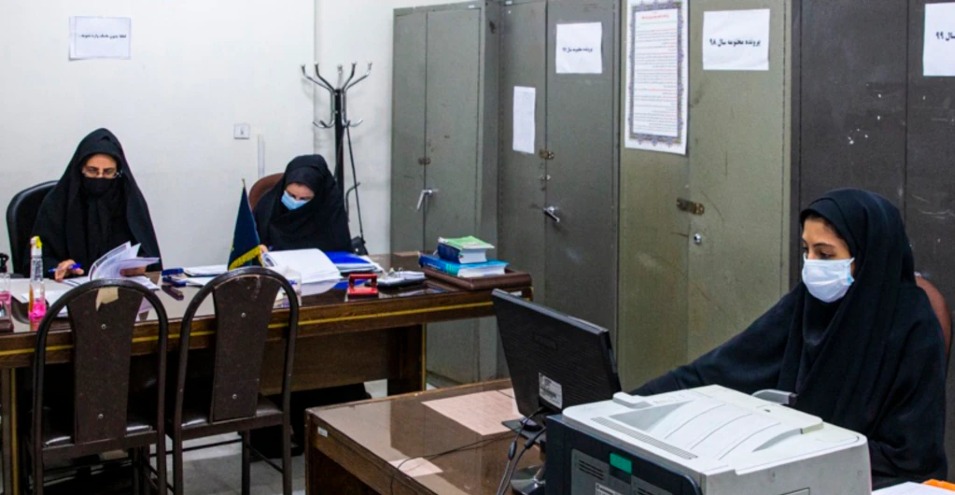
Kamel Abu Ali stands in front of the closed doors of the Bank of Palestine in Jabaliya, in the northern Gaza Strip, unable to understand the world. He and about 60,000 other Palestinian Authority employees still have no news about their salaries. Abu Ali's seven children and his cancer-stricken wife are waiting at home, and he must return empty-handed once again.
The Fatah organization led by Mahmoud Abbas lost Gaza in a war with the Hamas movement in 2007, and Hamas has since ruled the Gaza Strip. But even though Abbas had lost power in the coastal region, he still paid the salaries of his employees in the area, from hospital workers to ministry officials and police officers like Kamal Abu Ali. But a year ago, things changed.
In an exclusive report, Der Spiegel Online writes that in the summer of 2007, Abbas reduced the salaries paid to Hamas in the Gaza Strip in order to put pressure on them. Last year, they sometimes received half or a quarter of their salary. But not receiving any salary at all is something new. Abu Ali now has to sell his refrigerator and washing machine to get the money. But no one knows how he will pay his bills or buy medicine for his wife.
The PA Finance Ministry in Ramallah said last week that the salaries were not paid due to a technical problem. But Palestinians cannot be sure. Osama Antar, a political science graduate from the University of Münster who now works at the Friedrich Ebert Foundation office in Gaza City, said he was certain that this was “new Abbas.”
Abbas considers the national reconciliation talks between Fatah and Hamas to be a failure. Arab media reported on Wednesday, April 11, that Abbas had issued a six-day ultimatum. According to the ultimatum, Hamas must either return the Gaza Strip or the PA will treat the territory as a “rebel zone.” “This will mean the collapse of the banking system, the economy, the state sector, everything,” says Osama Antar.
The problem is that the PA in the Gaza Strip not only provides salaries for government employees, but also electricity, water, and medicine. By cutting off this aid, Abbas is trying to force Hamas to compromise for the sake of the people of Gaza. The people of Gaza have suffered for years from multiple wars and an 11-year blockade by Israel.
The consequences can be seen on the streets of Gaza: carts replace cars, the once-popular sea has turned a brown-green color due to algae and untreated sewage. Unemployment and poverty rates are around 50 percent and 80 percent, respectively. All of these factors have prompted the United Nations to warn that Gaza could become “uninhabitable” by 2020.
The UN says the signs of uninhabitability are already visible: Living conditions in the Gaza Strip are extremely poor. Normal life in Gaza is no longer possible due to high youth unemployment, a shortage of drinking water and numerous shortcomings in healthcare.
The United Nations Relief and Works Agency for Palestine Refugees (UNRWA) provides education, food and health care to 1.3 million people in Gaza, 70 percent of the city's population. But after the US cut its aid by $300 million, the agency warned that it may no longer be able to provide for the people of Gaza. If that happens, the region will face famine.
“Weakly-founded” reconciliation efforts
In October 2017, serious steps were taken towards reconciliation between the rival factions Fatah and Hamas, but when the convoy carrying the PA Prime Minister Rami Hamdallah was attacked during a visit to Gaza in March 2018, Mahmoud Abbas broke off the reconciliation talks.
Observers say Abbas never believed that reconciliation with Hamas was possible. According to them, Abbas is not ready to compromise with Hamas and wants to achieve all its demands at once, while this is not possible. The Palestinians want one country and one state, and this means the rapid integration or disarmament of all armed groups, which is not possible. Abbas does not even want to accept the gradual disarmament of Hamas and other militant groups such as the Al-Aqsa Brigades and the Islamic Jihad Organization.
“Abbas has lost majority support”
Khalil Shikaki, director of the Center for Policy and Field Research in Ramallah, says that Mahmoud Abbas believes in peaceful resistance, while the majority of Palestinians believe that armed groups should remain until a final peace with Israel.
Shikaki says that Mahmoud Abbas, who has ruled the West Bank for 13 years without interruption, has lost majority support. He says that in Gaza, Abbas is held responsible for the failure of the reconciliation talks.
Shikaki continues, the Hamas terrorist organization also no longer wants to rule the blockaded Gaza Strip and does not want a new war. For this reason, Hamas has resorted to other ways to reduce pressure and is fully supporting the "March of Return" to the homeland (Israel).
Shikaki says the march, which began on March 30 this year and has so far claimed dozens of lives, may bring some successes. For example, “Israel may be forced to ease the blockade of the region or pressure Egypt to open the Rafah border crossing.” Or “Mohammed Dahlan may be willing to accept some power.”
Mohammed Dahlan, the former head of the PA's security apparatus, remains popular in Gaza. He fled to the United Arab Emirates in 2011 after being expelled from Fatah after being found guilty of the assassination of former PA leader Yasser Arafat.
But that won't help either, says Khalil Shikaki, director of the Center for Policy and Field Research in Ramallah, because Abbas dislikes Mohammad Dahlan more than Hamas and naturally won't accept his renewed influence in Gaza.
Source: DW