Ukrainian plane downed; complaint against Khamenei and the IRGC
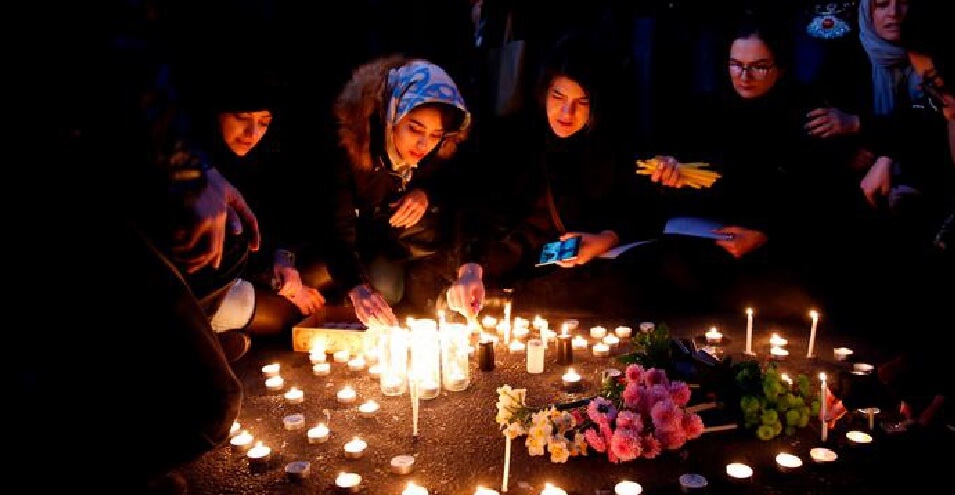
Families of some of the victims of the Ukrainian plane that was shot down by a missile near Tehran have sued Khamenei and the Revolutionary Guards. A Washington law firm is pursuing the lawsuit on behalf of the survivors of the American victims.
A Washington-based law firm has issued a statement announcing that it has filed a lawsuit on behalf of a number of relatives of the victims of Ukraine International Airlines Flight 752, who were American citizens, against the government of the Islamic Republic led by Ali Khamenei and the Revolutionary Guard Corps commanded by Hossein Salami.
According to the statement issued on Friday, October 16, the victims' survivors' lawsuit has been filed in federal court in Washington, D.C., and the plaintiffs hope that "this case will be an effective step towards prosecuting and holding accountable the perpetrators and leaders of this crime."
A Ukrainian passenger plane was shot down on the morning of January 8, 2019, shortly after taking off from Tehran Airport, after being hit by two IRGC air defense missiles, killing all 176 people on board.
Passenger aircraft as a defensive shield?
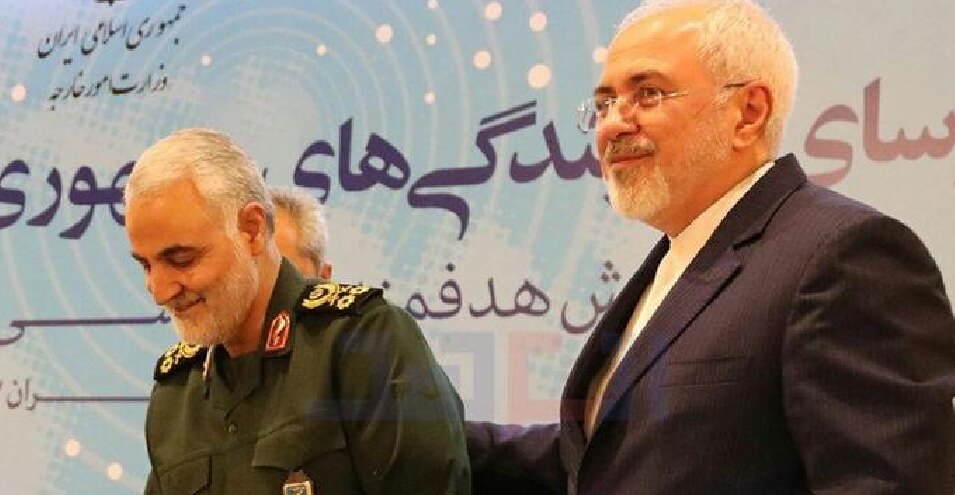
The downing of the Ukrainian plane occurred a few hours after the Revolutionary Guards launched a number of missiles at two bases housing American and allied forces in Iraq in retaliation for the killing of Qassem Soleimani, the then commander of the IRGC's Quds Force, in a drone strike by American forces.
Amir Ali Hajizadeh, the commander of the IRGC's Aerospace Force, took responsibility for the catastrophic error in a television interview with a three-day delay, saying that the IRGC's air defense system had "mistakenly identified the Ukrainian passenger plane as a cruise missile" and fired at it.
One of the most important accusations against Iran is that it allowed passenger planes to fly despite declaring a state of alert due to concerns about a retaliatory attack by the United States. The Islamic Republic is accused of using passenger planes as human shields to prevent a possible American attack.
The Washington-based law firm of Hrischi emphasized in a statement that relatives of a number of victims have sued for "failure to protect the lives of passengers in wartime conditions, as well as concealing key evidence, destroying the remains of the accident at the scene, and seeking to shed light on hidden aspects of the incident."
The statement reads: "Unfortunately, the families of the victims not only do not have the slightest confidence in the proper investigation of this incident by its perpetrators, but they also have no confidence in the Iranian judiciary to administer justice."
This lawsuit is one of the international efforts by the survivors of the victims of the downing of the Ukrainian plane, which is still being pursued in the judicial systems of foreign countries.
$1.1 billion compensation claim in Canadian court
In February of last year, just one month after the incident, a legal team in Canada filed a lawsuit on behalf of a number of survivors of the victims of the incident, demanding compensation of one and a half billion Canadian dollars (equivalent to about 1.1 billion US dollars).
The team is headed by Mark Arnold, a renowned Canadian lawyer who had previously succeeded in obtaining a court order in another case condemning the Islamic Republic and seizing two buildings belonging to it.
The Canadian government officially notified Iranian authorities last month that two class action lawsuits have been filed in the country's courts against the Islamic Republic and some of its senior officials in connection with the downing of the Ukrainian plane.
The Accident Investigation Bureau of the Islamic Republic of Iran's Civil Aviation Organization announced in a report published on February 20 that 146 of the passengers on the downed Ukrainian plane had Iranian passports and five had Canadian passports, and most of the other victims were Ukrainian citizens.
This is despite the fact that 52 passengers on the plane were dual Iranian-Canadian citizens, some of Iranian descent, and citizens of countries such as Britain and Sweden.
Iran's focus on negotiations with Ukraine
The Islamic Republic, which does not recognize dual citizenship, is apparently trying to advance negotiations on compensation by focusing on dialogue with Ukrainian officials.
ISNA news agency reported yesterday (Saturday, October 16) that the first round of negotiations between the Iranian and Ukrainian delegations was held on August 28 and 29 under the leadership of Mohsen Baharvand, Deputy Foreign Minister for Legal and International Affairs, and his Ukrainian counterpart, and the second round is scheduled to be held in Tehran on October 19-20.
Baharvand says that three technical meetings will be held in this round of negotiations, one of which is “on legal issues regarding the amount of compensation for individuals and aircraft.” In the meantime, negotiations have also been held between Iranian and Ukrainian officials in Ukraine.
According to ISNA, Iranian Ambassador to Kiev Manouchehr Moradi told the official Ukrainian news agency after the talks: "The payment of compensation, like other issues related to the incident, has a legal and international framework. In the negotiations and interviews that followed, we announced that we are ready to pay compensation based on international rules and Iran's obligations in the conventions to which it is a member. This point means that we will not accept any formula for paying compensation, and this is an important point."
In this way, the Islamic Republic is apparently trying to invalidate the possible verdict of courts in Canada and the United States in advance, but the experience of the past years shows that these efforts often fail. Meanwhile, many survivors of the victims of the downed Ukrainian plane have repeatedly emphasized that seeking justice and holding those responsible for the incident accountable is more important to them than receiving compensation.
Source: DW