Unrestricted repression, from child detention to deadly landmines
Published reports reveal borderless repression in Iran, the arrest of children, the torture of protesters, and the silent victims of landmines.
As popular protests spread across various cities in Iran, a new wave of arrests, from 15- and 17-year-old children to civil activists and ordinary citizens, presents a worrying picture of the intensification of repression; repression that knows neither age, nor ethnicity, nor even the time gap since a war that ended decades ago but whose mines are still alive.
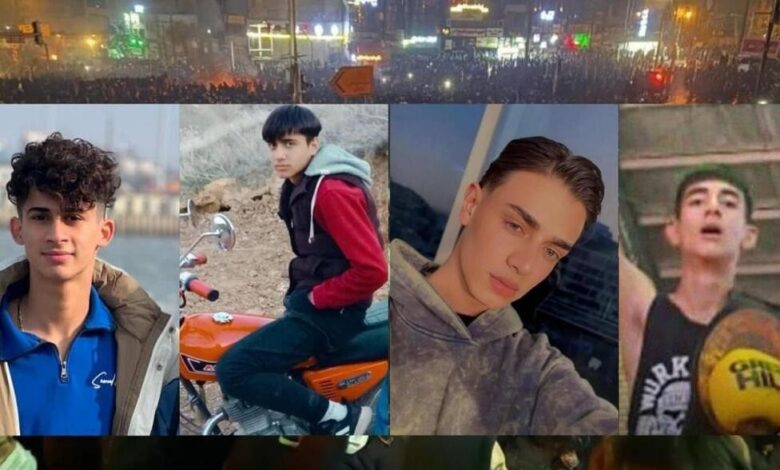
Four children, named "Adib Ahmadinejad", "Mehdi Haqjoo", "Armin Sharifian", and "Mohammad Hossein Khorshidvand", have been arrested by the security forces of the Islamic Republic of Iran during popular protests in the cities of Sanandaj, Langrud in Gilan Province, Neyshabur in Khorasan Razavi Province, and Kahrizak in Tehran.
According to some reports by the Hengaw human rights organization, on Monday, February 9, 2026, Adib Ahmadinejad, a 17-year-old Kurdish child from Sanandaj, was arrested by government forces in this city, and no information about his fate is available yet.
Also, on Sunday, February 19, Armin Sharifian, a 17-year-old child from Neyshabur, was violently arrested by intelligence forces from his workplace in Khat Kashi, and no information has been released about his fate or whereabouts. According to published reports, his father suffered a seizure due to the severe mental stress caused by the arrest and the lack of information about his son's condition.
On Wednesday, January 14, Mohammad Hossein Khorshidvand, a 15-year-old boy and athlete from Khorramabad, was arrested by government forces at his family home in Maskan Mehr, Kahrizak, Tehran, and transferred to a special juvenile detention center in Tehran. According to information received, he is being held in the quarantine section of the center.
Earlier, on January 12, Mehdi Haqjo, a 17-year-old teenager from Gilak and Langrud, was arrested by government forces at his family home. His family has only been informed that he has been transferred to Lakan Prison in Rasht, and as of the time of this report, no other information is available about his condition and detention conditions.
There are many other children who, due to severe pressure and threats against their families, still have no information about their arrest or disappearance, and the news of their arrest has not yet been reported to the media.
While the Islamic Republic is a member of the Convention on the Rights of the Child and is committed to providing special protection to those under the age of 18, the detention and detention of children in unsafe conditions without the knowledge of their families is considered a clear violation of international obligations.
At the same time as these protesting children were arrested, news of another child's death was released; but this time not in a detention center, but in a minefield.
A 13-year-old Kurdish child died yesterday, Tuesday, February 11, following a landmine explosion left over from the Iran-Iraq war in the Cham-Hindi area of Dehloran County in Ilam Province. According to informed sources, the explosion occurred yesterday evening and the child died at the scene due to the severity of his injuries.
The border areas of Ilam, especially Dehloran County, are still among the areas contaminated with mines left over from the Iran-Iraq war, and several citizens are killed or injured every year by these mines. More than three decades after the end of the war, these areas have still not been completely cleared, and the victims are often children and residents of the most deprived areas of the country.
In the wake of the widespread wave of citizen arrests, at least seven more citizens were detained and held in limbo. The names of these citizens are as follows:
Pouyan Gholami, a Baha'i citizen living in Kerman, was arrested by government forces at his workplace on Tuesday, February 11, and taken to an unknown location. After arresting this citizen, government forces searched his home.
Soroush Safaripour, a 31-year-old citizen of Gilak and a player for the Shahin Khoshkbijar football team, was arrested on Thursday, February 6, during a raid by government forces on his home in the Khoshkbijar neighborhood of Gilan Province.
Alireza Mirkhorsandi, a citizen of Gilak from Langrud and an employee of the city's Environmental Department, was arrested by government forces at his workplace on Monday, February 4, at the Environmental Department.
Yazdan Hashemi Khoshkbijar, a 27-year-old citizen of Gilak and resident of Khoshkbijar, was arrested on Sunday, February 12, after receiving a phone call from the Revolutionary Guards and going to this security institution, and was transferred to Lakan Prison in Rasht.
Milad Didar, a 27-year-old citizen of Gilak from Rasht, was arrested and tortured by government forces on Monday, January 12, during popular protests in the city, and after extracting a forced confession, was transferred to Lakan Prison in Rasht. The citizen has been charged with "leading the protests," which has led to increased concerns about his fate.
Davoud Abbasi, a 40-year-old citizen and filmmaker, was violently arrested by government forces of the Islamic Republic of Iran in Karaj on January 10 and transferred to Qezl-e-Hesar prison. The citizen faces security charges and, despite being injured during his arrest, has been denied proper medical attention.
Sajid Khabazi, a 33-year-old citizen of Gilak and a native of Lahijan, married and father of one child, was arrested by government forces in Lahijan and transferred to Tehran. According to informed sources, this citizen was subjected to severe physical and psychological torture. In one case, he was subjected to an artificial execution after being asked to prepare for execution and draw up a will.
Along with the detention of children, torture, pressure on families, and continued victimization by landmines, it paints a picture of a multi-layered crisis; one in which social protests have been met with a harsh security response, and fair trial standards, children's rights, and the rights of religious and ethnic minorities have been called into question.
As protests continue in various cities, widespread arrests and violent confrontations have not only failed to quell discontent, but have also increased domestic and international concerns.
The narrative these days is not just a narrative of detention; it is the narrative of a generation that faces repression both on the streets and on the forgotten edges of the border, with mines still left over from an old war.