The amount of the 1402 (1402) year's Fitrah was announced without considering the people's poverty.
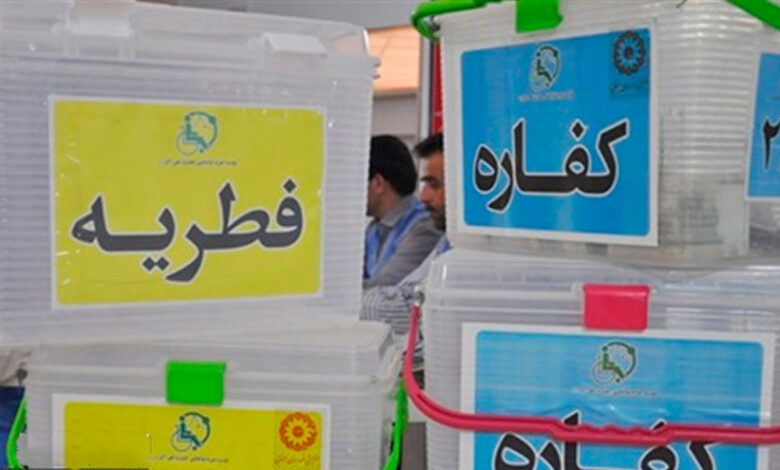
Ayatollah Sistani announced the amount of the Fitrah payment for the year 1402.
Zakat al-Fitr or Fitrah is one of the branches of Islam that is paid on Eid al-Fitr. Fitrah is one sa', which is equivalent to about three kilograms of the staple food (daily food) used by people, which can be wheat (for those who eat mostly bread) or rice, corn, raisins, dates, and the like.
In Islam, it is obligatory to pay Zakat al-Fitr after fasting for a month in the month of Ramadan and on the day of Eid al-Fitr, which is the first day of Shawwal. According to the fatwa of the religious scholars, it is obligatory for a person who is not poor to pay Zakat al-Fitr for himself and all those under his care.
Ayatollah Sistani determined the amount of fitrah payable in 1402 as follows: "Since the amount of zakat al-fitrah for each person is three kilograms, the amount for fitrah made from flour is 60,000 tomans, for fitrah made from Iranian rice it is 360,000 tomans, and for fitrah made from non-Iranian rice it is 105,000 tomans."
The announcement of the payment of Fitrah by the people was made at a time when the food table of the people has become much smaller compared to previous years and people have even lost the ability to buy food compared to previous months. Many workers have not even received their salaries for several months and even if they are not fasting, they cannot afford to buy rice and meat to satisfy themselves and are no different from a person who is fasting.
A few days before the end of Ramadan, on the night of Ali ibn Abi Talib's martyrdom, Ayatollah Javadi Amoli announced in a tweet: "The Islamic state has no right to oppress even the infidel." He wrote in this tweet that according to a letter that Ali wrote to Malik Ashtar as a directive, not all people are Muslims and there are some infidels among them, and no one can commit injustice against them.
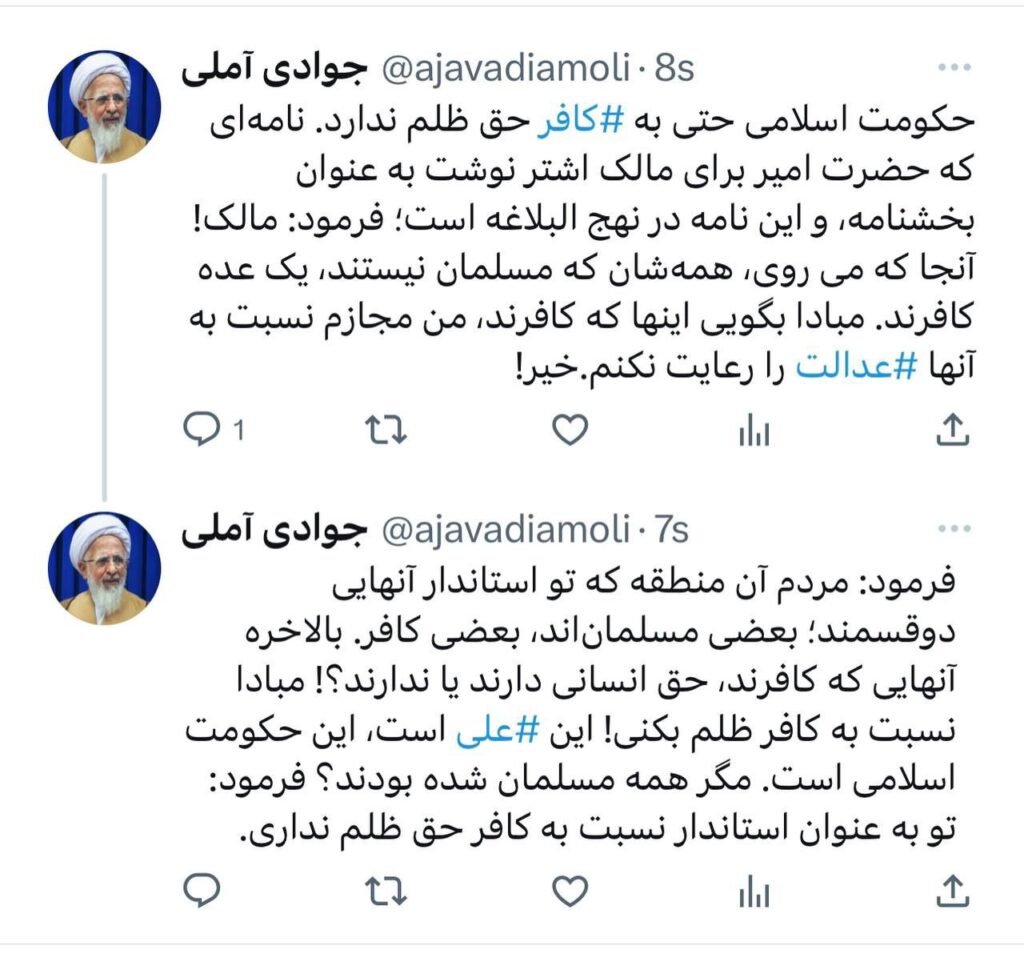
Javadi Amoli's speech about establishing justice was published at a time when Eid al-Fitr is just a few days away and people who are in need of even a meal for the night are required to pay fitrah. This means that if a family of four can afford to use flour, they must pay 240,000 tomans as fitrah. If they keep this amount and do not pay, they can buy themselves one and a half kilos of non-Iranian rice so that they do not have to constantly use flour.
According to Javadi Amoli, who refers to Ali ibn Abi Talib's letter to Malik Ashtar, isn't it unfair to take away the amount of fitrah, which could be at least the amount of one kilo of rice for a family, and pay it to the government?
Isn't it unfair to not pay workers' rights and wages for several months but make the payment of the Fitrah obligatory? What kind of government is Adl Ali, that the Islamic Republic regime is now following it and killing many Iranians every day?