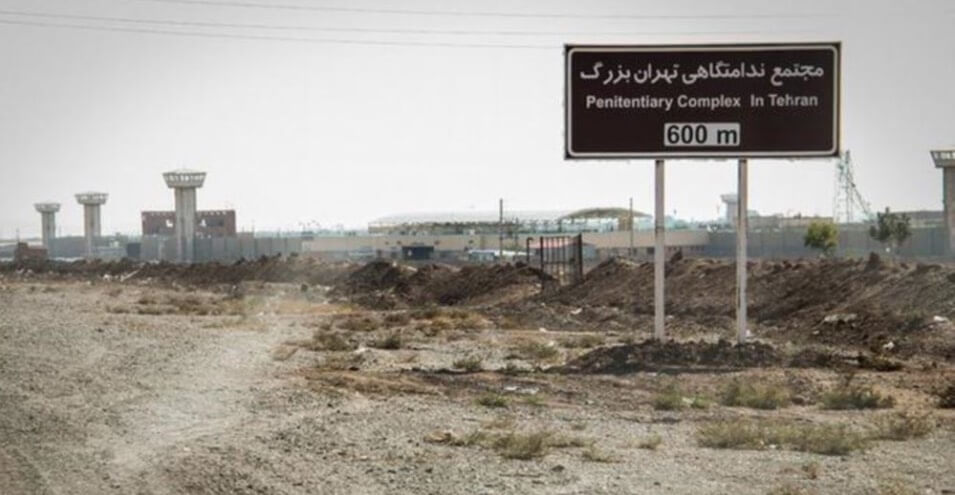
Tehran's new gas stations, a new way for street vendors
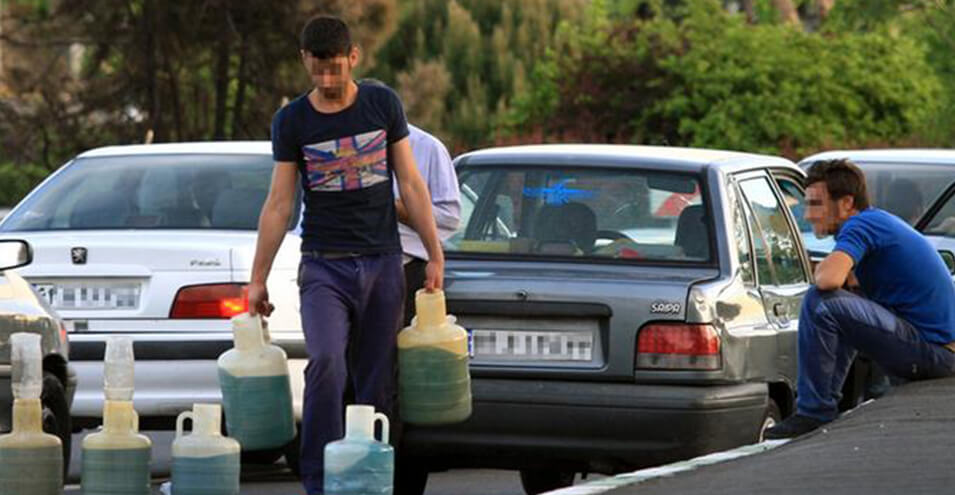
Tehran has new gas stations that sell each liter of gasoline in 20-liter gallons and plastic containers at two to three times the government price. The publication of images of this new method of peddling has drawn many reactions.
"Gasoline vending" on the streets and highways leading south of Tehran is so visible these days that it caught the eye of a photographer from the Mizan News Agency, affiliated with the judiciary.
The publication of a video report of the hot and widespread gasoline vending market, called "new gas stations," was soon republished by conservative media outlets and a number of other news sites, calling it an "abnormal phenomenon."
Street gasoline and higher prices
Gasoline vendors set up shop in different parts of the capital every day, and according to Iranian media, they buy gasoline from gas stations at a "free" price, which is 10,000 rials (1,000 tomans), and sell it in large 20-liter gallons and plastic containers at two to three times the price.
The approved price per liter of gasoline is 10,000 rials (1,000 tomans), but according to media reports, street vendors sell each liter of gasoline for two to three times the price at gas stations; "5-liter cans cost 10,000 tomans and 10-liter cans cost 20,000 tomans."
As a citizen in Tehran told Tasnim News Agency, gasoline vendors also have competitors: "Even in the middle of Tehran, if you run out of gas in your car and call the car service, they will bring you gasoline and charge you 2,000 tomans."
Petrol peddling is not limited to the capital of Iran, and this situation has also been reported on the roads of Khuzestan province: "I bought petrol for 3 tomans per liter on Izeh Road in Khuzestan. Where are you working... God forbid you get caught somewhere, you can wander around there. Isn't this petrol peddling dangerous?"
They also have card readers.
The retail price of gasoline is determined according to weather conditions and cold winter days. The Nowruz holiday must also be taken into account, to the extent that "the roads in the north sell everything, even gasoline."
Gasoline vendors, who some media outlets have described as "gasoline dealers," are men and women who provide convenience to gasoline buyers and are equipped with "card readers" and small and large containers. If the buyer wishes, the vendor himself will refuel the motorcycle or car.
Selling gasoline on Iranian roads is not a new phenomenon. What has caught the attention of the media is the growing prevalence of this condition as an “abnormal” phenomenon in the Iranian capital and in a “difficult economic situation”; a situation that, according to Saeed Bastani, a representative and member of the Industries and Mines Commission of the Islamic Consultative Assembly, affects the vulnerable and unemployed segments of society the most.
He considers the 2019 budget bill optimistic and in line with attention to "eliminating absolute poverty" among vulnerable groups, which "can be a solution to the problems" of this segment of society.
Poverty line for new gas station owners
It seems that gasoline vendors have taken action to address their economic problems before the parliament and the consolidation commission, and have not waited for the country's 2019 budget bill to be reviewed.
The budget bill will begin in the Iranian parliament on Saturday, February 17. The gasoline coupon plan, if approved by a majority of representatives, will also be considered in the same bill with the aim of "fair distribution" of energy subsidies.
In this plan, one liter of gasoline is deposited into the household head's account per day for each national ID number, and every Iranian can use their existing gasoline quota in any way they want or "sell all or part of it at a free price."
In this plan, parliamentarians have identified the importance of supporting the “disadvantaged” class. According to advocates for the return of coupon gasoline, if gasoline prices increase in 2019, which the government is pursuing, the disadvantaged class will be able to sell their gasoline at a “free price.”
There have been various proposals for a monthly gasoline quota. The ceiling for the monthly gasoline quota has not yet been determined, but proposals ranging from 80 liters per month to 120 liters have been submitted to the parliament, which would be allocated to every Iranian at a "subsidized price."
The price of coupon gasoline has not yet been announced, and there has been no discussion about it in the parliament or the government. Hopes for reducing the gap between low-income families and new gas station owners from the poverty line are also not very optimistic.
The poverty line for a family living in Tehran has been declared at 4,592,000 Tomans.
On the other hand, there are concerns about the unequal distribution of "hidden energy subsidies" among the people, to the extent that some representatives have warned that the high-spending and wealthy classes of society benefit from this hidden subsidy "up to 10 times" more than the low-spending and poor classes of society.
Low-income families are what the media calls families below the poverty line, marginalized, and bottom decile; some of these families have opened "new gas stations" for themselves.
Source: DW