Coronavirus threatens UN development goals
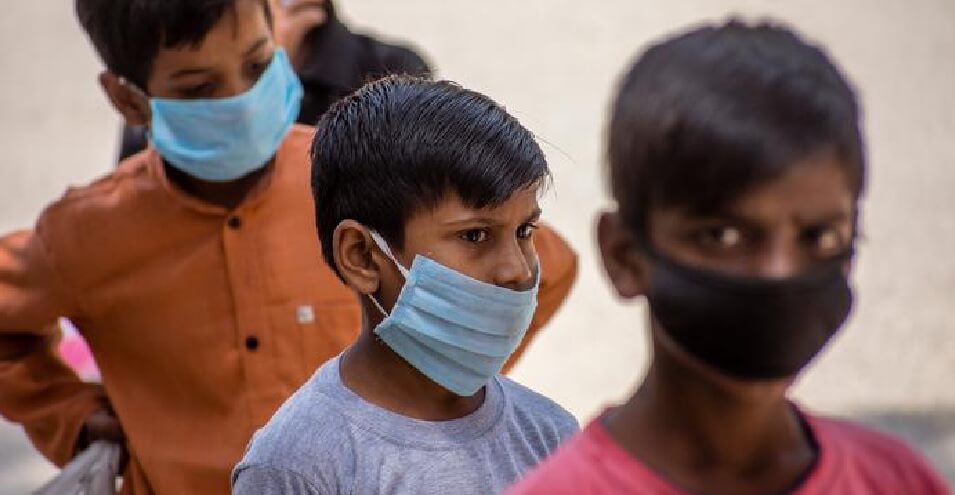
The United Nations Conference on Trade and Development has concluded that for the world's poorest countries, the coronavirus pandemic is more of an economic problem than a health and hygiene problem.
According to the latest report from the United Nations Conference on Trade and Development (UNCTAD), countries that are in severe economic distress have coped much better than wealthy countries with the health crisis caused by the new coronavirus (SARS-CoV-2).
The UN agency has concluded that most members of the Least Developed Countries (LDC) group have been spared the health and medical “catastrophe” that was predicted at the beginning of the spread of the coronavirus and COVID-19, the disease it causes.
According to the UN classification, 47 countries that are considered the "poorest" are members of this group.
The report cites various reasons for this positive trend, including the experience of many of these countries in dealing with previous epidemics, appropriate and timely government responses, very young populations, and population density in these countries.
Of course, it has been confirmed that there is concern that the situation in these countries will also worsen in the second wave of the infection.
Economic consequences
The report by the United Nations Conference on Trade and Development states that the coronavirus pandemic has been economically "devastating" for the poorest countries, with them experiencing the lowest rate of economic development in 30 years.
While the economies of these countries grew by an average of 5 percent last year, their growth is expected to be minus 0.4 percent this year.
In this way, the average income of the 43 member countries of this group is constantly decreasing.
Currently, more than half of the world's poorest people, with an income of less than one dollar and 90 cents a day, live in 47 member countries of this group, while their share of the world's population is less than 14 percent.
The main reason for the economic collapse of these countries is not the closure of shops and other local measures to combat Corona, but rather the global economic recession that has caused this negative trend.
According to a report by the United Nations Conference on Trade and Development, foreign demand for these countries' goods and services has declined sharply.
Countries like Angola, Chad, or Mozambique depend on oil, Congo or Zambia depend on the sale of minerals and metals, Bangladesh, Cambodia, or Nepal on the sale of textile products, and some countries on tourism.
Another important source of wealth for citizens of these countries is remittances received from family members and relatives who live and work in wealthy countries.
Chances of achieving UN goals
Among the 17 goals that were put on the agenda of countries until 2030 at the United Nations summit in 2015 were the fight against hunger and the climate crisis. Problems that can only be overcome with the joint cooperation of the international community.
Other goals such as health, education and gender equality are also at risk.
According to the United Nations Conference on Trade and Development, the coronavirus pandemic has once again clearly demonstrated all the mistakes and injustices in the global trade and financial system.
This UN body emphasizes that in order to improve the situation of the poorest countries after the crisis, fundamental steps must be taken in these countries themselves to ease export regulations and implement structural economic reforms.
Another important measure that the United Nations Conference on Trade and Development recommends in this regard is to reduce the debt burden of these countries, not in the sense of extending the repayment period, but in the sense of forgiving part of their debts.
Source: DW