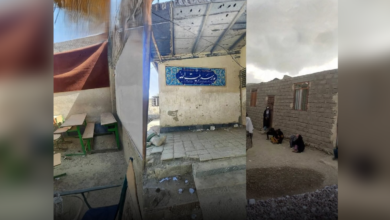
Negligence, Ignored Warnings, and Tragedy at Shajarah Tayyibah School
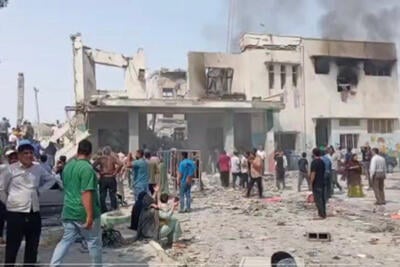
Hidden conflict and negligence led to the catastrophe at Shajarah Tayyibah school, even as warnings about this very conflict and its dangers had been issued in preceding weeks.
On the morning of Saturday, March 19 (equivalent to February 28), a deadly attack targeted the “Shajarah Tayyibah” girls’ primary school in Minab city, an attack that became one of the most tragic scenes of the recent conflict. According to official domestic reports, the death toll was rising in the initial hours, with debris removal operations continuing.
“Mohammad Radmehr,” the special commander of Minab city, in explaining the dimensions of this incident, said: “The number of deaths from the Israeli attack on the girls’ elementary school in this city is increasing, and so far 63 people have been killed and the number of injured has reached 92 people.” He further added: “Several other students are trapped under the rubble, and debris removal operations continue.”
Previously, the Education Ministry spokesperson had announced the death toll as 53 people, a figure that increased hours later, revealing that the depth of the tragedy exceeded initial estimates.
What makes this tragedy even more bitter is the history of warnings issued in preceding weeks about the possibility of war and the targeting of urban infrastructure. Some foreign governments had openly asked their citizens in Iran to avoid attending public gatherings and crowded places, including schools, should tensions escalate, and to take personal safety measures seriously.
Moreover, some Western officials had claimed that the Islamic Republic might design scenarios in which attacks or damages affect ordinary people but responsibility would appear to fall on the United States or Israel. These claims were rejected by Iranian officials, but they received widespread coverage in media and diplomatic circles.
Within this framework, warnings were also issued that if attacks occurred, citizens should refrain from visiting certain declared shelters and remain in their homes. Even Donald Trump, in a public message, had asked citizens to remain in their homes until the end of military operations and to particularly keep away from windows and outer walls, as there was a possibility of scattered explosions.
Regardless of the accuracy or exaggeration in these warnings, the reality is that the pre-war atmosphere was filled with signs of danger. Nevertheless, neither did the formal structures of the country’s education system close, nor did families widely decide to keep their children at home. The result of this negligence is seen today beneath the rubble of a school in Minab.
Irrespective of which side initiated the attack and what military objectives it pursued, one principle is clear: “Children should not be victims of political and military games.” However, in a country where for years the school environment has been accompanied by inspections, ideological pressures, and suppression of student protests, now a far more fundamental issue is at stake—the right to life.
Critics say that if governments considered their primary duty to be protecting the lives of their citizens, in circumstances when there was a possibility of widespread attacks, they should have swiftly closed educational centers and implemented emergency measures. On the other hand, families are also responsible for their children’s lives. Distrust of foreign warnings or habit of living in crisis cannot justify ignoring signs of danger.
The “Shajarah Tayyibah” school is now not merely a destroyed building; it is a symbol of a generation trapped amid political and military conflicts. War, whatever justification it may have, when it reaches the classroom, leaves no legitimacy remaining.
The Minab tragedy is not merely news; it is a test for everyone—for governments, for the powers engaged in war, and even for a society that perhaps saw the danger but did not take it seriously.