Hojjatoleslam ‘Mohammad Hamidinezhad’ Resigns Following a Controversial Insult
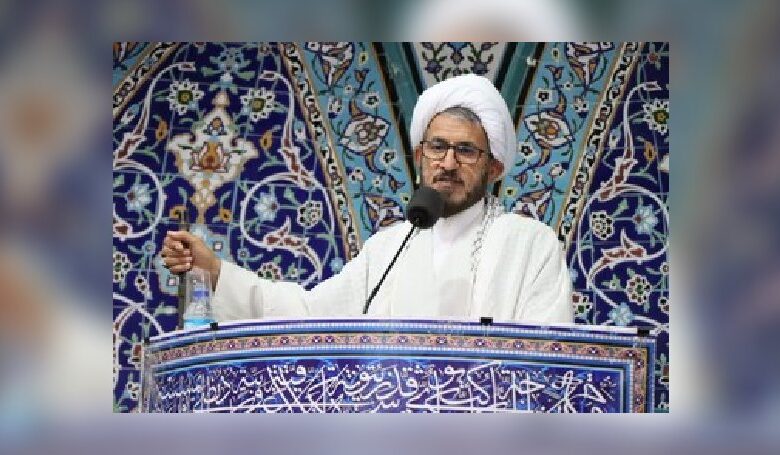
The resignation of Hojjatoleslam ‘Mohammad Hamidinezhad’ following a controversial insult has once again called into question Iran’s flattery-promoting culture and power-centric structure.
The sudden resignation of Hojjatoleslam Mohammad Hamidinezhad, Friday prayer imam of ‘Alishah’ in Bushehr, following a widespread controversy sparked by his harsh and insulting remarks in cyberspace, has sparked a new wave of discussions about flattery culture, the power-centric structure of the Islamic Republic, and the role of government-affiliated clergy.
This cleric, who had made headlines in recent days by making a controversial statement (a remark that many considered an outright insult to government critics and ordinary people), was forced to step down from his position amid a barrage of reactions. In a speech, he had said: “Whoever expresses hatred toward Master Sayed Ali Khamenei is certainly a bastard.”
The Friday prayer imam of Alishah, after receiving strong and sharp reactions from the public, announced his resignation by issuing a statement. In this statement, he wrote: “During a speech, while expressing and explaining my feelings and devotion to the leader of the revolution, a sentence came out of my mouth that was not conceptually correct and, in addition to exploitation by enemies, caused distress to the hearts of revolutionaries and system supporters. Therefore, while apologizing to the people, I announce my resignation from the Friday prayer imamate.”
However, critics argue that the issue is not merely a “slip of the tongue,” but rather a symptom of a deep-rooted problem in the structure of government-affiliated clergy and Iran’s political system: “the transformation of sycophancy into a tool for advancement and survival.”
In a structure where political legitimacy is built on the axis of the “apex of power,” excessive praise for the leader is not only not considered an error, but has effectively become the common language for gaining trust, promotion, and maintaining positions in government.
From parliamentary representatives to military commanders and government officials, many attempt to display their “unconditional loyalty” by using extreme expressions, exaggerated titles, and flattering remarks. This behavior is not merely a political gesture, but a strategy for survival in an opaque system.
When promotions and appointments are determined not based on expertise, but on the degree of expressed devotion, the result is nothing but: “the elimination of capable but critical individuals, the advancement of weak but loyal managers, the creation of echo chambers where only the sound of approval is heard.”
In such an environment, even the most dangerous decisions are presented without criticism, because no one wants to jeopardize their position through honesty or by issuing warnings.
Now one must ask whether the resignation marks the end of this affair, or is it a sign of a deeper illness? The words of the Friday prayer imam of Alishah may have been harsher than usual, but they are rooted in the same structure that rewards flattery and punishes criticism. When the system encourages excessive praise, it is natural that some clergy and officials push into new realms of extremism, even if this extremism ultimately leads to disgrace.
Although this resignation appears on the surface to be the retreat of an individual, it is in fact a mirror reflecting a deeper illness: “a political culture in which power is considered sacred and criticism is viewed as enmity.”
In the view of many Christian observers and human rights activists, insulting remarks by clergy who present themselves as “representatives of religion” are rooted not only in the structure of power, but also in the erosion of religious morality. Such statements demonstrate how part of the government-affiliated clergy has become a political tool instead of adhering to ethical and compassionate principles.
The solution is to reform this vicious cycle, which can only be achieved by creating real transparency, strengthening independent oversight institutions, supporting constructive criticism and freedom of expression, and limiting the political interference of clergy.
As long as flattery remains the “currency of power” in the Islamic Republic, resignations of this kind will only be signs of a deeper crisis.