Lebanese Sunni Cleric Attacks Khamenei: “He Is Not a Martyr, But a Murderer”
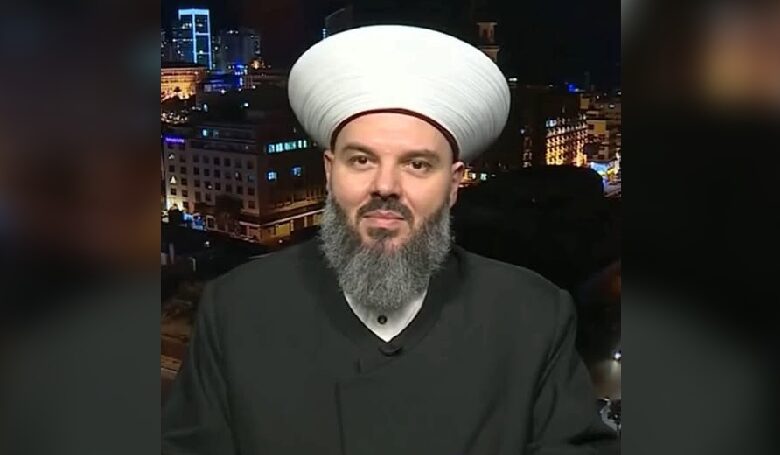
As reactions to recent developments in Iran and the Middle East continue, Sheikh Hassan Mar’i, a Sunni cleric in Lebanon, has issued sharp statements against Ali Khamenei, holding him responsible for the deaths of numerous Sunnis in the region and harshly criticizing the Islamic Republic’s policies in Arab countries. These remarks, which have been widely reflected in international media, have once again highlighted the deep rift between certain Sunni movements and the Islamic Republic of Iran.
Sheikh Hassan Mar’i, a Sunni cleric in Lebanon, adopted sharp positions against Ali Khamenei and the Islamic Republic’s regional policies in statements republished and translated by the research institute MEMRI. In part of his remarks, he stated that Khamenei cannot be called a “martyr,” but rather holds him responsible for the deaths of numerous Sunni Muslims in the region.
Mar’i also claimed that the Islamic Republic, over past decades, has played a role in exacerbating sectarian conflicts by supporting proxy groups and intervening in regional countries. In this context, he referred to wars in Syria, Iraq, and Lebanon, describing Tehran’s actions as a factor in spreading religious tensions.
The Lebanese cleric further mentioned Ahmad al-Shara (Abu Muhammad al-Jolani), the head of Syria’s transitional government, claiming that he has been able to eliminate the influence of groups affiliated with the Islamic Republic and influential figures from the previous Syrian government in Damascus. This part of his statements has also met with various reactions in regional media and social networks.
Middle East experts believe such statements reflect long-standing political and religious rifts between the Islamic Republic and certain Sunni movements in the Arab world; rifts that have taken on new dimensions following Syria’s civil war, the expansion of Tehran-aligned forces’ influence in Iraq and Lebanon, and recent regional developments.
Mar’i’s remarks come at a time when the Middle East’s political landscape remains affected by regional rivalries, shifting power dynamics in Syria, and the future of the Islamic Republic’s influence. Analysts believe that the expression of such positions by Sunni religious figures, rather than being purely sectarian, demonstrates the continuation of geopolitical competition and deep disagreements over the Islamic Republic’s role in regional developments.