Britain Accuses Islamic Republic of Directing Proxy Operations in Europe
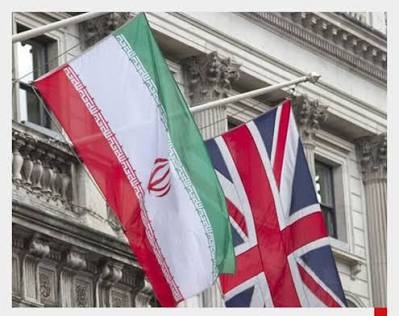
The summoning of Iran’s senior diplomat in London marks an escalation in Britain’s confrontation with Tehran. The British government states that the Islamic Republic has not only ignored security warnings but has expanded its hostile activities across Europe through the use of proxy groups—accusations that have once again brought the role of the Islamic Revolutionary Guard Corps in threatening the security of Western nations into focus.
By summoning Iran’s senior diplomat in London, the British government sent a clear message to Tehran: from London’s perspective, the Islamic Republic’s intelligence and security activities are no longer merely a diplomatic concern but have become a direct threat to European security. Britain’s Foreign Office announced on Tuesday, July 15, that the summons was in response to Iran’s role in directing proxy groups to carry out operations in European countries.
The British Foreign Office emphasized in a statement: “Despite repeated warnings, Iran’s intelligence services have not ceased their hostile activities. Instead, the Iranian government has sought to intensify its destructive behavior.” This stance represents one of London’s most explicit warnings against the Islamic Republic in recent years and reflects growing concerns about Tehran’s cross-border activities.
This action came just one day after the British government, using its new security powers, designated the Islamic Revolutionary Guard Corps and an affiliated group as entities threatening national security within the framework of a new system to counter foreign threats. This mechanism was designed to prevent foreign governments from using proxy networks for activities such as espionage, intimidation of opponents, sabotage, and covert operations.
In response, the Islamic Republic condemned London’s decision and claimed that the Islamic Revolutionary Guard Corps is an official component of Iran’s armed forces. Iranian officials also accused Britain of violating international law, stating that designating an official military institution is an illegal action.
Nevertheless, Britain’s concerns about the Islamic Republic’s activities are not new. In recent years, British intelligence organizations, counter-terrorism police, and the judiciary have repeatedly reported the discovery and foiling of plots attributed to the Islamic Republic or entities affiliated with it. These cases have included attempts at espionage, threats against journalists, intimidation of government opponents, and planning of attacks on British soil.
Although Britain has not yet formally listed the Islamic Revolutionary Guard Corps on its terrorist organization list, the country has gradually expanded restrictions against the institution in recent years. In contrast, the United States, Canada, and several other Western nations have designated the Islamic Revolutionary Guard Corps as a terrorist organization or subjected it to the most severe sanctions for years.
The summons of Iran’s senior diplomat can be seen as an indication of a gradual shift in London’s approach toward Tehran—an approach that is no longer focused solely on nuclear issues or diplomatic relations but now addresses the Islamic Republic’s intelligence, security, and cross-border activities as a threat to European security. This development could pave the way for increased political and security pressures on the Islamic Republic in the coming months.