Russian Expert’s Warning: Putin Prioritizes Survival of Islamic Republic Over Iran’s Nuclear Program
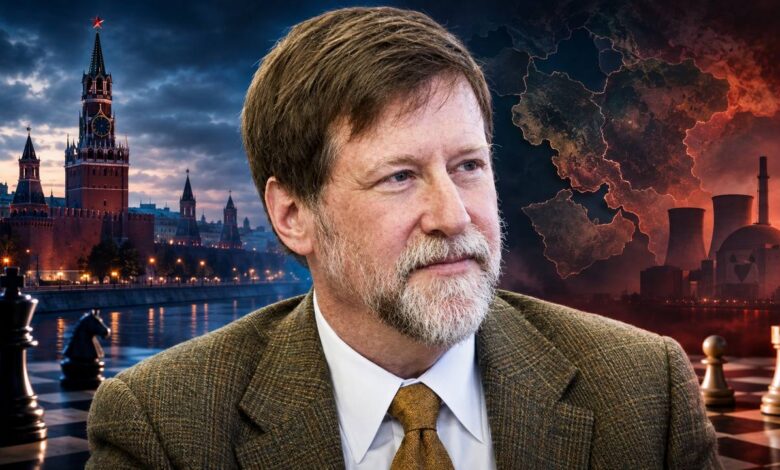
“Mark Katz,” a senior researcher on Russian affairs, says the Kremlin’s primary priority is not preventing the Islamic Republic from obtaining nuclear weapons, but rather preventing the rise of a government in Iran that is close to the West. According to him, Moscow, despite expanding military cooperation with Tehran, has no commitment to defend the Islamic Republic, and Russian support serves the Kremlin’s own strategic interests rather than guaranteeing Iran’s security.
Mark Katz, a retired professor at George Mason University and senior non-resident fellow at the Atlantic Council, in an interview with Iran International has presented an assessment of Tehran-Moscow relations that paints a different picture from the Islamic Republic and Russia’s claims of a “strategic alliance.” In his view, what matters most to Vladimir Putin is maintaining a government in Tehran that remains in opposition to the West.
Katz says Russia would prefer to coexist with a nuclear-armed Iran rather than witness a change of government in Tehran and the formation of a Western-leaning state. This assessment does not mean that Moscow wants Iran to obtain the atomic bomb, but rather indicates that from this researcher’s perspective, the Kremlin views the threat of Iran’s political reorientation as a more serious threat to its own interests.
This analysis comes at a time when officials of the Islamic Republic have repeatedly emphasized the importance of relations with Russia and described bilateral cooperation as part of a strategy to counter Western pressures. However, political and military proximity does not necessarily mean Moscow’s commitment to protecting the Iranian government in critical circumstances.
Putin, during his meeting with Masoud Pezeshkian in Turkmenistan on October 8, 2026, once again emphasized Russia’s support for Tehran and spoke of readiness to help end the war. However, Katz, referring to the 12-day war in 2025 between Iran and Israel and attacks on Iran’s nuclear facilities, says Russia provided little assistance to Tehran during that period.
According to this researcher, Moscow would prefer Iran not to obtain nuclear weapons, but does not consider this an immediate and vital threat to the extent that Israel and some regional countries do. In his view, the Kremlin’s main concern is that a change of government in Iran could remove a country of significant geopolitical and energy importance from the sphere of cooperation with Russia and push it toward the West.
Katz believes that even an anti-Western Islamic Republic has at times pursued interests and policies that conflicted with Russian interests. However, Tehran’s hostility toward the West has in many cases made it a partner aligned with Moscow’s objectives; a situation that a Western-leaning government could fundamentally change.
One sign of Moscow’s diplomatic support for Tehran was its veto, along with China, of a UN Security Council resolution on September 17, 2026; a resolution that sought to extend the mandate of independent experts to monitor the implementation of international sanctions against Iran.
This veto led to the end of the desired monitoring mandate, but in itself did not lift the established sanctions. This important distinction must be made: the action by Russia and China weakened independent oversight of sanctions implementation, but should not be presented as the lifting of UN sanctions.
Katz says Russia’s approach to Iran’s nuclear file has also changed over time. According to his assessment, before the Ukraine war, Moscow paid greater attention to Tehran-West nuclear disputes; but after Russia’s invasion of Ukraine began in 2022, Iran’s nuclear issue no longer remained at the center of the Kremlin’s priorities.
Military cooperation between the Islamic Republic and Russia expanded after the start of the Ukraine war. Tehran provided Shahed drone technology to Russia, and Western countries also accused the Islamic Republic of supplying short-range ballistic missiles for use in the war against Ukraine; accusations that should be evaluated within the framework of these governments’ stated positions.
The two countries signed a strategic partnership agreement in January 2025, but this agreement does not include mutual defense commitments. In other words, the military cooperation between the two countries does not mean that Russia has a contractual obligation to enter into war and defend Tehran’s government in the event of an attack on Iran.
Katz believes Russia’s military assistance to Iran is aimed more at increasing Tehran’s capacity to threaten American objectives and those of other regional countries than guaranteeing Iran’s defense against attack. He also says that given Russia’s military involvement in Ukraine, Moscow’s capacity and willingness to provide direct support to Tehran in the event of a major attack threatening the survival of the government is unclear.
This point is one of the most important limitations of the relationship that officials of the Islamic Republic refer to as strategic partnership: military and political cooperation, without mutual defense guarantees, does not necessarily mean having a reliable military ally.
According to Katz’s view, the notion that Iran is merely a pawn in Putin’s hands and Russia can sacrifice it at any time in a deal with the West does not align with the reality of relations between the two countries. Moscow does not have complete control over Tehran’s decisions, and the Islamic Republic has at times taken actions that were not aligned with Russia’s wishes.
Nevertheless, Katz believes it is unlikely that any incentive can be offered to Russia that would prompt Putin to completely abandon his relationship with the Islamic Republic. He points to Saudi Arabia’s efforts in 2015 and 2016 to expand trade relations with Russia; efforts that were accompanied by hopes of limiting Moscow’s relationship with Tehran, but Russia took advantage of the economic opportunities and simultaneously maintained its relationship with the Islamic Republic.
According to Katz, this calculation is not limited to bilateral relations. U.S. engagement with Iran could divert Washington’s attention from the Ukraine war, and disruption in oil transfers from the Persian Gulf might also increase the price of Russian oil. In such circumstances, a regional crisis could have favorable strategic and economic consequences for the Kremlin, even if the costs for Iran are high.
However, cooperation between Tehran and Moscow is not without limitations. Katz warns that if the American position in the Middle East weakens and the Islamic Republic gains greater regional power and ambition, the likelihood of conflicting interests between Iran and Russia will also increase; including in connection with Saudi Arabia, the United Arab Emirates, and Qatar.
Katz’s assessment shows that the relationship between the Islamic Republic and Russia should not be measured solely by the official language of “strategic friendship.” The two countries share common interests in countering Western pressure and in some military and political areas, but this shared interest does not mean unlimited Russian commitment to the survival of Iran’s government.
From this researcher’s perspective, Putin is primarily concerned with preserving Russian influence, weakening the West’s position, and preventing a shift in the balance of power in the region. Therefore, Moscow’s support for Tehran is reliable only to the extent that it aligns with these calculations.
For the Iranian people, the fundamental question is whether the government’s foreign policy secures the country’s long-term interests and security, or has turned Iran into a dependent partnership subject to the calculations of foreign powers. If even the Islamic Republic’s closest strategic partner has no commitment to defend it in critical circumstances, the official claims about the reliability of this alliance require serious scrutiny.
Ultimately, the main message of this analysis is that Russia is not necessarily concerned about the same things that the Iranian government identifies as its primary threats. For the Kremlin, preserving an anti-Western government in Tehran might be more important than definitively preventing Iran’s nuclearization; but this preference will not guarantee the salvation of the Islamic Republic in a day of crisis.