Happening Wednesday: Identifying “mafia gangs” of street children
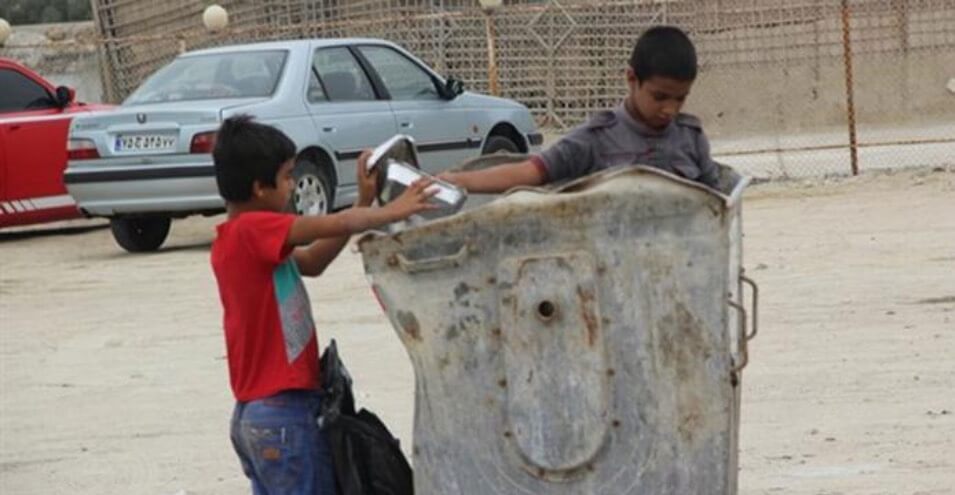
After 20 years of struggle and the announcement of various programs by government and non-governmental organizations, the collection and organization of child laborers in Iran remains a tangle of confusion in the hands of municipalities, governorates, and welfare departments.
Exact statistics are not available.
Due to the lack of necessary coordination, the organizations responsible for organizing "working and street children" do not have accurate and official statistics on the number of these children, and in recent years, no center has been established to collect data related to this phenomenon.
Tehran Municipality reports that there are 15,000 working and street children, while Tehran Provincial Welfare Department says the number is 7,000. However, these organizations do not have accurate statistics.
The Social Injuries Affairs Office of the Ministry of Cooperatives, Labor and Social Affairs has attributed the different statistics of organizations to the various “definitions” of working and street children. Some statistics without a specific research source or census show that about 60 percent of street children are Iranian and the remaining 40 percent have non-Iranian (Afghan) citizenship. Of this number, according to Fars, children and adolescents, boys and girls aged 10 to 15, work in unethical and unsafe workshops and basements. Children as young as 7 or 8 are also employed in workshops on the outskirts of Tehran.
The Ministry of Interior implemented a plan to organize working and street children in 2018, but many child rights activists in Iran protested the way it was implemented after images of the organizers' inappropriate treatment of working and street children were published. The plan remained without results.
Waiting for more street children
As the economic situation in Iran worsens, the media reports on the increasing presence of street children. There is a serious concern that child laborers will be taken to the streets due to the decrease in income in these unauthorized workshops without proper working conditions.
Inflationary pressures and the subsequent decline in household income are also among the most important motivations that can add to the population of street children.
Some reports stated that child laborers receive a wage of a little over 350,000 Tomans for 11 hours of work. However, according to some child rights organizations, the daily wage of street children can reach up to 100,000 Tomans.
Identifying gangs organizing street children
Waste collection and garbage collection have become a daily bread and butter for both Iranian and non-Iranian children, as well as for the "gangs" and groups that organize these children.
Amid concerns about the increasing number of street children, Farzaneh Marvasti, Director General of the Tehran Governor's Office of Social and Cultural Affairs, has announced the implementation of a plan to identify what she calls "mafia gangs trafficking street children."
In this plan, which is scheduled to be implemented from Wednesday, December 10, the police will identify gangs that, according to Ms. Marousti, employ children at crossroads and collect them at night.
قرار شده در این طرح، سازمان بهزیستی با نیروی انتظامی همکاری کند. بهزیستی همواره اعلام کرده که برای نگهداری از کودکان بی<سرپرست، بودجه لازم را ندارد چه برسد به نگهداری و حمایت از کودکان خیابانی.
There has always been a claim that street children are organized by "mafia gangs" and settled in different areas of cities, and after working hours are returned to residential centers on the outskirts of the city. The result of their hours of "garbage picking" is also collected in garbage and waste collection centers and sold by contractors.
However, Sam Borbour, director of the Children's Rights Watch Association in Iran, told the Iran newspaper that a group of municipal contractors "exploit" children and send them out onto the streets to collect waste, garbage, etc.
Available statistics show that about 40 percent of children and adolescents known as street children have non-Iranian citizenship.
Farzaneh Marvasti, Director General of the Tehran Governor's Office of Social and Cultural Affairs, confirmed in an interview with ILNA that these children have entered Iran, and at the same time stated that in order to resolve the problem, issues must be resolved legally and internationally, both nationally and internationally.
According to him, in recent years, a number of Afghan children have entered Iran as "smugglers," and because they do not have guardians with identification papers, the Welfare Department cannot hand them over.
This official at the Tehran Governor's Office also said that the Tehran Governor's Office is not responsible for identifying and dealing with street child traffickers and only witnesses the illegal entry of these citizens.
Many child rights activists have always said that until radical measures are taken to address the economic problems of marginalized families, the situation will continue as before; welfare and the municipality will collect a few children from the streets, but new children will fill the empty spaces.
Source: DW