What details of the Obama administration's "secret license" to the Islamic Republic were revealed in the Senate report?
The US Senate Intelligence Subcommittee recently released a report stating that the Obama administration had secretly authorized the Islamic Republic of Iran to convert rials through US financial institutions and ultimately into euros. The report comes after the US Treasury Secretary in the Obama administration had previously told Congress that Iran would not be allowed to access the US financial system under any circumstances.
According to a detailed report by the US Senate Investigations Subcommittee, the Obama administration's Treasury Department issued a specific license to Bank Muscat in Oman on February 24, 2016, allowing Iranian rials to be converted into euros through US financial institutions.
Despite issuing this authorization to convert $5.7 billion, the plan failed because no American bank was willing to cooperate. The report states that the Islamic Republic of Iran was ultimately able to convert this large amount of money, worth $6.7 billion, through other means.
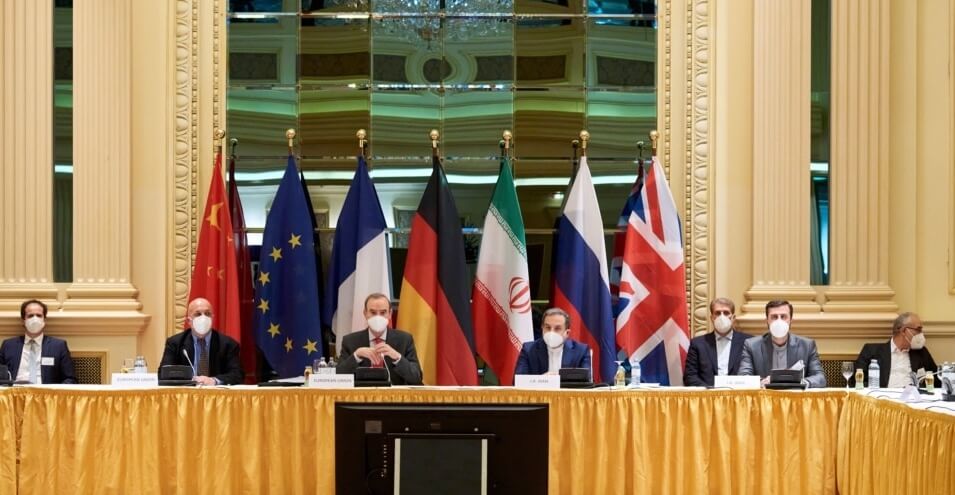
Iran and the P5+1 countries reached a nuclear agreement in July 2015, and the agreement went into effect in January of the same year.
Under the deal, in exchange for curbs on Iran's nuclear activities, UN sanctions and US secondary sanctions were suspended. In the US, this meant that US individuals and entities could still not do business with Iran or with third parties acting on its behalf. This has led US banks to be extra cautious with Iran. US banks are subject to the first-tier sanctions, which are not related to nuclear issues, and therefore cannot exchange any currency for Iran.
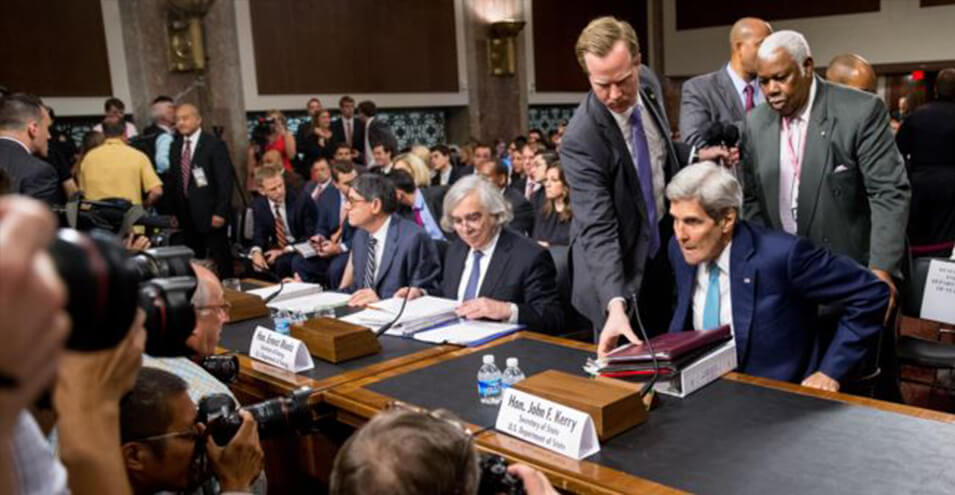
In 2015, then-US Treasury Secretary Jack Lew, when he appeared before Congress with Secretary of State John Kerry and Energy Secretary Ernest Moniz, assured US lawmakers that these first-tier sanctions would remain in place and that Iran would not be allowed access to the US financial system.
A report by the Homeland Security and Government Affairs Committee, a subcommittee of the US Senate, now shows that the US provided the Islamic Republic of Iran with access to the US financial system, but no bank was willing to take advantage of that opportunity.
What was the Obama administration's authorization story?
Under the initial agreement, which went into effect in January 2015, the Islamic Republic of Iran reportedly transferred $13.4 billion of sanctions-era oil revenues to designated bank accounts. Of this amount, $8.8 billion was deposited at Bank Muscat in Oman. Three days after the agreement went into effect, Bank Muscat in Oman notified the U.S. Treasury that it needed access to dollars.
They said that the Central Bank of the Islamic Republic of Iran wanted to convert $5.7 billion of the money that was with the Bank of Muscat into euros. There was a problem. The US dollar was the backer of the Omani rial, so for the Islamic Republic of Iran to get to the euro, the money had to flow through the US financial system.
It was here that the US Treasury issued a special license to Bank Muscat to fulfill Iran's request. It then tried to convince two US banks that were brokers for Bank Muscat to do the currency conversion.
A US State Department official even suggested to his colleagues that if the banks did not agree, they should be told that Secretary of State John Kerry or Treasury Secretary Jack Lew would contact them.
But in the end, neither bank was willing to convert the Iranian currency, which was the Omani rial, into dollars, which could then be converted into euros.
The Senate report says that this was not the only case, and that Iranian Foreign Minister Mohammad Javad Zarif had repeatedly complained about such a problem.
The US Senate committee report reported an exchange of correspondence in this regard between senior officials of the two countries' foreign ministries.
The unnamed US State Department official wrote that after issuing the license to Bank Muscat, the official wrote to his counterpart that the US had gone beyond its obligations under the agreement…because even after the agreement, Iran’s access to the US financial system and the US dollar was prohibited.
The US State Department also believes that Iran gradually converted that amount into euros directly with European banks, an option that was more difficult than the US proposal.
The Treasury Department even briefly considered issuing a general license to convert the Iranian rial into dollars, but after 200 trips and meetings with the banking sector around the world, banks were unwilling to take the risk; hence, this idea was also shelved.
The Congressional report says that although the Obama administration granted such privileges to the Islamic Republic, senior government officials, from the Treasury Secretary to the Assistant Secretary for Anti-Corruption and State Department officials, answered in the negative in various meetings when asked by members of Congress whether Iran had access to the US financial system.
Source: Voice of America