Ai Weiwei at Venice Festival; Iranian Refugees Turn Their Backs to the Camera
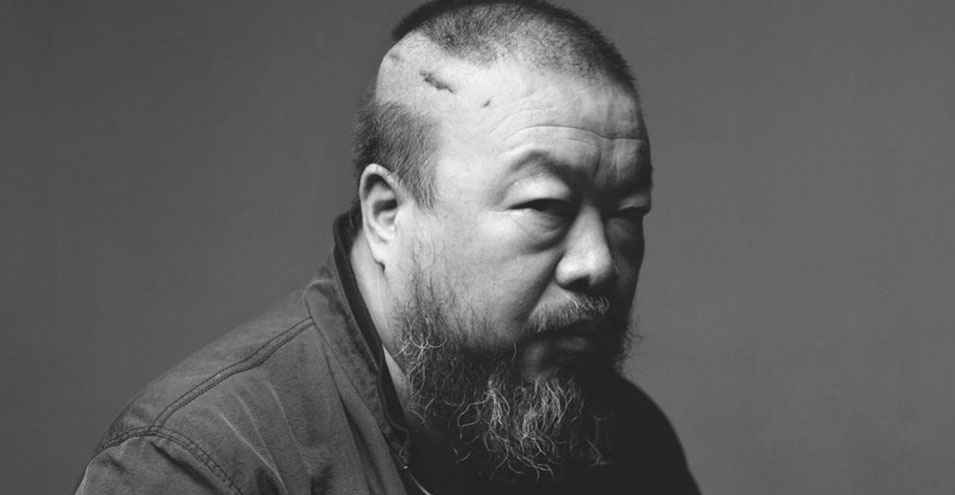
Everyone knows Ai Weiwei, the Chinese artist, and it is perhaps not far from the truth to call him one of the most recognized artists in the field of visual arts.
Now he is present at the seventy-fourth Venice International Film Festival with his first feature film in the competition section, and it seems he will win one of the main prizes.
“Human Flow” is the title of this documentary film, which is dedicated to the subject of migration and refugees.
Ai Weiwei has spent long periods visiting different refugee camps around the world and seeks to document their painful conditions in every corner of the globe.
He has repeatedly waited on the shores of Italy and Greece for boats bringing refugees across the sea to the European continent, creating one of the most controversial issues in today’s Europe. The film begins with beautiful images of the Mediterranean Sea and quickly gets to the heart of the matter: the human condition of displaced persons, mostly from Syria, Iraq, and Afghanistan who have fled war. The film pauses at distances and tries to make the viewer a witness to a human flow that, for example, migrates to the North Macedonia border in Greece in search of safe asylum, hoping that from there a way might open to reach Germany.
But at times it also documents the most private moments of their lives; including an Iranian girl who, with her back to the camera, speaks about herself and her uncertain situation (and that there is no one to guide them), and suddenly breaks into tears (Ai Weiwei himself in this scene tries to calm the girl).
The second Iranian we see in the film recounts the story of fleeing across the border and staying in Turkey, and mentions that some refugee girls were assaulted along the way, and because the smugglers had weapons, nothing could be done about it.
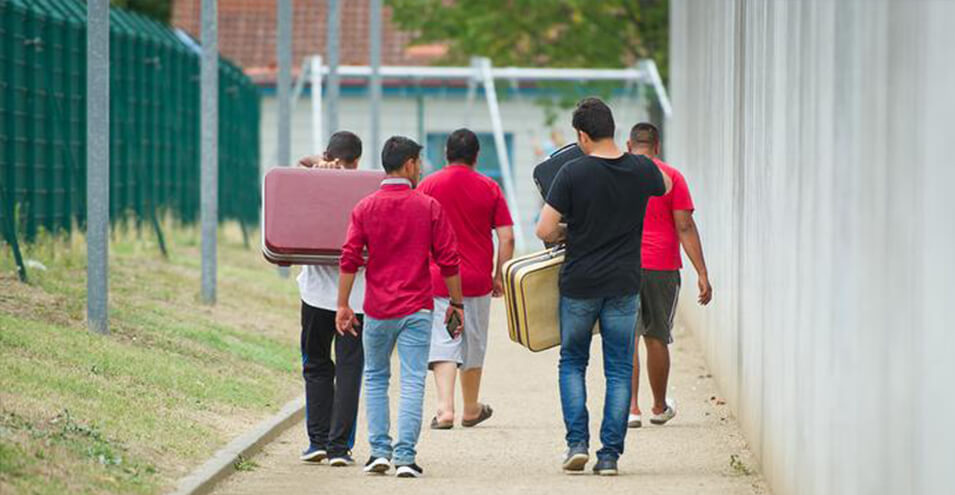
What is strange is that all refugees from all countries easily appeared in front of the camera, but both Iranians in the film have their backs to the camera and presumably, out of fear of Iran’s security forces, were not willing to appear in front of the camera. This reminds us of a bitter point: that Iranian refugees in refugee camps, in addition to numerous other problems, do not feel safe.
But except for some special framings (which reflect Ai Weiwei’s experiences in the field of visual arts), his perspective is strangely journalistic in nature. Resorting to newspaper and media headlines in different sections to provide information to the viewer gives rise to this perspective, and some scenes—and intermediate texts of the film—become unnecessarily sloganic; including scenes related to Palestinians.
On the other hand, the presence of Ai Weiwei himself in various scenes seems like a redundant presence that could easily be removed from the film.
But the film’s strength lies in the filmmaker’s unrelenting investigation of parts of the world that can even be very dangerous; including scenes from war with ISIS and the conquest of cities, which speaks to the filmmaker’s courage.
He visits different camps around the world; from Bangladesh to Kenya, which surprisingly has a lesser-known camp and is the largest refugee camp in the world: with five hundred thousand refugees!
The realities the filmmaker touches upon are very bitter realities that can disturb the viewer’s peace; from this simple fact that at the time of the Berlin Wall’s collapse there were only eleven walls between countries, and in 2016, seventy walls (or something like that), to the fact that Africa’s population will double by 2050 without having resources for them.
The filmmaker also reaches the Mexico-United States border and documents several people jumping over the wall; the place where Donald Trump has promised to build an even larger wall.
The film’s final dialogue is a beautiful humorous line from a former Syrian astronaut: “From up there when I saw the Earth, I thought this beautiful sphere was for all of us. Of course, this beautiful sphere also has evil people in it, so why don’t we gather them all and send them to space?”.
Source: Radio Farda