Attack on Azadi Stadium and Destruction of 12,000-Capacity Hall After Its Conversion to Suppression Forces Base
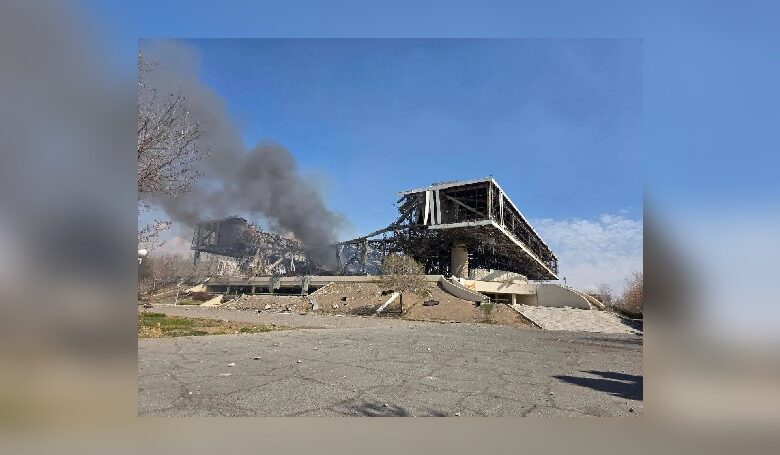
Revelations about the attack on Azadi Stadium show that the 12,000-capacity hall of this complex, which in recent years has been used for gathering Basij forces and security equipment, has been extensively destroyed during recent attacks on Tehran.
Hours after reports of explosions and attacks in western Tehran, Iranian domestic media released images showing extensive destruction of the 12,000-capacity hall of the Azadi Sports Complex; one of the largest covered sports halls in the country that for decades has hosted important sporting and even political events.
According to reports from Iranian official news agencies, this hall was targeted during missile attacks on the morning of Thursday, March 5, corresponding to Esfand 14, and sustained heavy damage. State media in explaining this incident wrote: “In the missile attack this morning, America and Israel destroyed all sections of the 12,000-capacity hall of Azadi Stadium in Tehran and the surrounding structures.”
Published images show that large sections of the hall’s structure and surrounding buildings suffered serious damage, with some parts completely collapsed. There are also reports indicating destruction of a dormitory complex related to the Cycling Federation located near this hall.
The 12,000-capacity Azadi Hall, formerly known as the Aryamehr Covered Hall, was constructed in the 1970s coinciding with the hosting of the 1974 Asian Games in Tehran. Over the past decades, this complex has been one of the country’s most important sports centers, hosting major competitions in sports such as volleyball, wrestling, basketball, futsal, and roller skating.
In addition to sporting competitions, this hall has been used over the years for large gatherings, religious ceremonies, and political programs. This multipurpose nature had made it one of the symbols of Iran’s sports infrastructure.
While Iranian official media refer to this place as a sports center, claims have been raised on social networks and some foreign media reports suggesting that this complex had at times been converted into a gathering place for Basij and security forces.
In some reports published in cyberspace, this stadium has been described as “a hideout for suppression forces.” It is also said that in recent months, large sports halls have been used for storing security equipment and deploying anti-riot forces.
Prior to the start of the recent wave of attacks on Islamic Republic positions, reports had been published showing that some of the country’s major stadiums had been converted into bases for security forces. According to these reports, the government was using vast and covered stadium spaces to protect vehicles and equipment of special units.
For example, reports had been published about the Naqsh-e Jahan Stadium in Isfahan showing that in the days before the start of attacks, this stadium was a gathering place for water cannon vehicles, special unit motorcycles, and suppression equipment. Similarly, in the past, reports had been published about similar use of the Pas Qavamein sports complex for deploying security forces.
Military experts and international law specialists say that using non-military infrastructure such as stadiums for military purposes can turn them into potential targets during conflicts. According to principles of international humanitarian law, converting public centers into military bases can create serious dangers for civilians and public property.
Meanwhile, images and videos published in Iranian media show that the destruction of the Azadi 12,000-capacity hall was extensive, with sections of this historic sports complex essentially eliminated. No official report has yet been released regarding possible casualties or the number of people present during the attack.
The Azadi Sports Complex has been over the decades one of Iran’s most recognized sports symbols. Now the destruction of one of its most important halls amid military tensions has once again drawn attention to the consequences of converting public infrastructure into security centers.
With the continuation of clashes and escalating mutual attacks in the region, it remains unclear how many other public infrastructure facilities may be at risk; an issue that has created new concerns about the security of non-military centers in Iran.