Floods in Sistan and Baluchestan; In the Absence of Officials, Flood-Stricken People are Providing Aid to Each Other
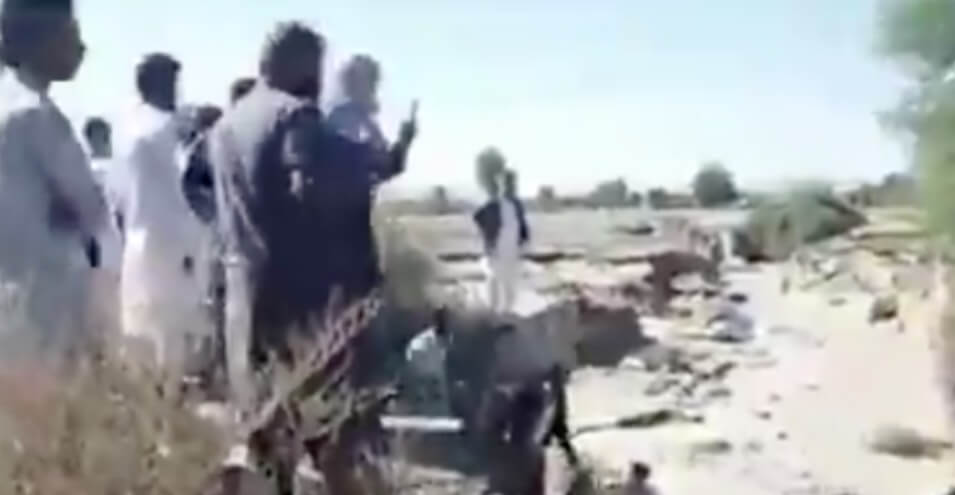
Following the occurrence of floods in Sistan and Baluchestan province, reports indicate that communication routes to 500 villages and cities in the province remain cut off, and severe damages have been inflicted on flood-affected areas.
Iranian domestic media reported on Monday, December 23, that communication routes to 500 villages and cities in Sistan and Baluchestan remain cut off, and while aerial aid is the only possible means of assistance, even that has not been provided.
Cities such as Delgan, Nikshahr, Khash, Delgan, Konarak, Saravan, Dashtiari, Chabahar, Zarabud, Konarak, and Bezman, along with surrounding villages, are among the areas that have suffered significant damages in this flooding.
According to reports and released images, people in flood-affected areas are attempting to help each other with empty hands.
ISNA also reported that “shortage of relief equipment and Red Crescent personnel is being felt in Sistan and Baluchestan.” Criticism of the Red Crescent’s performance has been expressed by Alireza Salimi, a parliamentary representative, addressing Hassan Rouhani, Iran’s president.
He said in this regard: “Mr. President, Sistan and Baluchestan has been flooded and people are in trouble; the Red Crescent should come to the aid of the people; were you told that the Red Crescent has no leader? Did someone cry out that the Red Crescent has no leader?”
The General Administration of Roads and Highway Transportation of Sistan and Baluchestan also reported that 16 routes in Sistan and Baluchestan remain closed due to snow, rain, and river flooding.
Official reports of damages to Sistan and Baluchestan province have not been released, and Aziz Sarani, the representative of the people of Sistan and Baluchestan in the Supreme Council of Provinces, in response to weak relief efforts, said: “What has occurred as a disaster in this province is the lack of aid and assistance to the injured people of this province after 72 hours.”
Sarani, pointing out that water and electricity are currently cut off throughout the province, added: People trapped by floods in various villages have exhausted any food provisions they had.
He emphasized that “if this problem continues and relief efforts are not accelerated, we will face a major crisis.”
Following recent heavy rainfall, several villages in Jask city of Hormozgan province have also been flooded, resulting in flooded streets, port closures, and blocked communication routes in the province. Reports indicate that damages have been inflicted on the infrastructure of this province in terms of roads, bridges, agriculture, municipal affairs, and buildings.
The recurrence of flooding and water inundation following rainfall in various provinces of Iran comes at a time when officials and managers of the Islamic Republic have not taken effective measures to prevent flooding and water accumulation and reduce damages in various cities.
Environmental crises in Iran have long attracted the attention of the international community. U.S. officials have repeatedly warned about Iran’s mismanagement of natural resources, widespread deforestation, and unnecessary and unplanned dam construction aimed at filling the pockets of corrupt officials of the Islamic Republic regime, listing it as one of the main factors in the emergence of various environmental crises, including devastating floods and unprecedented droughts.
For example, recently Brian Hook, the U.S. Special Representative for Iran Affairs, noting that 600 dams have been built “without any environmental assessment” since the revolution in Iran, announced that the Islamic Republic regime has destroyed the country’s water resources through mismanagement over the past forty years.
Source: Voice of America