Ghazal Marzban’s Account of Sexual Assault in Ministry of Intelligence Detention Center and a Question That a 9-Year Sentence Cannot Silence
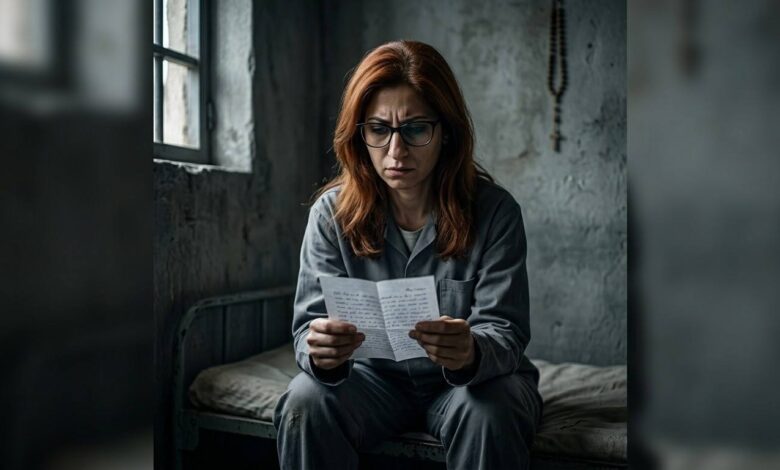
Ghazal Marzban, a Catholic Christian citizen imprisoned in Evin Prison, detailed her experience of sexual assault in one of the Ministry of Intelligence’s detention facilities in a letter, describing threats made to silence her and prevent her from filing a complaint. Her account raises serious questions about torture, immunity of security personnel from accountability, and the absence of independent mechanisms for justice in Iran—questions that persist alongside her sentence of 9 years and 8 months imprisonment.
Ghazal Marzban, a Catholic Christian citizen detained in Evin Prison, provided a disturbing account in a letter written from inside the prison in late August 2026 of what she says happened to her at one of the Ministry of Intelligence’s detention facilities. According to her account, following her arrest in April 2023, she was held at what she later discovered was one of the Ministry of Intelligence’s operational detention centers, where she was sexually assaulted and subsequently threatened into silence.
According to Marzban’s account, on April 27, 2023, while walking in a park, she was arrested by several officials. After blindfolding her, the officials transported her by vehicle to an unknown location—a place she later learned, during a subsequent detention, was a detention facility operated by the Ministry of Intelligence.
In her letter, she describes being subjected to a body search upon arrival at the detention facility, where officials demanded she remove all her clothes. She was then taken to a cell in the basement. Shortly after, according to Marzban’s account, a masked man entered the cell and sexually assaulted her.
In describing the aftermath of this incident, Marzban wrote that the assault resulted in bleeding and both physical and psychological injuries. She also recounted that after the assault, several detention facility officials promised her freedom on the condition of her silence, and threatened her with consequences when transferring her regarding what would happen if she disclosed the incident.
This portion of her account represents one of the most serious allegations made regarding the conduct of Islamic Republic security personnel toward a detainee. If proven, it would constitute not merely a violation of a prisoner’s rights, but could represent a grave instance of sexual violence in detention and an abuse of power.
According to Marzban’s account, when she was arrested again in December 2025, one of her primary fears was being transferred back to that same location.
She wrote: “The greatest torture during my 22 days of detention at the Ministry of Intelligence’s detention facility was the fear of that terrible event happening again.” Marzban also stated that during this detention, she protested the movement of men through the women’s section multiple times and was met with harsh treatment from officials. According to her account, after a 10-day hunger strike, while she was on the verge of death, she was transferred to prison.
This account gains greater significance when we consider that Ghazal Marzban had previously experienced detention and imprisonment, and in her second detention, she again encountered the very structure she describes as her primary source of fear and insecurity. A complaint that, according to Ghazal, she was not allowed to file. One crucial section of Marzban’s letter concerns her claims about attempting to file a complaint regarding the assault.
She wrote that during her previous detention, she tried multiple times to file a complaint about the assault, but each time faced opposition and threats. According to her, these pressures led her to conceal what happened.
Regarding her reasons for silence, Marzban also referenced the condition of her husband, who she states is suffering from advanced Parkinson’s disease and would have difficulty bearing the psychological stress of knowing about such an incident. She wrote: “I remained silent. I isolated myself and distanced myself from people.”
This part of her account raises a fundamental question: if a detainee cannot file a complaint against officials whom she claims committed sexual assault in a detention facility, how can a justice mechanism in such cases actually function?
In her current detention, Ghazal Marzban faces a serious legal case. Following her arrest in Tehran, she was transferred to Evin Prison, and Branch 26 of the Tehran Revolutionary Court, presided over by “Iman Afshari,” sentenced her to 9 years and 8 months imprisonment. The charges announced against her include “propaganda against the system” and “assembly and conspiracy against national security.”
International bodies have also previously expressed concern about her situation. The United States Commission on International Religious Freedom (USCIRF) included Ghazal Marzban on its list of prisoners of conscience and described her detention and conviction as related to her religious faith and activities.
Article 18 also reported that during her detention, her Bible and other Christian literature were confiscated, and during interrogation, she was asked to acknowledge that these materials were being used for missionary activities—an allegation that Marzban rejected, stating the books were for personal use.
International media reporting shows that Ghazal Marzban’s case received attention from religious freedom and human rights organizations even before the release of this letter. Article 18, USCIRF, and several international Christian organizations have reported on her detention, deprivation of liberty, pressure due to her Christian faith, and her heavy sentence.
However, the claim of sexual assault presented in Marzban’s letter has not yet been independently confirmed by an international source. Therefore, what is currently available is Ghazal Marzban’s direct account. In this newly released letter, Ghazal wrote:
“It was the twenty-seventh of Ordibehesht, 1402 [April 17, 2023]; a relatively cool afternoon and gentle breeze for a walk in the park. A habit I had maintained for years to preserve my health.
During this walk, I was reviewing the events of the past year and all that had happened to us Iranian people since the twenty-fifth of Shahrivar, 1401 [September 16, 2022]—from accounts of people’s suffering to blood spilled on the streets, to lives unjustly taken in pursuit of freedom, to our suppressed sobs and streets that still witnessed our Iranian people’s solidarity.
I walked around the park. Gradually, I made my steps firmer and faster. As if with each step, I was separating myself from the world around me. On the walls around the park, I could still see the slogans ‘Woman, Life, Freedom.’ There were even handwritten inscriptions that smelled of the hands of elementary school girls; girls who had written the slogan with colored pencils.
I was lost in my own world when suddenly two men and a woman stood in front of me. I tried to change my route, but it seemed they really had business with me. To be honest, I was a bit frightened. It had been years since people with such a demeanor stood before me that I didn’t understand something heavy was about to happen.
The woman was wearing a chador and a mask. After the COVID pandemic, wearing a mask had become normal for us; but this time the mask seemed to smell of fear. I don’t know, perhaps they are more afraid of their victims than we are.
I was dazed when they called my name a few times and I came to my senses: “Ms. Marzban, you must come with us; you are under arrest.” I asked for the reason, and the answer was only anger and threats. I tried to resist going, but two other men joined them and threatened that if I didn’t go with them, they would take me by force.
Two white Samand cars. Myself, a woman, and a man, both wearing masks, got into one car, and the rest got into the other. After sitting in the car, they blindfolded me with my scarf.
About an hour, maybe more, I don’t know—I couldn’t perceive time. But I was aware that I was arrested around 2 p.m. It took some time before we reached their destination; a place that, I later learned during my subsequent detention, was one of the Ministry of Intelligence’s operational detention centers.
First, a young man registered my identification information in the system. Then I was taken by a woman to a room for a search. After these procedures, which didn’t take long, my eyes were blindfolded and I was guided to one of the rooms where two women were present. I was told to remove all my clothes.
Since I had never been arrested before and was unfamiliar with the procedures, I suffered severe anxiety and kept crying and begging them to let me go. The veiled women wearing masks said not to worry, as this was a normal procedure and I had to be searched. They said if I did this, they would allow me to contact my husband and inform him that I had been arrested.
With that offer, I removed my coat, but then anxiety and terror came over me again. While I was naked, they wrapped a chador around my head and forcibly took me into a cell and left me there.
I got up and turned the cell upside down. From the small opening looking at the darkness above the cell, I understood it was a basement. It had a shower and a stainless steel toilet separated from the rest of the cell space by a short wall. The air was damp and filled with soil, and my breathing became heavier.
Less than ten minutes later, the cell door opened. This time a tall man, approximately 1.80 meters, entered with a harsh voice mixed with shouting and anger. His eyes were visible from under a black hat that covered his entire face except for his eyes and mouth. His shirt was over his pants; like all men dressed like this who are oppressors.
His ring was a red agate with writing on it; in the darkness of his clothes, it stood out. From the tone of his voice, one could tell he was a man in his thirties. He was so bulky and sturdy that when he entered, he filled the entire door frame. From the moment he entered, I understood this was not a normal occurrence.
He shouted loudly at me to change into two pieces of cloth he had thrown at me. I was terrified. I screamed and protested with all my strength; as if at that moment my life was being taken from me.
My condition was that of a human being caught in absolute helplessness. I wanted to bang on the door and call for help. I didn’t know what would happen. My breathing became heavier; as if I was still walking in the park, faster and faster. As if everything was a dream. I couldn’t believe it.
This was me in his hands, not in the gentle hands of my husband; a husband who for years had maintained boundaries even for caresses and kisses. For a moment, I came back to myself: no, this was reality. I was still in that room, with that man, a captive. He had violated my bodily integrity; my womanhood, my human dignity. My resistance, my tears, my screams.
Time felt like years to me. I don’t know, maybe half an hour; maybe less or more, this savage assault lasted. After that, I was left alone. I had fallen to the floor. The floor mat was stained with a large spot of blood from my body.
I remembered all the immortal ones whose precious blood had been spilled on the pavement of the streets the previous year; those whose only desire was a normal life.
Less than five minutes later, the door opened again. Two women with masks and chadors and another woman in white nursing clothes came to me. They paid some attention to my disheveled condition and allowed me to put my clothes back on; they even brought my coat.
Several other men came into the cell and, in exchange for my promise of silence, promised my freedom by evening. I hugged my knees and sat in the corner of the cell waiting. Time had slipped away from me. Throughout, I felt like I was sleeping; but the pain in my body and soul, which was more overwhelming than my bodily pain, reminded me: “You are awake, awake.”
Those people returned, blindfolded my eyes again, and put me in the same car they had brought me in. Throughout the journey, I was constantly threatened and warned about the consequences of breaking my silence. They dropped me off somewhere near my home. It was still the twenty-seventh of Ordibehesht. It was around 7 p.m.
My phone had rung several times. My husband was worried because he hadn’t heard from me for so long. I called him and told him I had extended my walk and forgotten to turn off my phone’s silent mode. I returned home. Nothing was normal for me anymore. I didn’t know what to do with the suffering that had been imposed on me.
I was concerned about my husband’s condition. He had suffered from advanced Parkinson’s disease for several years, and his condition was very bad. I didn’t know what learning of such an incident would do to him. The suffering of this disease had destroyed his youth like a flower plucked from a branch, and it was not right to add more suffering to it.
I remained silent. I isolated myself and distanced myself from people. I no longer went to the park. I made excuses that the weather was not suitable for walking. Night and day, I held my soul in my arms and sought healing for an unbelievable experience I had endured.
On December 15, 2025, around midnight, I was arrested again. This time it was similar to the last time, except that many sisters were with me, and perhaps this presence and the abundance of those arrested had somewhat reduced my anxiety about the repetition of that terrible event.
This time too, I was taken to the same place. The greatest torture during my 22 days of detention at the Ministry of Intelligence’s detention facility was the fear of that terrible event happening again. I protested multiple times about the movement of men through the women’s detention area and was met with harsh treatment from the officials there.
Forced to engage in a dry and wet hunger strike, after ten days, while I was on the verge of death, they transferred me to prison. When I was arrested last year, I tried several times to file a complaint about that assault, but each time I was turned away and threatened into silence. Now that seven months have passed since my arrest and imprisonment, I still endure the bitter days and daily deaths of prison with the anxiety caused by seeing men.
But I hope that one day the seeds of our suffering will sprout and the tree of our justice will flourish. With this heart-written account, I am seeking justice for the suffering imposed on my life by the Ministry of Intelligence, and perhaps it can be a pathway for spreading and multiplying courage, so that we may speak of such atrocities committed in the dark dungeons of the Islamic Republic’s tyranny.
I hope for the day when my country is freed from the grip of authoritarian violence; that authoritarianism of a religious dictatorship that for years women have fought against on the front lines of struggle. Women who for years through civil activism and intellectual struggle in universities, research centers, and justice-seeking circles, and through civil disobedience, have multiplied courage and achieved victories.
We have proven that our power surpasses the power of missiles and bombs for domination and control. We are those who brought protest from homes to the streets. We return again to the trenches of intellectual struggle until the day when freedom of thought, freedom of belief, freedom to choose how to dress, and liberation from tyranny are secured for our beloved homeland. And that not through enemy attack, but through the resistance of us, the women and men of Iran.
Long live freedom; long live the homeland, Iran.
Ghazal Marzban, late August 2026.”
Now the issue is that the seriousness of this claim should not cause the line between “a victim’s account” and “an independently proven fact” to disappear. At the same time, the absence of independent investigation should not serve as a justification for dismissing the account of a detainee; especially when she herself claims that her efforts to file a complaint were met with threats and obstruction.
The fundamental question remains unanswered. Ghazal Marzban’s case has now transcended a court ruling or a dispute over security charges. Her letter raises allegations about the conduct of officials of a security agency, sexual violence in detention, threats to a detainee to enforce silence, and the prevention of filing a complaint.
If these allegations are true, the question is not merely about the fate of one Christian citizen in prison; the question is about a structure—whether it provides the possibility of independent and impartial investigation into the conduct of its own officials and a mechanism for justice.
In such circumstances, responding to these allegations with silence, denial, or imposing heavy sentences on the detainee herself cannot replace an independent investigation.
At the end of her letter, Ghazal Marzban wrote with hope for justice and called for an end to violence and tyranny. Her account is now before the public eye and has at least created one clear demand: “The allegations of sexual assault in the Ministry of Intelligence detention center must be investigated independently, impartially, and verifiably.”