Hussein Pedaran Executed; Death Sentence Issued in Security Case with Unclear Details
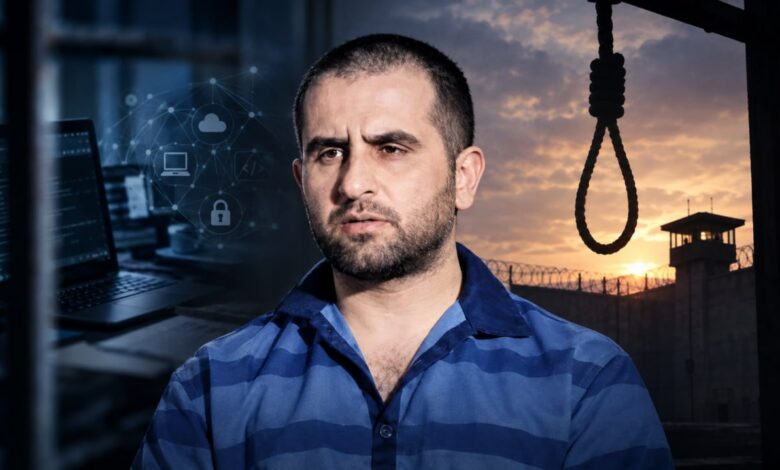
Hussein Pedaran, 41, an information technology activist in Isfahan who had been sentenced to death on charges of “spying for Israel,” was executed early Saturday, September 19. His sentence was carried out in Dastgerd Prison in Isfahan and conducted in secrecy, while Iran Human Rights Organization has stated the place of execution remains unconfirmed. Details of the legal proceedings, evidence in the case, and the nature of his effective defense have not been independently clarified.
MIZAN News Agency, affiliated with the Islamic Republic’s judiciary, announced on Saturday, September 19, that Hussein Pedaran’s death sentence has been carried out. Official media identified him as guilty of “espionage and intelligence cooperation in favor of Israel,” claiming he had provided information about military and missile centers in Isfahan Province to Mossad.
Hengaw has also reported that Pedaran, 41, was from Isfahan and his death sentence was carried out early that morning in Isfahan’s central prison, known as Dastgerd Prison. However, Iran Human Rights Organization stated that based on initial reports from official media, the place of execution was not specified in the judiciary’s announcement.
According to the Islamic Republic’s official account, Pedaran had provided information about sensitive military sites, missile equipment, and personnel at these centers to Israel’s intelligence service.
MIZAN also claimed that during a search of his home, a notebook containing information related to missile topics classified as “highly confidential” was found, along with several encrypted storage devices. The judiciary also mentioned the discovery of a device capable of covert photography and encrypted communications.
Judicial officials claimed that the information provided by Pedaran was available to Israel during the 12-day military conflict and that some of the mentioned centers were targeted for attack. These claims have been made in official Islamic Republic reports and cannot be independently verified.
One of the most important questions regarding Hussein Pedaran’s case is how it was handled judicially. The judiciary states he was tried in court, had a lawyer, and his death sentence was confirmed by the Supreme Court after his appeal was rejected. However, significant details about the case proceedings, including which court issued the sentence, the duration of detention and interrogation, how his lawyer accessed the case, and the evidence upon which the court based such a severe sentence, have not been independently published.
Iran Human Rights Organization has also emphasized that independent information about Pedaran’s case is not available, and parts of the official narrative, including claims about his intelligence activities, cannot be independently verified.
Shortly after news of the execution was released, state media published a brief excerpt of what was presented as Hussein Pedaran’s “confessions.” Iran Human Rights Organization has described these confessions as “forced.” However, independent information about the conditions under which these statements were recorded and whether Pedaran spoke freely when making them has not been published.
In similar security cases in Iran, the release of televised or media confessions prior to public and transparent proceedings has repeatedly faced criticism from human rights organizations, as there is no opportunity for independent review of the conditions under which these confessions were obtained by the public and independent bodies.
Before his arrest, Pedaran worked in the field of information technology and business. He was a website expert, business consultant, and specialist at the knowledge-based company “Gostar-e Tarrahan-e Nagh-e Almass” operating under the trade name “iNoti” in Isfahan. Iran Human Rights Organization, after reviewing his online accounts, noted that he operated a company called iNoti that worked in website design, digital resumes, search engine optimization, and business consulting.
According to Hengaw’s report, he was arrested in June 2025 in Isfahan; however, official media did not provide precise details about the time of arrest and the initial stage of the case when announcing his execution.
Iran Human Rights Organization has stated that Hussein Pedaran is the fifteenth person executed in 2026 on charges of espionage. According to the organization’s statistics, 13 of these individuals were accused of spying for Israel or America, and two Iraqi nationals were also executed on charges of spying for an unspecified Arab country.
This increase in executions has occurred as military conflicts between Iran and Israel have led security and judicial authorities of the Islamic Republic to pursue cases involving allegations of espionage and cooperation with foreign governments with greater sensitivity.
Espionage charges are among the most serious security offenses in Iran’s judicial system, and in recent cases, the issuance and execution of death sentences for defendants in such cases have increased.
The main issue in such cases is not merely the allegation made against an individual; rather, access to an independent lawyer, knowledge of case evidence, conducting transparent proceedings, and the possibility of effective defense are equally important.
In Hussein Pedaran’s case, the judiciary states that legal procedures have been followed and the sentence was confirmed by the Supreme Court; conversely, human rights bodies emphasize the absence of independent information about the details of the trial and ambiguity surrounding case evidence.
For a human being, issuing a death sentence under circumstances where case details are not clear to the public and independent bodies is not merely a judicial issue; rather, it concerns the right to life and the necessity for every defendant to enjoy fair trial and the possibility of genuine defense.
From a Christian perspective, human life possesses inherent dignity, and government authority should not replace truth, justice, and conscience. The execution of a death sentence, particularly in cases where parts of the judicial process are unclear to society, underscores the necessity for transparency and accountability regarding the fate of the accused.