Iran’s Money Flows to Hamas Again
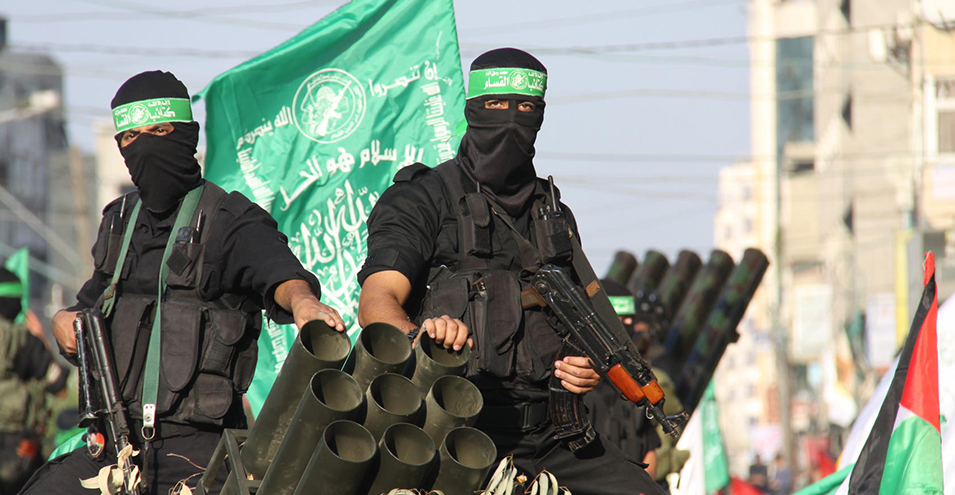
Sohila.Sh. FCN News Agency: The Hamas organization, which according to some governments including the United States bears the mark of terrorism on its forehead, has repeatedly strained its relations with Iran over the past decade, but as soon as Iran’s officials eased the restrictions, these relations warmed up again and became even warmer. This happened once again yesterday and became the headline of most media outlets.
This news came to light following a Friday trip by a delegation of senior Hamas leaders to Iran, and Hamas leaders emphasized that Iran has once again become Hamas’s greatest supporter.
Through this meeting, the Palestinian group sent a message to Israel, which meant rejecting that country’s conditions for accepting Hamas’s reconciliation plan and its rival Fatah. Because severing ties with Iran was mentioned in those conditions.
For more than half a decade, both the Iranian and Palestinian sides have shown no hesitation in revealing these dealings. While according to Hamas officials, so far this Palestinian group has not received support from Arab governments, and Hamas leaders emphasize that current Arab governments are preoccupied with their own problems.
Simultaneously with the seventh of Shahrivar, a similar news headline appeared in the media. Right after Hamas sent a delegation to Tehran to attend the inauguration ceremony of Hassan Rouhani, Iran’s president. Yahya al-Sinwar, Hamas leader in Gaza, said at that time that Hamas had repaired its relations with Iran and Tehran had once again become Hamas’s greatest supporter.
He explicitly announced that the relationship with Iran was more than excellent and Iran is the greatest supporter of Hamas’s military wing.
Poor Iranians Pay Hamas’s Costs
Thus, the cost of sustaining perhaps a terrorist group must be taken from the pockets of the Iranian people. And this is at a time when 12 million Iranians are living below the absolute poverty line and 25 to 30 million are living below the relative poverty line. This is while poverty is not just about not eating and not clothing, and it creates the ground for various harms. To the extent that according to a lawyer, it can turn an ordinary citizen into a family murderer.
Abdolsamad Khorramshahi, a lawyer, while warning about the increase in violence and especially murders in the country, emphasizes that officials can no longer keep the statistics in this regard hidden.
According to a report by Khabar Online news agency, Khorramshahi believes that in most murders, poverty and financial problems play a determining role. Addiction, divorce, educational poverty, lack of job security and psychological security are, in this lawyer’s view, consequences of poverty that are connected to each other in a chain-like manner and ultimately can lead to murder.
Filling the Pockets of Hamas’s Armed Men
One example of the Islamic Republic of Iran’s financial support, which was even protested by the Palestinian Authority government itself, was financial support for the families of those killed in the intifada in 2015. As part of this support, every family that had lost someone was paid seven thousand dollars, and every family whose homes were destroyed in Israeli attacks was paid thirty thousand dollars.
Ignoring the role of the Palestinian Authority in allocating these supports and emphasizing Hamas’s role by Iran faced criticism from Palestinian Authority officials.
Nabil Abu Rudainah, spokesman for the Palestinian government president at the time, in response to Iran’s method of support in those circumstances, announced that this method is against the law and constitutes unacceptable interference in Palestine’s internal affairs.
The Islamic Republic’s Motivation for Support
Evidence and Hamas’s track record since 2007 when it took control of the Gaza Strip clearly demonstrate this group’s financial dependence on Iranian support. For example, in 2013 when disagreements over supporting Bashar Assad escalated, Hamas officials announced a financial crisis in the group. In March of that year, Salah al-Bardawil, a senior official of the Islamic Resistance Movement (Hamas), in an interview with the French news agency, acknowledging their complete dependence on Iran’s financial support, emphasized that following events in Syria, Iran’s financial support to Hamas decreased and they faced a serious crisis.
Disagreement over supporting the Bashar Assad government has long affected Iran-Hamas relations. Because Hamas was a supporter of the Muslim Brotherhood and objected to Iran’s support for Assad. But the fact that Iran continues to dig into its pockets to keep Hamas satisfied is questionable. Of course, in a regime that is not accountable to its people and does not hesitate to use any tool to advance its objectives, the answer to such questions is not far out of reach. The presence of Arabic-speaking plainclothes forces in suppressing the violent protests of the 2009 election and torturing detainees is one answer to this question. Of course, the common goal of Hamas and the Islamic Republic to overthrow Israel also appears to be a factor in Iran’s support for this Palestinian group, but it is unclear for how long and under what conditions Hamas will remain committed to this goal and what burdens the Iranian people will bear to maintain this commitment.
Since 2007 when Hamas took control of the Gaza Strip, it has engaged in war with Israel three times. But with the signing of a pact between Hamas and Fatah concurrent with October 12 of this year, it was predicted that the bitter hostilities and disagreements among Palestinians would fade and they would reach an agreement for peace with Israel and managing the Palestinian Authority, which the trip of Hamas’s delegation to Tehran dimmed these conclusions. There is no doubt that reactions to this trip in the coming days will determine who the winner is in a bet that Iran has been a losing player in for years—Hamas or Israel.