IRGC on Terrorist List: Europe’s Decisive Shift and Islamic Republic’s Sharp Response
The European Union has placed the Islamic Revolutionary Guard Corps (IRGC) on its terrorist list, and with Tehran’s threatening response, the rift between the Islamic Republic and Europe has entered an unprecedented phase.
The European Union’s decision to place the Islamic Revolutionary Guard Corps on the list of terrorist organizations marks a turning point in the tense relations between Brussels and Tehran; a decision that not only prompted immediate and threatening reactions from the Islamic Republic’s military institutions but also demonstrates a serious shift in Europe’s approach toward Iran’s power structure.
The General Staff of the Islamic Republic’s Armed Forces responded to this action, stating: “The dangerous consequences of this provocative decision rest with European policymakers. The armed forces, particularly the IRGC, will continue to enhance their defensive capabilities day by day.”
The institution also added in full defense of the IRGC: “The Islamic Revolutionary Guard Corps has always been a legal and powerful institution at the forefront of fighting against America and Israel.”
According to the statement by foreign ministers of EU member states, the IRGC has been placed on the EU’s terrorist organizations list alongside groups such as ISIS and Al-Qaeda; an action that observers assess as Europe’s departure from years of caution and consideration toward the Islamic Republic.
Antonio Tajani, Italy’s Foreign Minister, stated: “At the political level, the necessary agreement for recognizing the IRGC as terrorist has been reached and completed, and now only the technical process remains.”
These remarks indicate that at least at the political level, previous objections from some European governments have been set aside and a common will has formed to deal with the Islamic Republic’s military-security apparatus.
Simultaneously with these developments, Kaja Kallas, the EU’s Foreign Policy Chief, wrote on the social network X on Thursday, January 29, corresponding to February 9: “Repression cannot go unanswered. Any regime that kills thousands of its own people is actually taking steps toward its own destruction.”
With this stance, she explicitly linked the EU’s decision to the bloody suppression of protests in Iran; a suppression that, according to European officials, could no longer be overlooked.
In this regard, David van Weel, the Netherlands’ Foreign Minister, said: “It is important that we send the message that the bloodshed we have witnessed and the violent brutality used against protesters is unacceptable.”
France and Italy, which were previously hesitant about designating the IRGC as terrorist, formally announced their support this week. This shift in position, particularly in Paris, is seen by analysts as reflecting the heavy political and moral costs of continued appeasement toward Tehran.
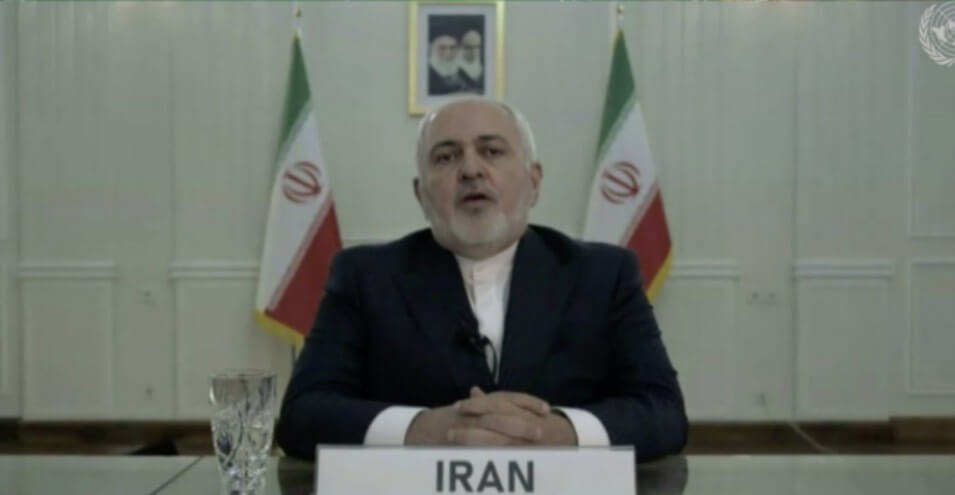
In response, Abbas Araghchi, the Islamic Republic’s Foreign Minister, reacted to this decision on the social network X, writing: “Europe is busy stoking the fire of crisis.” He also added: “By placing the armed forces on the list of terrorist organizations, the European Union has committed another major strategic mistake.”
The IRGC was formed after the 1979 revolution with the aim of protecting the new political system, but over decades has transformed into an institution with extensive influence over Iran’s economy, politics, internal security, and missile and nuclear programs. Many large companies, development projects, and sectors of Iran’s energy industry are directly or indirectly under IRGC control.
This multi-layered role, from the European Union’s perspective, has elevated the IRGC beyond a purely military force, transforming it into an actor that plays an active role in domestic repression, regional destabilization, and threats to international security.
Ursula von der Leyen, President of the European Commission, welcomed this decision on X, writing: “This action should have been taken long ago.” She also emphasized: “Terrorist is precisely the word to describe a regime that oppresses its own people.” She added: “Europe stands with the Iranian people in their brave struggle for freedom.”
Dick Schoof, the Dutch Prime Minister, also wrote: “Good news today from Brussels: the European Union has agreed to place the Islamic Revolutionary Guard Corps on the list of terrorist organizations. Europe today responds decisively and united to the bloody suppression of peaceful protests in Iran.”
While the United States, Canada, and Australia have previously designated the IRGC as a terrorist organization, Britain has not yet made such a decision. However, pressure is mounting in London.
Bob Blackman, a Conservative Member of the British Parliament, welcomed the EU’s action and called on Keir Starmer’s government to stop delaying and sanction the IRGC. Earlier, Richard Moore, head of Britain’s foreign intelligence service (MI6), had warned: “Russia, China, Iran, and Islamist terrorism are the most important threats facing the West.”
British security sources have also stated that the Islamic Republic’s fingerprints are evident in terrorist threats on British soil; a matter that could lead London to follow Brussels’ path.
The placement of the IRGC on the EU’s list of terrorist organizations is not merely a symbolic gesture but a political, legal, and security message to Tehran: “The era of tolerance is coming to an end.”
The sharp reaction from the Islamic Republic’s military institutions and open defense of the IRGC, along with widespread support from European officials for the Iranian people, indicates that the rift between the two sides has entered a new and tense phase; a phase whose consequences could extend beyond diplomatic relations.