Organized Rape, the Naked Face of the Islamic Republic’s Crime Against Protesting Women in Iran
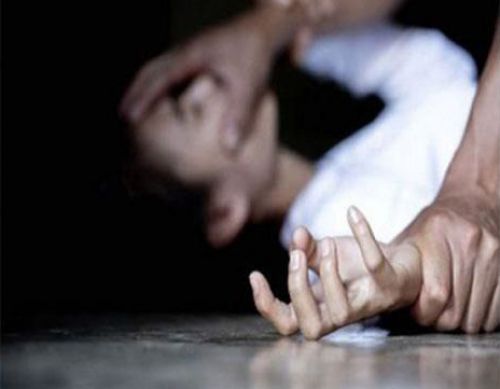
Organized rape and physical elimination reveal new dimensions of the Islamic Republic’s crimes against detained women, wherein even their wombs are removed from their bodies to prevent investigation and trace of assault.
A new report released on Friday, February 20, corresponding to the first day of Esfand, lifted the veil on one of the most horrifying aspects of suppressing protesters in Iran: “Systematic sexual assault against detained women during the national revolution; a crime that, according to domestic sources, was not an exception but part of the mechanism of intimidation and breaking down opponents.”
According to this report, dozens of women detained in various cities across Iran have been subjected to harassment and assault in detention centers and prisons. Some remain missing, while others have been handed over to their families with mutilated bodies; families who, mostly in silence and fear, have been deprived of legal recourse.
An Iranian source who witnessed the massacre of protesters provides a disturbing picture of prison conditions. He says: “I am most concerned about those who have been arrested. In prison, both men and women are raped. They are assaulted daily by groups of police. We are not considered human by the regime. People are raped in prison every day.”
He adds about physical torture: “They hurt you, they punch you, they tear your nails, they gas them. Those who are arrested are not given food. The government kills them in prison every day.”
Another section of this report states that some detained women, after gang rapes, have been mutilated to destroy evidence of torture and sexual abuse. An Iranian individual whose name is protected and who became a refugee in another country after the protests said: “Some of the bodies of women who were returned to their families were without a uterus so there would be no possibility of investigation or inquiry into these crimes.” He adds: “To be honest, most families did not pursue the matter to avoid further suffering.”
Videos released by people on social networks also show families who lost their daughters or wives in the protests, and when their bodies are handed over, female doctors or nurses do not allow them to receive the bodies, and they are told that all women must be transferred from body transport vehicles to hospitals to have their uteruses emptied. These videos, discreetly recorded by individuals, reveal the depth of the disaster and the Islamic Republic’s crimes against the people, especially Iranian women.
One of the released images shows the body of an imprisoned woman in Bojnord who, according to a knowledgeable source, was handed over to her family 25 days after detention with clear signs of torture and injury.
Another Iranian refugee has stated that she and other detained women were subjected to group rape under gun threat and by masked men and were effectively turned into “sexual slaves.” According to her, security officials mocked the political or social beliefs of these women, intensifying humiliation and violence.
Meanwhile, “Shaqayegh Moradi-Nejad,” an Iranian photographer who left Iran years ago, emphasizes that torture “has always been the method of this regime.” She told News Nation: “During interrogations, they squeeze their breasts, use obscene and humiliating language, and expose them to sexual harassment.”
According to human rights activists, security forces arrested more than 50,000 people during nationwide protests; among them were students, children, doctors, lawyers, and civil activists.
It was previously reported that dozens of female political prisoners were transferred from Qarchak Prison in Varamin to Ward 350 of Evin Prison; women some of whom have been sentenced to long sentences and even execution. According to informed sources, some of these women were subjected to harassment and assault during transfer or during temporary detention.
Among the disturbing accounts is the story of “Kimia Alighani,” a 17-year-old girl from Tehran who, according to her cellmates, was assaulted by four officers inside a van while being transferred from a safe house to Qarchak Prison; a narrative that presents a naked image of teenagers’ defenselessness against the government’s repressive machinery.
Some reports released by families whose identities are protected show that many girls held in prison and detention have asked their families to bring them emergency contraceptive pills to prevent pregnancy from rape. An issue that exposes the horrific crimes of the Islamic Republic regime against detained girls and women in the protests.
International human rights organizations have repeatedly warned in recent years about the use of sexual violence as a tool of repression in Iran. UN special rapporteurs have also expressed deep concern in various statements about torture, rape, and forced confessions.
The pattern presented in the released reports—gang rape, systematic torture, physical elimination, and creating terror for families—is described not as an isolated incident but as a government mechanism to silence the voice of protest.
For the Christian community and awakened consciences worldwide, what happens to women and girls in the Islamic Republic’s prisons is not merely a violation of law or political repression, but a direct attack on human dignity, the sanctity of the body, and the value of human life.
While the testimonies released are horrifying and painful, they are only a glimpse of the reality unfolding behind prison walls. A reality that many families are unable to recount due to fear, threats, or security pressure.
These reports once again place this question before the global community: “How much longer will crimes against detained women in Iran remain unanswered?”