“Religious Freedom of Turkish Alevis Being Violated”
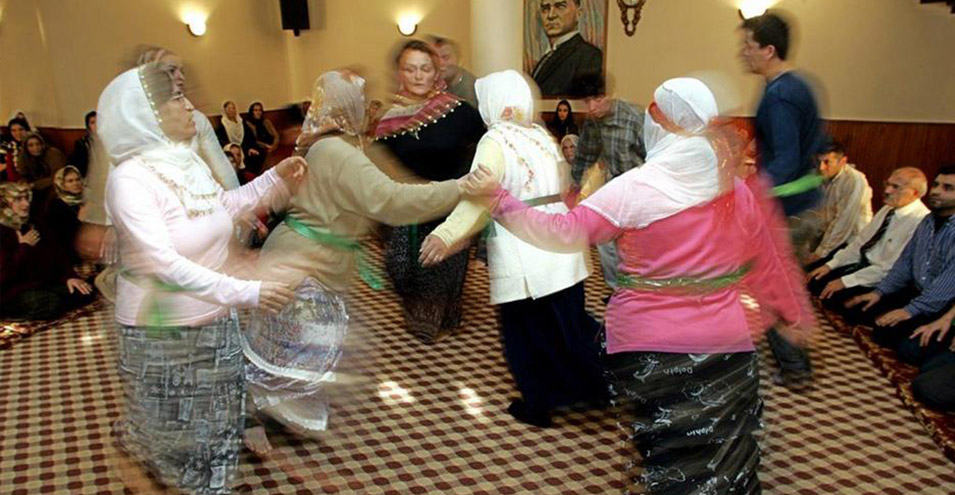
The European Court of Human Rights says Alevis in Turkey, who make up approximately 20 million of that country’s population, are in a situation of inequality compared to Sunnis, and the Turkish government must end this discrimination.
Judges at the European Court of Human Rights in Strasbourg, after reviewing complaints from a number of Turkish Alevis, ruled that the Turkish government has violated the religious freedom of the complainants. The court stated that Turkey’s Alevi minority is being discriminated against “without justified and logical reason.”
The European Court of Human Rights issued its ruling following review of a complaint by 203 Turkish Alevi citizens on Tuesday (April 26/May 7). The court ruled in favor of the complainants and condemned the Turkish government for “refusing to provide religious public services to the complainants,” ordering it to pay 3,000 euros in compensation to each of them.
In the European Court of Human Rights’ decision, it states that from the Turkish government’s refusal to respond to the complainants’ requests, it can be concluded that “the religious belief of Alevis and their right to worship” is not officially recognized in Turkey.
In the view of the European court, there is “inequality” between Alevis and Turkey’s Sunnis. The complainants say that Ankara does not provide legal protection to Alevi sacred sites, places of worship, and their religious leaders, which has made it difficult to finance and maintain their activities.
Judges at the European Court of Human Rights say the reasons the Turkish government provides for this behavior are neither important nor sufficient for a democratic society.
What Do Alevis Want?
Alevis, as Turkey’s second religious community, are seeking government budget allocations and say their religious leaders should be granted the privileges and status of “civil servants.” Additionally, Alevis are seeking official recognition of their religious sites and places of worship.
The Turkish government rejected a similar request from Alevis in 2005, and Turkey’s judiciary also confirmed the government’s decision. Ankara says what Alevis believe in is not a separate religion but a movement within Islam.
However, the judges at the European Court of Human Rights do not recognize the Turkish government’s view on the “religious characteristics” of Alevi beliefs, which has roots in Turkish society and history, and say that how a religion is understood belongs to its believers, not the state.
Alevis, like other Muslims, do not believe in the Five Pillars of Islam. For example, they do not fast and do not perform the pilgrimage. They believe in the equality of men and women, and in their places of worship, men and women pray together.
The ruling of the European Court of Human Rights in Strasbourg was adopted by the court’s highest authority, and its decision is final and binding on Council of Europe member states. For the Turkish government, this ruling means it must henceforth refrain from the violations of rights mentioned in the court’s decision.
Source: Deutsche Welle