Return to the Coupon System; “Representatives Did Not Understand What They Voted For”
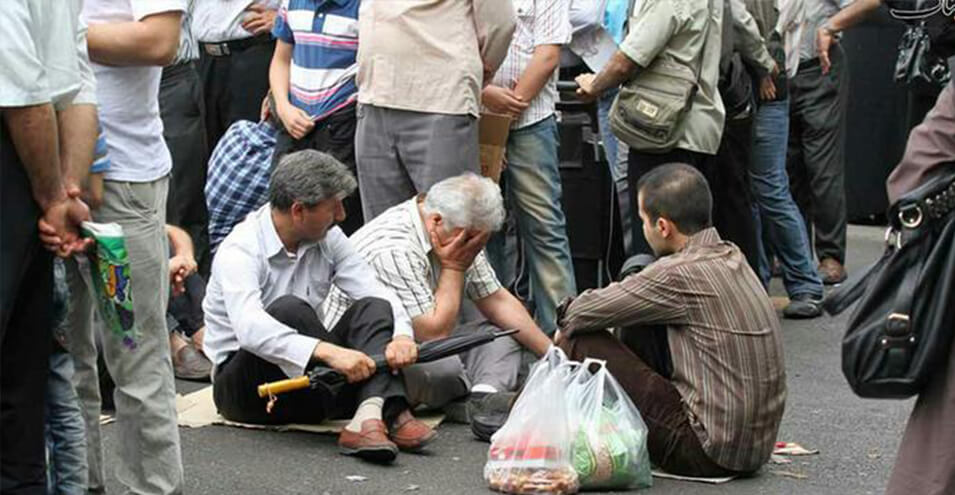
The approval of rationing essential goods by the Iranian parliament faces significant opposition. Critics are calling for a review of this policy. According to them, the “coupon system” will deprive the private sector of growth opportunities and lead to monopoly and corruption.
Hardly two days have passed since the recent decision by the Islamic Consultative Assembly regarding the return to the policy of distributing essential goods through coupons, yet this decision has faced widespread warnings and protests. Last Saturday, during the review of the 1398 budget, the Iranian parliament obligated the government to return to the method of distributing essential goods at government prices through coupons or electronic vouchers.
Mehrdad Bauj Lahoti, a member of Iran’s Parliament’s Planning and Budget Commission, responded to this decision on Monday, March 13 (March 4th), saying: “Regarding the rationing, I must say that the representatives themselves did not understand what they were voting for.”
This parliamentary representative continued in an interview with ILNA news agency: “The government allocated 14 billion dollars with an exchange rate of 4,200 tomans to supply essential goods, which amounts to 50 trillion tomans; this alone would have made goods cheaper by themselves.”
Lahoti added: “What the representatives did was disrupt the equation and said that rent-seeking might occur and to use gradual and semi-official exchange rates for this; I asked them what gradual exchange rate means? They said 4,200 tomans, when the definition of gradual exchange rate is not this and is higher than 4,200 tomans. The semi-official rate is 8,000 tomans. With this action, we ourselves have raised the prices of goods.”
“Are we in year 58?”
The representative from Langarud in the Islamic Consultative Assembly finally stated in opposition to the recent decision: “What does rationing mean? Are we in year 58? Back then there were paper coupons, now shall we put a card in people’s hands and tell them to stand in line to get oil and meat! This is illogical and creates corruption.”
The return of unilateral American sanctions, unfavorable economic conditions, the collapse of the national currency’s value, the alarming increase in commodity prices in Iran, and the largely unsuccessful efforts of the government to control the prices of essential goods have prompted a considerable number of experts to evaluate the electronic coupon scheme as an effective measure to supply citizens with necessary goods. Supporters of commodity distribution through the shopping card also emphasize the government’s duty to support the needy and see it as a way for government support of low-income groups.
The Etemaad newspaper wrote today, Monday: “These supporters also emphasize that even if the government has decided to give all citizens items as a commodity basket, these shopping cards mean that all citizens are entitled and it is not intended that standing in line and getting a turn sooner would result in creating rights and confining them within the lines.”
The return to the “coupon system” also has many opponents. Critics view this plan as a decision oriented toward the past and, given the changes that have occurred in the structure of Iran’s economy in recent years, they evaluate the result of its implementation as merely further state control of the country’s economy.
Warning About Growth of Corruption
Fatima Moqimi, a member of the Tehran Chamber of Commerce, citing “the ineffectiveness of the experience of recent months” regarding the distribution of essential goods in the form of rationing, called for a “review” of the policy of returning coupons and said: “Unfortunately, from a few months ago and simultaneously with the rise in meat prices in domestic markets, the issue of distributing rationed goods was raised, a matter that after a few months of follow-up neither could meet market demand nor was it a reliable tool against price increases.”
Ms. Moqimi added in an interview with ISNA: “When the ability to establish order in economic markets is not provided at the micro level, it certainly will not be provided at the macro level and regarding the group of essential goods.”
This member of the Tehran Chamber of Commerce emphasized: “The issue of re-establishing the coupon distribution system and forming people’s lines to get their needed goods will not resolve larger macroeconomic problems such as those producers have faced in recent months. On the other hand, the dignity of people, as one of the most important social values, will not be respected by forming lines again, and therefore I hope that matters currently being proposed and initially put forward will be eliminated by the government in the future and policies will change.”
In Fatema Moqimi’s view: “What can provide the most help to Iran’s economy in this regard is the effort to change consumption patterns and increase productivity. An issue that perhaps in many sectors Iran’s economy has forgotten its role in.”
According to a report by the “Etemaad” newspaper, Mohsen Jalalpour, former head of Iran’s Chamber of Commerce and one of the critics of returning to the policy of rationing essential goods, also believes that “the government wants to plan in a way that in the upcoming constraints, the country does not face a shortage of foreign currency and other needed resources and for this reason has resorted to rationing and dual pricing of goods.”
From Jalalpour’s perspective, the danger of government budget deficit “in sanctions conditions” is high; a budget deficit that “will ultimately lead to inflation as well.” This economic activist “sees the formation of informal and black markets as a future problem, which has also been observed in the foreign exchange market, and in this space the private sector has no opportunity for growth and monopoly and corruption arise, and a large portion of the government’s capabilities must be spent on combating hoarding and commodity speculation.”
Coupon Distribution and “Lifestyle Change” of People
With the return to the policy of distributing essential goods through coupons, the possibility of the emergence of the “false profession of coupon selling” is not ruled out. If coupons are given to all people, non-needy individuals will sell their coupons; an action that could lead to the formation of a “black market” for buying and selling coupons.
On the other hand, the growth of consumerism and the change in the lifestyle of Iranians in recent decades reinforces the suspicion that the supply of essential goods at the level intended by the government may not meet the real needs of society. Also, according to IRNA: “The prioritization of households in their household basket differs from one another. This is while the commodity basket that the government has considered is the same for everyone. This can force households to sell coupons to meet their other needs.”
According to this state news agency: “Experts also believe that this will severely increase government costs. In addition to the cost of launching the system, maintaining and monitoring its proper implementation, providing the foreign currency needed for these goods at a time when the government’s foreign exchange revenues have declined significantly is also one of the main challenges in implementing the coupon system.”
Government Facing Two Paths
The Iranian parliament has obligated the government to allocate 14 billion dollars to supply essential goods, medicines, medical equipment, and agricultural and livestock inputs such as soybean meal, barley, etc., either “through preferential exchange rates” or “allocate this amount at a semi-official exchange rate and allocate the difference for people’s livelihood and support for production, and use electronic commodity vouchers for supplying essential goods needed by people at preferential exchange rates or cash payment.”
Two different paths lie ahead for the Iranian government. According to Etemaad’s report, “If the government decides to follow the first clause and import goods at preferential rates, we will still witness corruption regarding the allocation of this currency, and the question arises: why did this merchant use the 4,200 toman dollar for imports, and until the last moment and perhaps never will it be determined whether the goods equivalent to that exchange rate reached people or whether violations also occurred.”
The second path, however, according to the Etemaad newspaper, “obligates the government to say goodbye to cheap and preferential exchange rates and consider the semi-official rate. This can also reduce corruption in this sector, and merchants with preferential rates will not differ from other importers so that one importer is given the 4,200 toman exchange rate and another the semi-official rate. The other occurrence is that other importers with preferential exchange rates can no longer import with 4,200 toman dollars and under the pretext of the 12,000 toman dollar sell it at several times the price to people and have a special trade this way.”
In any case, however, if the Iranian government chooses either of these paths, it is obliged to “change” the conditions for distributing essential goods among people in the form of shopping cards.
Coupons for Iranian citizens evoke memories of the 1980s (1960s in the Persian calendar) and the Iran-Iraq War period. Now those same coupons are set to be distributed in the form of electronic commodity vouchers or “shopping cards” for people to obtain essential goods.
The use of the coupon mechanism for distributing essential goods is primarily recommended in extraordinary situations such as during war or after it, that is, in abnormal conditions where the economic system’s functioning is disrupted. Governments in such circumstances directly intervene and, to prevent the deepening of livelihood problems, take over the monitoring of the distribution of essential goods.
Returning to the era of the “coupon system” can be seen as a formal confirmation of the unfavorable economic situation by the government. A similar action by the government of the Islamic Republic during the Iran-Iraq War also coincided with the reduction of the country’s foreign exchange and commodity resources to the lowest possible level.
Source: DW