Temporary Halt to Execution Order for Milad and Navid in “Akbatan Case” Without Lifting Sentence

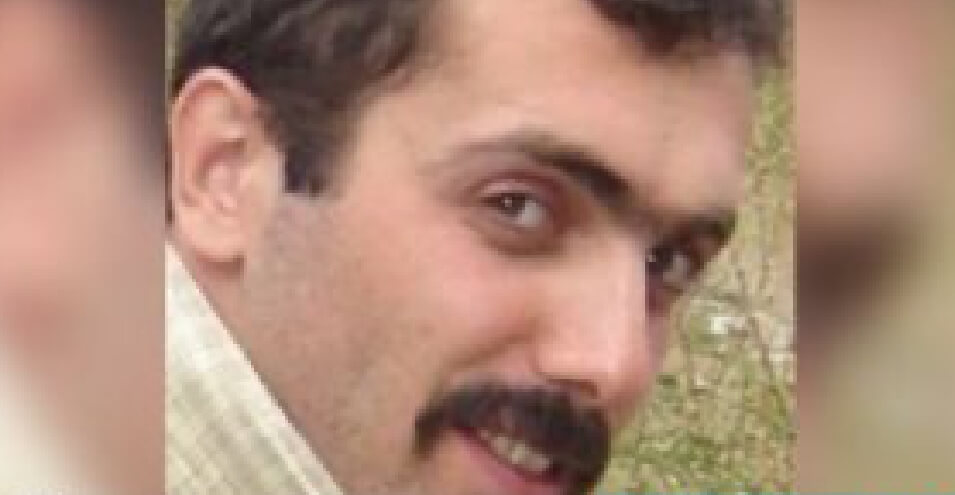
In the final hours before the execution of Milad Armoun and Navid Najaran, the implementation of their death sentences was halted; however, Iran’s judiciary not only failed to announce the lifting of the sentence, but also threatened the lawyers and activists following the case with “surveillance and monitoring” while emphasizing that the sentence remains in force. These two young men continue to face the danger of execution.
On Tuesday evening, December 24, 2026 (3 Azar 1405), as families and relatives of Milad Armoun and Navid Najaran were preparing themselves for the execution of their sentences at dawn on Wednesday, December 25, 2026 (4 Azar 1405), news of the halt to the execution order was released; news that, after days of worry and anxiety, brought temporary hope to the families of these two prisoners.
Mohammad Hossein Aghassi, “lawyer for Milad Armoun,” announced on Wednesday morning, December 25, 2026, that he had been informed by phone of the halt to the execution order just hours before the scheduled time. He said he had informed his client’s family of this news, but emphasized that the halt to execution does not mean the lifting of the death sentence.
Meanwhile, the Dadban Legal Education and Advisory Center reported, citing an informed source, that Navid Najaran also informed his family of returning to the general ward of Qezelhesar Prison. However, hours later, Mizan News Agency, “a media outlet affiliated with the judiciary,” issued a statement stating that the final death sentence issued against these two defendants has not been lifted. In this statement, claims of lifted sentences were denied and it was emphasized that the court’s ruling remains in effect.
The judiciary proceeded to accuse the lawyers and activists who had disseminated information about the situation of these two prisoners of media exploitation of the defendant’s case, writing that their activities are “under the surveillance and monitoring of relevant authorities.” This stance was taken while information dissemination and legal pursuit regarding the lives of two prisoners sentenced to death are among the most basic duties and rights of lawyers and civil rights advocates.
The Akbatan case was formed following the death of Arman Aliverdi, a Basij member, during the nationwide protests of 2022. Aliverdi was wounded on November 25, 2022 (4 Aban 1401) in Akbatan neighborhood of Tehran and died in a hospital two days later.
During the investigation of this case, more than 50 young people from Akbatan neighborhood were arrested and legal cases were filed against several of them. Milad Armoun, Navid Najaran, Mehdi Imani, and Mohammad Mahdi Hosseini were among those accused who had been in detention since fall 2022.
An important point in Armoun and Najaran’s case is the difference between the rulings of two judicial bodies. Branch 13 of the Criminal Court of Tehran, upon renewed examination of the charge of participating in premeditated murder, acquitted Navid Najaran due to insufficient evidence regarding inflicting a blow leading to death. However, regarding Milad Armoun, the same court issued a sentence of five years imprisonment and payment of blood money; therefore, contrary to some published accounts, it cannot be said that both individuals were acquitted of participation in premeditated murder charges in the criminal court.
Despite this difference, Branch 15 of the Revolutionary Court of Tehran, headed by Abolqasem Salwati, sentenced Armoun and Najaran to death separately and under the charge of “spreading corruption on earth.” The Supreme Court also upheld the death sentences of these two; while according to reports, the death sentences of two other defendants in the same case, Mehdi Imani and Mohammad Mahdi Hosseini, were overturned and their case was remanded for reconsideration.
This difference in the judicial fate of the defendants has raised serious questions about the basis of issuing sentences and the proportionality of charges and punishments. Particularly, the issuance of a death sentence in the Revolutionary Court following the criminal court’s examination of premeditated murder charges requires clear and substantiated explanation of the legal elements and evidence that formed the basis of the conviction.
Mai Sato, “UN Special Rapporteur on human rights in Iran,” on Tuesday, December 24, 2026, expressing concern about the imminent execution of these two prisoners, called for an immediate halt to execution and lifting of the sentences.
In her statement, she pointed out that the criminal court acquitted these two individuals of the murder charge and no death penalty order has been issued against them. Sato also referred to reports of torture and coerced confessions during the investigation of the case and called for clarification of the basis for issuing the death sentence.
Allegations regarding torture and coerced confessions should be investigated independently; however, raising such reports in a case where the punishment is death requires strengthened independent oversight, effective access to the case file for lawyers, and guarantees of fair trial.
The halt to execution at dawn Wednesday does not mean the end of the case or removal of the danger of execution. The judiciary has explicitly stated that the sentence remains in force. Mohammad Hossein Aghassi also said on Wednesday, December 25, 2026, that no new execution date has yet been announced, and that he intends to contact the relevant judicial authority on Sunday, December 29, 2026 (8 Azar 1405), to follow up on the reason for the halt to his client’s execution.
Under such circumstances, the absence of formal and transparent announcements about the legal status of these two prisoners continues to fuel the families’ concerns. Returning a prisoner from solitary confinement to a general ward or a telephonic halt to execution is not a guarantee for the lifting of the death sentence.
This case once again places a fundamental issue before public opinion: when two judicial bodies reach different conclusions about a murder charge and subsequently a death sentence is issued and upheld based on a different charge, society has the right to demand a clear answer regarding the evidence, the trial process, and the legal basis for such a sentence.
The lives of Milad Armoun and Navid Najaran remain in danger. What families and human rights advocates seek is not merely a halt to execution for a few hours or days; rather, it is the lifting of death sentences, an independent and transparent investigation of the case, and guarantees of the right to defense and fair trial.