Twenty Days After Nasrin Sotoudeh’s Hunger Strike Ends, Islamic Republic Still Denies Her Medical Care
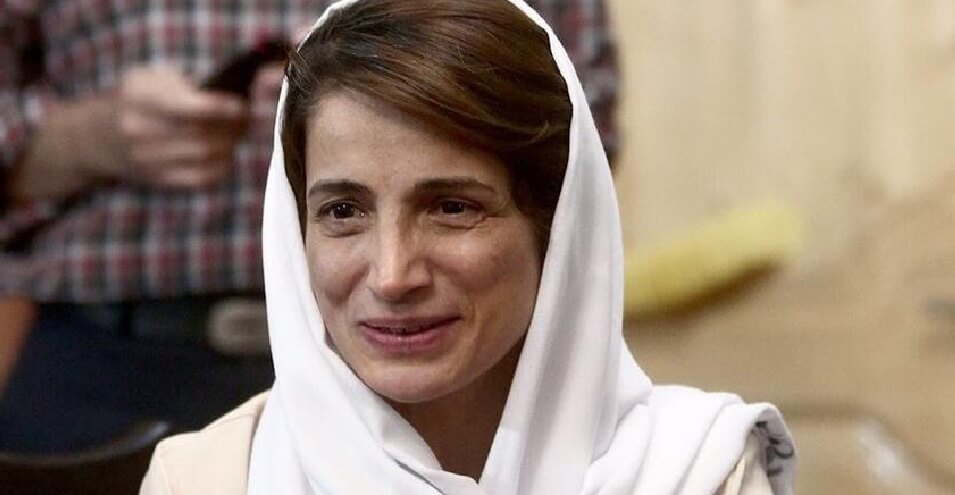
Nasrin Sotoudeh’s husband, a imprisoned lawyer in Iran, says that although twenty days have passed since Ms. Sotoudeh’s return to Evin Prison, her physical condition remains poor.
Reza Khandan said on Tuesday, October 22, in an interview with Voice of America that Ms. Sotoudeh ended her 45-day hunger strike about twenty days ago and was returned to prison. According to Mr. Khandan, although the medical commission at the hospital said her angiography examination should be performed as soon as possible, no action has been taken and Ms. Sotoudeh’s physical condition is not good.
Mr. Khandan added that his wife, following her return to Evin Prison, spent two weeks in quarantine in the same poor physical condition, and after two weeks was transferred back to the women’s ward and left to her own devices.
Reza Khandan told Voice of America: “It is true that my wife’s general condition has improved due to breaking her hunger strike, but heart problems and shortness of breath persist. She needs to be sent to a reliable hospital so that her health condition can be examined again and if she needs any tests or special treatment, she should receive it.”
According to Ms. Sotoudeh’s husband, although this imprisoned human rights defender has requested medical leave or transfer to a trusted hospital for two weeks and her family has also sent requests to the prosecutor’s office, no response has been given to these requests to this day.
Reza Khandan continued telling Voice of America: “Not only us, but many people who have dealt closely with security institutions and the judicial system are aware that these institutions have no specific laws and regulations. Most of the time, in order to be stubborn with prisoners and their families, they do not approve requests for furloughs.”
Mr. Khandan, in response to the failure to respond to Ms. Sotoudeh’s requests, says that the obstinacy of Islamic Republic officials is not only because of Ms. Sotoudeh’s hunger strike, but this has a history and previously they either objected to the requests of this imprisoned human rights defender or did not respond to them at all.
Reza Khandan told Voice of America that judicial officials are willing to reduce the pressure on the Islamic Republic by granting furloughs to other prisoners and sending them on leave; but this is not the case with Nasrin Sotoudeh and some other prisoners, and they deal with them out of stubbornness.
Previously, Voice of America reported that Nasrin Sotoudeh, who from August 11 had gone on a hunger strike in protest of all her correspondences with prison officials, the prison organization, and judicial officials regarding prisoners’ rights and conditions, in-person visits, prisoner furloughs, and the issuance of long-term prison sentences for political prisoners in prison remaining unanswered, ended her strike on Friday, September 25.
On the day Ms. Sotoudeh was transferred from the hospital to prison, the U.S. State Department spokeswoman, while expressing concern about Nasrin Sotoudeh’s situation, a imprisoned lawyer in Iran, called her unjust detention by Iran’s ruling regime “barbaric” and condemned it.
Morgan Ortagus wrote on Twitter on Wednesday, September 23: “The United States is deeply concerned about the health of Nasrin Sotoudeh, who was recently hospitalized in prison.”
Previously, Robert Menendez, a senior Democratic senator of the United States, had announced on Twitter on September 11 that Nasrin Sotoudeh, an Iranian human rights defender, should never have been imprisoned in the first place. In his Twitter message, he wrote that Iran must immediately and unconditionally release Nasrin Sotoudeh and end her hunger strike before her condition worsens.
Previously, the U.S. State Department’s Office of Women’s Affairs also expressed support and deep concern for Nasrin Sotoudeh’s health and asked Iran’s regime to release this imprisoned human rights lawyer and all political prisoners who have been wrongfully detained.
The United States has repeatedly and in various cases condemned violent conduct and widespread suppression of protesters and civil activists, as well as repeated and continuous violations of the rights of Iranian citizens by Iran’s ruling regime.
Source: Voice of America