Users Report Internet ‘Disruptions’ in Iran Ahead of November 2019 Protests Anniversary
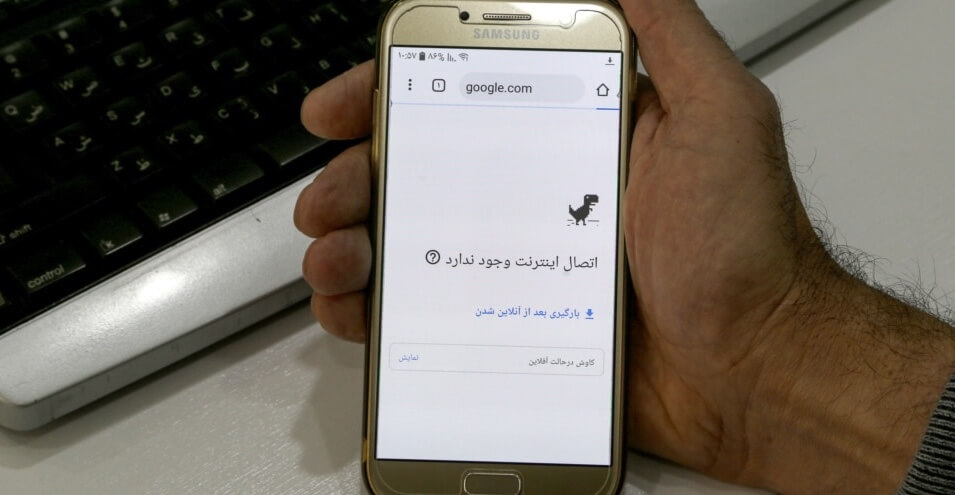
As the anniversary of November 2019 protests approaches, some social media users in Iran are reporting disruptions in the country’s internet services.
Hossein Ronaghi, a blogger and freedom of speech activist in Iran, tweeted that as of Friday, November 12, “there is a severe disruption in VPNs and circumvention tools that is causing internet outages.”
He also wrote: “Internet speed has also been severely reduced.”
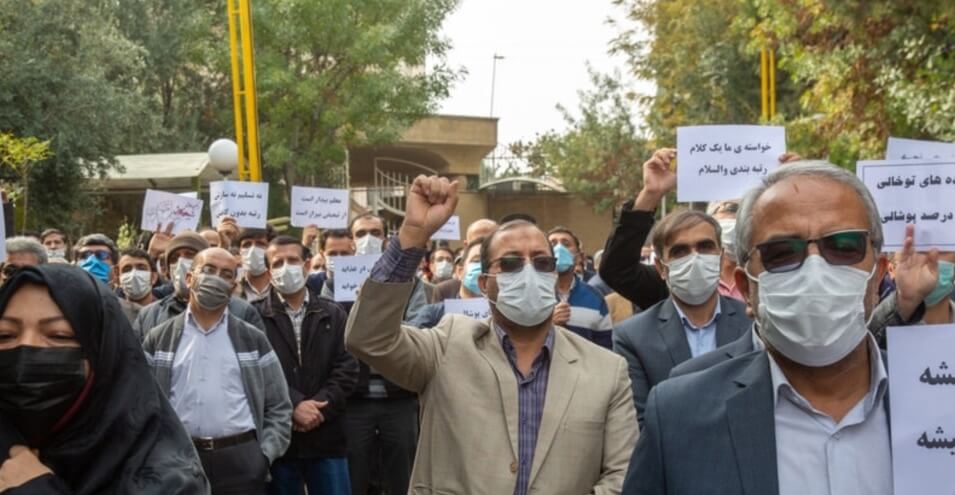
Some users attributed the internet disruption in Iran to the continuation of Isfahan farmers’ protests, while others pointed to the trial of Hamid Noori and the November 2019 people’s tribunal.
On November 15, 1998, as nationwide protests against the Islamic Republic’s institutions escalated following the announcement of fuel price increases, the Islamic Republic’s authorities shut down the country’s internet to prevent news of the protests and their suppression from reaching the world. At the same time, a small number of people had special internet access and in their writings described the situation inside Iran as calm.
During the November protests, hundreds of protesters were killed and arrested by security and police forces. Amnesty International has so far documented and registered the identities of 323 people killed.
Mohammad Mosaed, a journalist who was able to report on the internet outage after several days, was arrested and after months was forced to leave the country.
At that time, Mosaed tweeted with a brief account of Iran’s situation and the complete internet blackout, criticizing the benefit some individuals were getting from the internet: “In the absence of internet, metropolises have turned into thousands of densely packed small villages. When communication tools are cut off, your field of vision narrows to just a few meters, and it no longer matters whether you are a few kilometers away or thousands of kilometers away. Give our congratulations to the young minister equipped with well-dancing parrots with internet access.”
He also tweeted in English, which was met with tremendous reception. Mosaed wrote: “Tick tick, hello free world … I used 42 proxies to write this. Millions of Iranians have no internet. Can you hear our voice?”
Ayatollah Khamenei, the leader of the Islamic Republic, who has been referred to as one of the “beasts of media freedom,” has repeatedly called for limiting the internet and particularly social networks.
Currently, a plan to restrict internet in Iran titled “Protection of User Rights in Cyberspace and Regulation of Social Messengers” is under review in the Islamic Consultative Assembly. The passage of the plan known as “Protection” is referred to as the implementation of one of Ayatollah Khamenei’s demands.
Source: Voice of America