Surge in Price Increases in Iran Ahead of Nowruz; Journalist: ‘Risk of Food Shortage and Inflation’ Exists
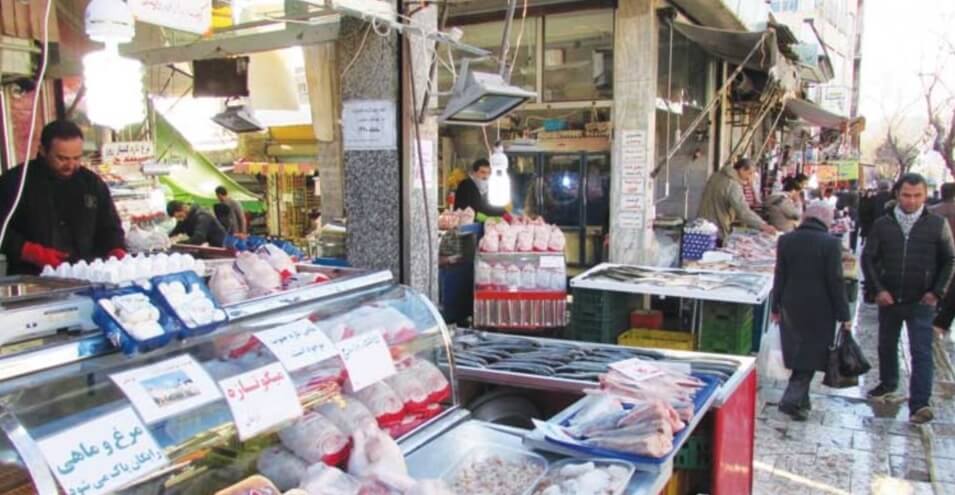
As Nowruz approaches, a wave of price increases across various food items in Iran has heightened concerns. Additionally, according to statements by economic activists, Iran’s livestock and poultry feed reserves are only “one month’s worth,” and the Ukraine crisis will cause further problems for Iran.
Iran’s Statistics Center reported in its price report for food items in Bahman 1400 that walnuts, pistachios, and almonds experienced price increases of “17 to 40 percent.”
This comes at a time when the consumption of nuts and dried fruits increases every year during this season due to the approaching Chahar Shanbeh Suri and Nowruz celebrations.
According to a report by EqtesadOnline on Tuesday, Esfand 10, based on data from Iran’s Statistics Center regarding “average price changes of selected food items for different food groups in urban areas,” the prices of various food items have become more expensive.
According to the report, first-grade Iranian rice saw an 18.2 percent increase, lamb meat saw a 5.3 percent increase, animal butter saw a 1.7 percent increase, and potatoes saw a 26.1 percent increase compared to the previous month.
Potato prices have increased 2.5 times over the past year, and Iranian rice prices have risen 95.3 percent.
Based on reports, the Rural Cooperative Organization purchased “holiday fruits 20 to 30 percent higher than market prices.” The head of the country’s Inspection Organization states, “Negligence and inattention in this matter are evident and clear.”
ISNA also reported on Tuesday, Esfand 10, that the Rural Cooperative Organization, while it “could have purchased oranges for less than 10,000 tomans and apples for around 12,000 tomans,” purchased oranges for “13,900 tomans” and apples for “around 14,000 tomans.”
Gholam-Hossein Mohseni Ejehi, head of the judiciary, considered this matter “worthy of reflection,” and Zebaih Khadaiyan, head of the country’s Inspection Organization, also called it “negligence and inattention” and said determining whether it was “intentional or collusive” requires “further judicial investigations.”
Maryam Shakrani, an economic journalist in Iran, in a tweet series sounding “the alarm on food shortages and inflation,” expressed concern and quoted Iran’s Livestock and Poultry Feed Importers Union: “There is only one month’s worth of livestock and poultry feed reserves in Iran, and the Russia war has caused all traders’ orders to be suspended.”
According to the website of Iran’s Livestock and Poultry Feed Importers Union, Mohammad Mahdi Nehdavandi, a board member of this union, said that “the Ukraine crisis will cause us to face problems in securing corn and soybean seeds” and “officials must provide permits to import from other sources of supply including Argentina, Canada, and North America.”
This comes as livelihood protests continue in Iran.
A protesting livestock herder during the Yazd herders’ strike in Bahman said to the people, “They are strangling us livestock producers in the bud” and “We ourselves have come voluntarily to say they have endangered our country’s food security. We ourselves have gone on strike to say in future years, don’t go buy meat for 700,000 tomans per kilogram.”
Source: Voice of America