Crisis of Distrust; A Crisis That Did Not Begin with Corona

Contradictory coronavirus statistics, the mismatch between the number of deaths and the number of infected, and the high rate of recoveries compared to the rest of the world are among the factors that have caused trust in other government recommendations and guidelines to fade in Iran.
According to the latest official statistics announced by Iranian authorities, a total of 1,501 cases of coronavirus have been registered in Iran so far, and 66 people have died from COVID-19.
Ali Rabiei, Vice President of Iran, says “everything is under control.” However, apparently what is not quite under control is the people’s distrust of the statistics and figures, and even the government’s actions.
For example, people have been asked to stay in their homes and avoid unnecessary travel. Schools and universities have been closed for the same reason. Nevertheless, reports from Iran indicate a surge of people moving to Iran’s northern provinces; places that are, in fact, facing the coronavirus crisis.
Medical officials repeatedly state that there is no need for healthy people to wear masks, and that using them is necessary for sick people and to prevent virus transmission. However, masks have become scarce throughout Iran.
Or it has been repeatedly said that proper and correct hand washing with soap and water is sufficient, but nevertheless alcohol and disinfectants have become scarce.
Where Does This Distrust Come From?
First and foremost, the high death rate in Iran compared to other parts of the world has reinforced the suspicion that the actual number of infected people should be higher than what the Iranian government has announced.
While the mortality rate from coronavirus worldwide is between two and two and a half percent, this figure in Iran, based on officially announced statistics, is above five percent; the highest mortality rate after China.
This stark difference appears to many experts to indicate incorrect government statistics rather than being caused by a lack of medical facilities in Iran.
The number of recoveries is another dark point that questions Iran’s statistics. Today, in the final moments of preparing this report, Iran’s Minister of Health announced that out of 950 identified patients, 175 have recovered. This means more than 18 percent of the infected have recovered.
This is while, for example, in South Korea the recovery rate is only 0.69 percent and in Italy 4.8 percent. (1)
Based on these data and according to research by Canadian scientists, the number of people infected with coronavirus in Iran should be around 18,000.
German television network ZDF in a report about the blow that contradictory coronavirus statistics have dealt to public trust in Iran, quoted a doctor who wished to remain anonymous as saying that hospital doctors are warned by the Islamic Revolutionary Guards Corps upon entry and exit not to disclose information about their work and statistics of coronavirus patients.
The report also quoted other doctors saying they were forced in some cases to record the cause of death as something other than coronavirus.
One Deutsche Welle user from Gilan also said that in their small city, two people apparently died from “influenza,” but the cause of their death is not announced, however, their families are in quarantine.
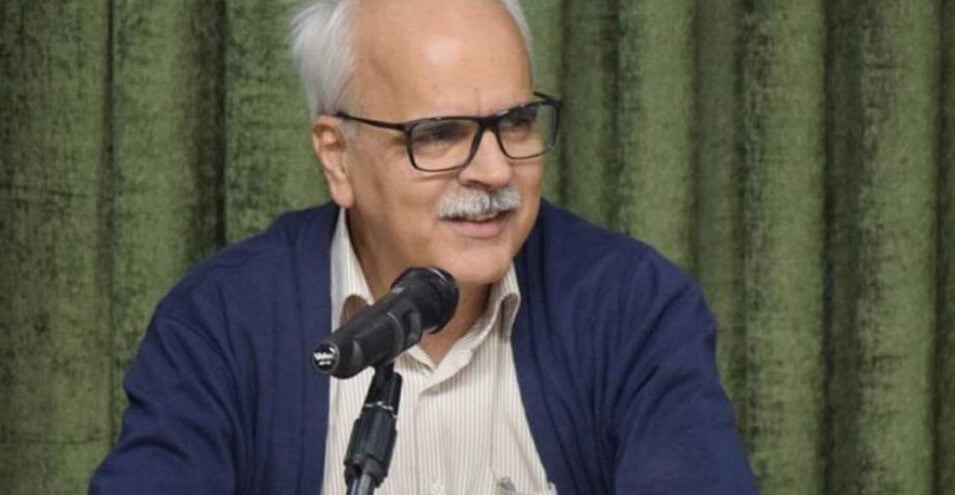
Abbas Abdi, a social researcher, listed several reasons in a post on his Telegram channel that he believes explain people’s distrust of the government on the coronavirus issue.
He pointed to the late announcement of the disease as the first reason, as the announcement was practically not made until two patients died. He then wrote: “How can it be expected that with a one-month delay in learning about the disease; and then the president’s announcement normalizing the situation from Saturday; and before reaching Saturday, announcing this week as the peak of the crisis; and two days after this news, announcing that the peak of the crisis is next week and certainly this peak will also be delayed, how can people trust your plan and cooperate with it in this situation?”
The Crisis of Distrust and Its Consequences
Saeed Piwandi, a sociologist residing in Paris, believes that the relationship between the government and people in Iran has been damaged, and this damage manifests itself more clearly and distinctly in critical situations.
Regarding the consequence of this damaged relationship, he told Deutsche Welle: “The most important consequence of this lack of trust between the government and society is that we cannot pursue effective policies regarding the emerging crisis because society, due to this very lack of trust, either ignores this information or does not know it accurately and clearly, and this is a major challenge for any country.”
Saeed Piwandi says that in countries facing the coronavirus crisis, there is a kind of “confidence in the health system and the government’s crisis management” which causes the public to more easily accept and implement government decisions, and for this reason, managing the crisis is easier.
In Iran, the absence of trust between the government and people, according to Saeed Piwandi, has created a “crisis management challenge.”
The Role of Intermediary Institutions
When the gap between the government and people widens, intermediary institutions such as non-governmental organizations or the press can to some extent fill this void. Saeed Piwandi regards the role of these institutions as “reassurance or continuation or fact-checking of government policy” and believes that with the suppression of these institutions in recent years by the Iranian government, society has become defenseless against crises.
He says: “In recent years, we in Iran have faced the systematic suppression of non-governmental institutions, and this very thing has left Iran defenseless against such events, meaning not only is there no effective and acceptable government to deal with such events, but those intermediary institutions that could have played a positive role, albeit not to the extent of the government, and could have participated in creating and rebuilding this trust, unfortunately, do not exist either.”
Saeed Piwandi believes that “the crisis of distrust did not begin with the coronavirus.” He points to floods and earthquakes in recent years that have repeatedly confronted Iran with this crisis.
This time, however, the difference is that “because of the scope of this event, which for the first time is at the national level and its dimensions are unknown, the absence of this distrust is shown more prominently and clearly and with greater clarity, and also reveals the deep fissure that eats away at Iranian society from within.”
Source: DW