Trump's demand for the complete dismantling of the Islamic Republic and the people who call out Reza Pahlavi's name
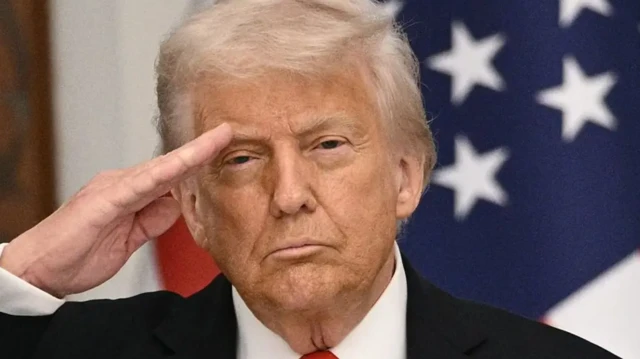
Emphasizing the complete dismantling of the leadership of the Islamic Republic, Trump spoke of the existence of options for a "good leader," while many Iranian protesters in recent protests have invoked the name of Reza Pahlavi as a symbol of change.
While political and military developments in Iran have entered a critical phase, US President Donald Trump has announced in interviews with American media that he wants the complete dismantling of the Islamic Republic's leadership structure and believes that Iran must move towards the formation of a new leadership.
In a telephone interview with NBC News, Trump said he was considering options for Iran's political future, but he had not yet named a specific one.
"We want to come in and clean everything up," he stressed. "We don't want someone to rebuild everything over a 10-year period."
The US president also added: "We want them to have a good leader. We have a couple of people who I think can do a good job." However, Trump refused to name these people, only indicating that Washington is monitoring developments related to these figures.
In another part of his statement, he said, "We don't want them to put anyone there unless it's approved by us."
Trump also stressed that he would take steps to ensure that those on his list were not harmed during the fighting. In other statements, the US president also referred to the military situation of the Islamic Republic, claiming that a large part of Iran's missile capabilities had been disabled.
He added: "58 percent of the Islamic Republic's missile launchers are out of service." He also added about the continuation of military operations: "Well, many people say that this is already over. It's not over for me, it will end when I want it to end."
He also responded to Iranian officials' statements about being prepared to counter a ground attack, dismissing the remarks as unimportant and saying that he currently has no plans for a ground operation.
"It's a waste of time," Trump said. "They've lost everything. They've lost their Navy. They've lost everything they could lose."
Trump's statements come amid widespread speculation about the future of the power structure in Iran following the assassination of Supreme Leader Ali Khamenei.
Some analysts believe that his son, Mojtaba Khamenei, may be considered for succession; although this issue has faced serious opposition among a section of Iranian society.
At the same time, many political observers believe that the Islamic Revolutionary Guard Corps, which is considered one of the most powerful military, political, and economic institutions in Iran, may play a more decisive role in the power structure if the crises continue.
Trump had previously said in response to a question about the possibility of Reza Pahlavi, the son of the last Shah of Iran, playing a role, that he would prefer someone who is moderate at home to take on the future leadership of the country. This is despite the fact that many Iranian protesters have shouted the name of Prince Reza Pahlavi over the years, especially in recent protests inside and outside Iran, as one of the symbolic figures of political change.
Critics of the idea of selecting someone from within the structure of the Islamic Republic say: "Such a scenario could lead to the continuation of the same power structure." According to these critics, it is very difficult to find a personality in Iran today who does not have a role in the power structure of the Islamic Republic and who also has the necessary influence to lead.
Some analysts also warn that if the transfer of power is entrusted to someone from within the same structure, a cycle similar to the past may be repeated; a situation in which superficial changes occur but the basic power structure remains.
The debate about the future of the country is also being closely watched among Iran's religious minorities. Iran's Christian community has faced widespread restrictions and pressure over the past decades, with many members of this community being arrested or forced to leave the country because of their religious beliefs.
Christian activists believe that Iran's future should be shaped by freedom of religion, human dignity, and the separation of religion from the state; principles that can pave the way for peaceful coexistence among followers of different religions.
In such circumstances, many observers say that Iran's future path will depend not only on the decisions of political powers, but also on the will of the Iranian people; people who have repeatedly taken to the streets in recent years to demand fundamental changes in the country's political structure.