26 Baháʼís Convicted in Shiraz; 85 Years in Prison and 24 Years Exile
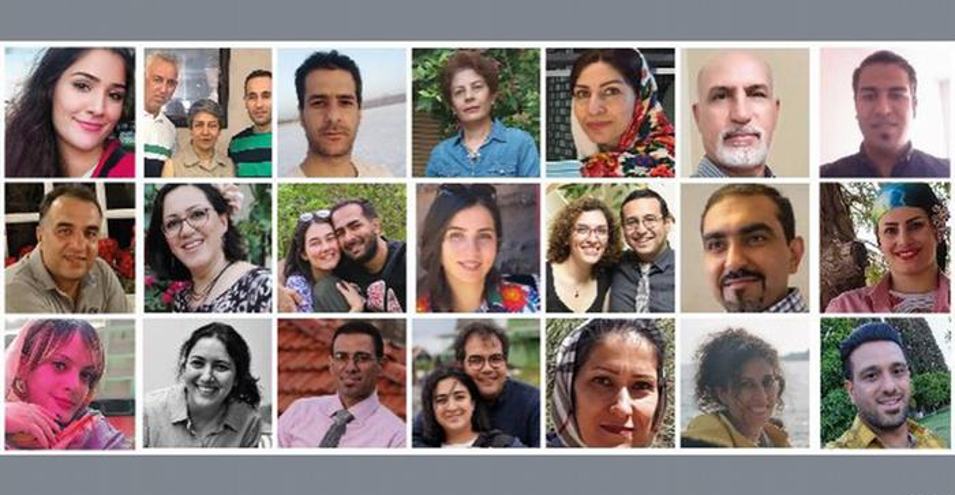
Shiraz Revolutionary Court has convicted 26 Baháʼís on charges of “conspiracy and assembly with the intent to commit crimes against the internal and external security of the country” to a total of 85 years imprisonment and 24 years exile. These individuals have also been convicted of passport revocation and prohibition from leaving the country.
Twenty-six Baháʼí citizens have been convicted by Branch One of Shiraz Revolutionary Court, presided over by Judge Mahmoud Sadati, to a total of 85 years of imprisonment, 24 years of exile to various cities in Iran, passport revocation, and prohibition from leaving the country. In another section of the verdict, these individuals are required to register themselves daily at the provincial intelligence office for two years.
The charges against these citizens are stated as “conspiracy and assembly with the intent to commit crimes against the internal and external security of the country,” and the issued verdicts are subject to appeal.
This verdict was issued despite the defendants’ lawyers repeatedly pointing out numerous defects and shortcomings in the case file, noting that “the connection of many individuals convicted in this case to the charges filed against them is unclear.”
Based on reports received by Deutsche Welle, the names of these citizens are as follows:
Saeed Hasani, Shadi Sadegh Aghdam, Shamim Akhlagi, Sahba Farah Bakhsh, Parisa Rouhizadegan, Ismail Rousta, Bahareh Norouzi, Behnam Azizpour, Samar Ashnai, Farabad and Farzad Shadman, Ramin Shirwani, Rezvan Yazdani, Sorush Iggani Saqadi, Sahba Moslehi, Ahdieh Enayati, Lala Salehi, Maryam Ghalam Pour Saedi, Marjan Ghalam Pour, Maryam Islami Mahdiabadi, Mehyar Sofidi Miandoab, Nabil Tahzib, Noshin Zanhari, Yekta Fahondezh Saedi, Varga Kaviani, and Nasim Kashani Nejad.
In the verdict issued against the 26 Baháʼí citizens, reference is made to their “presence and gathering” in poor and suburban neighborhoods of Shiraz and “congregations” at religiously sacred sites, tourist and tourist attractions including Shah Cheragh, Hafeziyeh, Persepolis, and Narenjestan.
Mahmoud Sadati, the judge of the case, stated in his ruling that these individuals, under the “pretext” of investigating the water crisis, social harms, and environmental issues, have sown “intellectual and ideological insecurity” in Islamic society and, in line with implementing the “sinister program of the leaders and the deviant Baháʼí sect,” have promoted the Baháʼí faith to Muslims. He considered this an example of “disrupting the internal and external security of the country.”
The Baháʼí faith is referred to by security and official government institutions in Iran as a “deviant sect.”
Numerous Doubts and Flaws in the Case
According to information received by Deutsche Welle, the Ministry of Intelligence arrested these individuals in several phases and opened cases against them. Initially, six of these individuals were arrested for activities in the field of “environmental protection,” and subsequently 20 others were arrested and interrogated “without having any connection to these activities and even without being aware of the existence of these projects.”
According to informed sources, the only reason for issuing verdicts for many of these individuals was “having friendly relations” with people involved in environmental projects and “their belief in the Baháʼí faith,” and it appears that pressure from security agencies was the primary reason for issuing such verdicts against these citizens.
The first court hearing regarding the charges against these citizens took place on 26 Khordad 99 (July 15, 2020), and the second hearing after addressing the objections took place on 14 Mehr (October 5) of the same year. During the first session, the defendants’ lawyers raised objections to the case file with the judge.
The verdict was communicated verbally to the lawyers, and “written notification of the verdict to the convicted has not been made.” This is despite the fact that the Thana system has been launched by Iran’s judiciary for electronic notification of verdicts and notices of judicial institutions for years. Iranian courts are required to communicate their verdicts and notices through this system to citizens and their lawyers.
Yekta Fahondezh is one of the Baháʼí citizens who was convicted by this court to 5 years imprisonment and prohibition from leaving the country for two years and passport revocation. This is despite the fact that in previous years he was arrested twice by the Shiraz Ministry of Intelligence on similar charges, and ultimately in the appeal and retrial phase at the Supreme Court, he was acquitted of all charges.
The Situation of Baháʼís in Shiraz
Baháʼís, as a religious minority in Iran, have consistently been subjected to pressure, harassment, and persecution by authorities and officials of the Islamic Republic and have been referred to as “spies and enemies.”
Security pressures on Baháʼís in Shiraz and Fars Province are not unprecedented, and since the early days of the Islamic Republic, Baháʼís in this province have been subjected to harassment and persecution. Currently, dozens of Baháʼí citizens in Shiraz are waiting for security verdicts to be issued or executed.
For example, two years ago, the Fars Province Appeals Court convicted 12 followers of this faith to a total of 33 years imprisonment and punishments such as “fines” and “dismissal from government and public services.”
The pressure and persecution of Baháʼís in Iran is not limited to the Islamic Republic period, but since the Islamic Revolution, these oppressions have intensified and expanded. In the early years of Islamic governance in Iran, many of these citizens were assassinated or executed. The share of followers of this faith in Shiraz in the number of executions was very high. In the most well-known case, 16 Baháʼí citizens in this city were collectively executed on June 26-27, 1983.
The Baháʼí faith is not recognized in the Constitution of the Islamic Republic of Iran as an official religious minority, and this has subjected followers of this faith to numerous restrictions, including restrictions on business, deprivation from employment in government and high-paying jobs, deprivation from university education, and prohibition from having administrative organizations and conducting religious affairs.
Source: DW