Human Rights Defenders: End the Harassment of Families of Those Killed in Iranian Prisons
Four human rights organizations, including Amnesty International and Human Rights Watch, have issued a joint statement calling on Iranian authorities to end their "campaign of harassment and intimidation of families of individuals who have suspiciously died in prison."
Human Rights Watch, Amnesty International, the Campaign for Human Rights in Iran, and Justice for Iran are the groups and organizations that issued this statement on March 13.
Human rights defenders have called on Iranian authorities to allow the UN Special Rapporteur to visit Iran and to authorize the formation of an independent commission of inquiry.
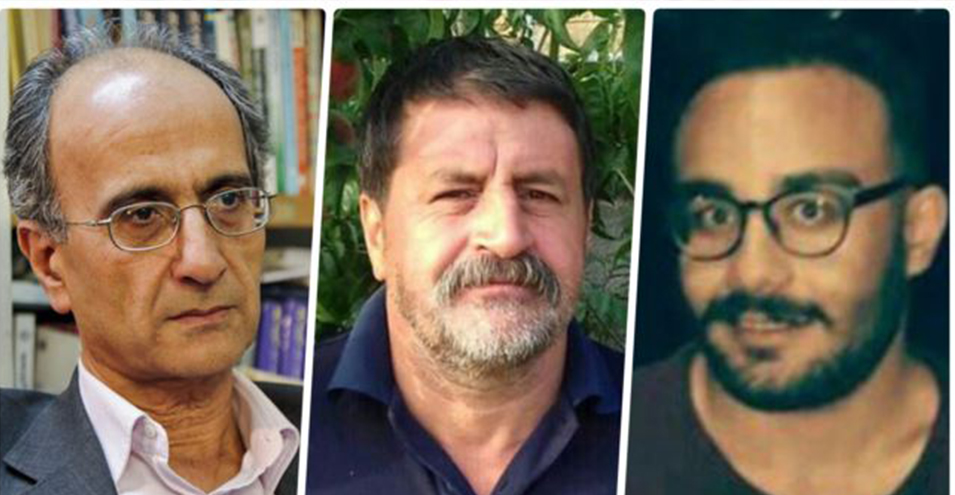
The four organizations say that since January, at least five deaths in custody have occurred; Sina Ghanbari, Vahid Heydari, and Kavous Seyed Emami are among the five who the Islamic Republic's judicial authorities claim committed suicide. Despite the judicial authorities' statements, relatives and human rights organizations have denied these claims.
Saroo Ghahramani and Mohammad Raji are two other individuals named in the statement. Mr. Ghahramani died during the massive protests in January and the Islamic Republic’s judicial authorities have said he was “killed in a clash.” Mr. Raji was a Gonabadi dervish who died after security forces clashed with dervishes in Tehran and made a number of arrests. The Tehran prosecutor denied Mohammad Raji’s death during interrogation, but his daughter told Radio Farda that officers spoke of her father’s death after one of the detainees fell into a coma “as a result of the beatings.”
But deaths and suicides that human rights groups have described as “suspicious” have also had consequences for the relatives of the victims. In one recent case, that of Kavous Seyed-Emami, Tehran airport officials refused to allow his wife to leave Iran for Canada, a country where Seyed-Emami’s family members hold citizenship.
Four human rights organizations say that in all five cases of “suspicious deaths in custody,” Iranian judicial and security authorities have “threatened” the families of the victims. The human rights organizations have also accused Iranian judicial and security authorities of “a series of coordinated and organized actions to conceal evidence of torture, ill-treatment, and death, and to defame the victims.”
Human Rights Watch, Amnesty International, the Campaign for Human Rights in Iran, and Justice for Iran have also cited other cases of “harassment and intimidation” in their joint statement; they say that in addition to threats against families, lawyers have also been threatened or detained even before the announcement of the deaths of their relatives, and that “a campaign to defame” them is underway. Human rights organizations say that Iranian authorities have attempted to cover up evidence of torture and suspicious deaths in custody, and have failed to conduct independent and transparent investigations.
The Islamic Republic's judicial authorities have not yet responded to the statement by the four organizations. Iranian authorities, of course, have in other cases not only rejected the criticism, but have also accused human rights defenders and even the UN Secretary-General of lying and making "false" statements. Human Rights Watch had previously noted that Iran has not allowed UN experts to visit the country since 2005.
Source: Radio Farda