Report on Secret Detention Facilities of Iran’s Security Agencies in Urmia, Sanandaj, and Kermanshah
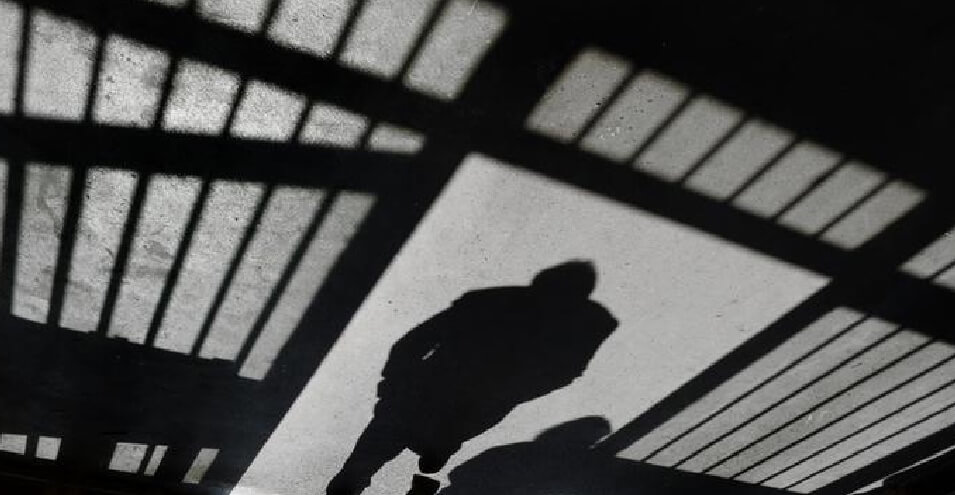
The Kurdistan Human Rights Network has released a report on the detention conditions, interrogation methods, and torture of political prisoners in the detention facilities of the Ministry of Intelligence and the Islamic Revolutionary Guard Corps (IRGC) Intelligence Organization in the cities of Urmia, Sanandaj, and Kermanshah.
The Kurdistan Human Rights Network released a report on Friday, November 29, revealing the conditions of political prisoners in secret detention facilities operated by the Ministry of Intelligence and the IRGC Intelligence Organization in Urmia, Sanandaj, and Kermanshah.
At the beginning of the report, it states that given the security situation of these detention facilities and obstacles in gathering information, the Kurdistan Human Rights Network attempted to interview a number of detained activists who had spent time in these facilities. The majority of the report’s contents are information obtained from firsthand observations of these individuals.
The report states that the Ministry of Intelligence, the IRGC Intelligence Organization, the Police Intelligence Organization, and the Security Police each independently operate secret detention facilities in different cities of Kurdistan.
The IRGC Intelligence Organization has several secret detention facilities in the provincial centers of West Azerbaijan, Kurdistan, Kermanshah, and Ilam provinces, and the locations of some of them remain unidentified.
The Ministry of Intelligence also has a central detention facility in each provincial capital, where detainees from different areas are typically transferred for interrogation.
The Intelligence Office in each city also has a small detention facility within its premises, used in emergency situations such as when sudden street protests occur, strikes related to living conditions, and similar circumstances that often result in mass arrests of citizens.
Beyond the military and security compounds of the IRGC Intelligence Organization, in some cases detention facilities include villas in residential areas used for interrogating foreign nationals and highly classified cases.
According to the Kurdistan Human Rights Network report, the locations of these secret detention facilities have not yet been identified.
“Grave” Cells
The report states that all cells in the Urmia Intelligence detention facility lack windows. Air channels are only installed in the ceiling of these cells for ventilation.
Citing former detainees, the Kurdistan Human Rights Network describes it as one of the dirtiest and most terrifying detention facilities of the Ministry of Intelligence in Iran. The toilet and bathroom facilities in each cell are severely inadequate and foul-smelling, and detainees are provided with dirty blankets.
The food provided to detainees is from Urmia Central Prison and is described as extremely poor quality.
According to the report, the facility contains a notorious cell known as the “grave cell,” which is 1.5 meters high and half a meter in length and width. Detainees must stand for hours in this cell. This room is used solely for torture purposes.
Former political prisoners state that beating is the common torture method used by interrogators at the Intelligence Office. During interrogations, two members of the torture team stand beside the accused’s chair, and if the person does not answer the questions posed, they are severely beaten by these two individuals, to the point that some have lost consciousness.
In another room of this detention facility used for torture, the accused is laid on a bed and whipped on the soles of his feet with various cables and other implements. Additionally, the use of electric shocks and beating sensitive parts of the body such as the testicles is common in this facility.
A Facility for Murder and Execution
According to the Kurdistan Human Rights Network report, the IRGC Intelligence Organization of West Azerbaijan Province has several secret detention facilities inside and outside the city of Urmia.
The report mentions that one of them, known as the “81 Ramadan” or “Al-Mahdi” detention facility, is used for fake executions and shootings. In several other cases, security interrogators suggest to detainees that they intend to execute them in order to obtain forced confessions.
In many cases, detainees are pressured by arresting their spouse or close relatives and threatening them with torture or sexual assault.
At least one Kurdish citizen has died under torture in this facility. The report states that according to reliable information, Naser Isa-zadeh, a citizen from Salmas, who intended to join a Kurdish opposition party during his military service, was arrested in 2011 and killed under severe torture in this facility. Pasdaran forces secretly transferred his body to his hometown and buried it at night.
Sanandaj Detention Facilities
According to the Kurdistan Human Rights Network report, the solitary confinement cells in security agency detention facilities in this city are, like other secret detention facilities, filthy and nauseating, and prisoners are subjected to various physical and psychological torture methods.
Over the past several years, at least 2 detainees have died under torture in these facilities.
According to the report, one of these individuals was Ibrahim Lotfallahi, a Kurdish student activist who was arrested on January 6, 2008 by security forces. After 9 days, his body was secretly buried by security forces in Sanandaj’s cemetery.
Another young man from Sanandaj named Saro Ghahramani was arrested during the nationwide protests in December 2017. After 11 days, his body was handed over to his family. Saro Ghahramani’s mother, after seeing her son’s body, told relatives that there were clear signs of beatings on his body.
Mohammad Hossein Rezaei, a former Kurdish political prisoner who spent several months in Sanandaj Intelligence Office detention facility, told the Kurdistan Human Rights Network about the conditions of the facility and the torture inflicted on him: “Although my leg had recently been operated on, simply because I had hummed songs inside my cell, they transferred me to the basement of this detention facility and tortured me severely. As a result of this torture, my nose and several ribs were severely injured.”
Farzad Kamangar, a Kurdish teacher who was executed in Tehran’s Evin Prison on May 9, wrote in one of his letters about this detention facility: “One day the detention facility commander, along with several others, beat me without reason and removed me from my cell. On the stairs—18 steps leading to the basement and interrogation rooms—they hit my head from behind as I was going down, causing me to fall to the ground and lose my vision. In that condition, they dragged me down the stairs.”
Roya Talloui, a Kurdish civil activist now living in the United States, was arrested by security forces in 2005. She stated in an interview with an American newspaper that she was sexually assaulted during her detention in this facility.
The IRGC Intelligence Organization detention facility in Sanandaj is located in the highly secure Shahramfar camp.
Mohammad Hossein Rezaei told the Kurdistan Human Rights Network about this detention facility: “I was held in this detention facility for 29 days under the worst conditions. Although I was injured, I was directly transferred to this facility without hospital treatment and subjected to severe physical and psychological torture for 29 days to extract confessions. During the first few days, a Sepah doctor examined me but did nothing to treat me. As a result, my leg became infected and my wounds became infested with maggots. In addition to being denied any medical care, I was tied behind my back and suspended by interrogators multiple times, which caused my shoulder to dislocate.”
Kermanshah Intelligence Office Detention Facility
Unlike the other two provinces (West Azerbaijan and Kurdistan), most security interrogators in Kermanshah are local residents of the province.
According to the Kurdistan Human Rights Network report, none of the cells in the Kermanshah Intelligence Office detention facility have windows, so detainees cannot distinguish between night and day. Each cell contains two dirty blankets and lacks any heating or ventilation. Toilets and bathrooms are not installed in the cells, and detainees are only allowed to use the bathroom three times a day. Such restrictions are one of the ways used to pressure prisoners.
The Kurdistan Human Rights Network report also mentions that the facility has a large basement where detainees are usually transferred for torture. Those working as guards in this facility are mostly elderly Basij members trusted by the Ministry of Intelligence; in recent years, several young guards have also been employed at the facility.
Torture and Sexual Assault in Kermanshah Detention Facility
Zeinab Jalalian, a Kurdish political prisoner serving a life sentence who was interrogated and tortured for several months in this facility, told the Kurdistan Human Rights Network: “One of my interrogators, after failing to obtain fabricated confessions, announced that he wanted to marry me temporarily through a religious contract. For this reason, he forcibly tried to put a ring on one of my fingers. To prevent this, I was forced to kick him, which caused several people present there to attack me and beat me until I lost consciousness.”
Zeinab Jalalian was transferred to the basement multiple times and for hours was whipped on the soles of her feet by interrogators with cables. The intensity of these whippings was such that she was repeatedly returned to her cell unconscious.
A Kurdish citizen arrested on espionage charges stated that in the interrogation room, he was placed on a chair with holes underneath, and then heavy weights were attached to his testicles, with the weight being increased each time. He was also suspended from the ceiling by a special rope for hours over several days. In this method, he was suspended by one or both hands from behind or by both legs for hours at a time.
Two female detainees told the Kurdistan Human Rights Network that during their detention, under interrogator pressure, they were subjected to virginity tests by a doctor.
According to the Kurdistan Human Rights Network report, another young woman who was arrested several years ago on espionage charges for an intelligence agency affiliated with one of the parties in the Kurdistan Region was sexually assaulted for several months by a cleric in this detention facility.
This young woman told the Kurdistan Human Rights Network: “One day after being injected with a narcotic drug while blindfolded, I became aware of a new person’s presence in the cell. After greeting, I realized he had pressed himself against me to the point that I could feel his breathing on my neck. I was suffering moment by moment, but since my hands and feet were tied, I could do nothing but scream. He forcibly removed my clothes and raped me.”
According to the Kurdistan Human Rights Network report, this person was wearing clerical clothing. The sexual assaults by this cleric continued for two months.
Farzad Kamangar also wrote in his letters about this detention facility: “In the winter of 2006, in a narrow, dark solitary cell in Kermanshah, without any charges, I endured three months of horrific imprisonment, three months that even after three years, still pain my body, mind, and soul.”
The Kurdistan Human Rights Network report also refers to similar cases of torture and mistreatment of political prisoners in IRGC Intelligence Organization detention facilities and their catastrophic detention conditions.
The Kurdistan Human Rights Network stated that it will publish a report in the future about two other security detention facilities in the city of Ilam.
Source: DW