Senior Revolutionary Guards Commander Killed in Saravan; Armed Clashes Turn Baluchestan into a Battlefield
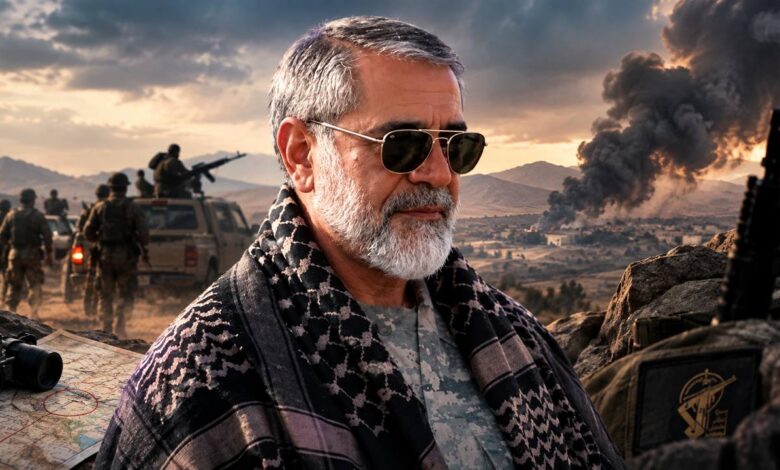
“Hossein Zarifi,” commander of the “Shahid Sajjad” operational base of the Revolutionary Guards in Saravan, was killed during a multi-hour armed clash between military and security forces and armed individuals in the Jehadabad area. The Islamic Revolutionary Guard Corps confirmed his death, and local sources reported that the intelligence officer of this base was also killed and at least 13 other forces were wounded. Meanwhile, the “Popular Fighters Front” claimed responsibility for the clash, but details and casualty figures from both sides cannot be independently verified.
A review of published reports indicates the core of this news is accurate; however, a more precise description is the killing of Hossein Zarifi, commander of the Shahid Sajjad operational base of the Revolutionary Guards in Saravan, in an armed clash.
The Quds Headquarters of the Revolutionary Guards Ground Forces also confirmed Zarifi’s death. Iranian and international media reported that this clash occurred in the Jehadabad area of Saravan in Sistan and Baluchestan Province.
According to published reports, this clash began on Wednesday, the first day of Mehr 1405 (September 23, 2026) in the Jehadabad area, known as “Dab,” and lasted for several hours.
The Revolutionary Guards announced that Revolutionary Guards forces, the Ministry of Intelligence, and the law enforcement command participated in operations against an armed group. The Islamic Republic’s official narrative describes this group as “terrorist” and affiliated with enemies.
In contrast, the “Popular Fighters Front” claimed responsibility for the clash and alleged that government forces attacked the location of this group’s members. The group also claimed that four of its members were killed. These claims remain independently unverifiable.
Local reports state that “Ahmad Hirati Zaraat,” the intelligence officer of the Sajjad operational base, was also killed during this same clash.
Reports also indicated that at least 13 military and security forces were wounded. The Revolutionary Guards stated in its announcement that five armed individuals and one security force were killed, but local sources provided different figures, and none of these numbers are independently verifiable.
Therefore, what can currently be said with greater confidence is Zarifi’s death during the clash and its official confirmation by the Revolutionary Guards; regarding total casualties, there is serious disagreement between the accounts of the two sides.
The recent clash is not an isolated incident. Sistan and Baluchestan has witnessed an increase in clashes between government forces and armed groups in recent weeks.
Another clash in the Bakhshan area of Saravan on September 12 also resulted in the deaths of several Revolutionary Guards forces and armed individuals. A few days later, new clashes in Jehadabad once again created a severe security and military situation in the region.
Local reports also indicated extensive deployment of military forces around Razi Hospital in Saravan, restrictions on movement, and severe internet disruptions during the recent clash. Reports claimed a large number of wounded forces were transferred to this hospital.
In such circumstances, the primary concern is not only the deaths of armed forces. When heavy clashes occur inside urban and rural areas, ordinary civilians are also exposed to bullets, explosions, movement restrictions, and communication cutoffs. Local reports even indicated the evacuation of some maternity ward patients from Razi Hospital without their and their doctors’ consent; a claim that requires independent investigation.
Sistan and Baluchestan Province has long been one of Iran’s most volatile regions; an area that, simultaneous with poverty, economic deprivation, and a deep rift between people and government, has witnessed the activities of armed groups and extensive operations by security forces.
The killing of a commander of a Revolutionary Guards operational base in an area where the government has tried for years to impose strict security control is a significant political and security event.
The Shahid Sajjad base is one of the Revolutionary Guards’ operational structures in Saravan, and Zarifi served as its commander. His death indicates that despite the widespread presence of security forces, armed clashes in this region continue.
However, from this incident alone, one cannot conclude that government control over the region has collapsed or that a widespread political change is occurring. What is currently documented is an increase in armed clashes and casualties among security forces and armed individuals in recent weeks.
For years, the Iranian government’s response to the crises in Sistan and Baluchestan has been largely accompanied by increased military and security presence. But real security cannot be created merely by increasing forces and weapons.
The people of this province, like all Iranian citizens, have the right to live in security, move freely, and have access to proper healthcare and economic services; without their daily lives being caught between military operations, armed clashes, and security crackdowns.
What has occurred in Saravan is more than the death of a Revolutionary Guards commander; it is a sign of the continuation of a cycle that the people of Baluchestan have been paying for for years: weapons against weapons, security against security, and ultimately, civilians caught in between.