Christian Activists for Free Iran: Iranian Women, Victims of Structural Violence and Religious Discrimination
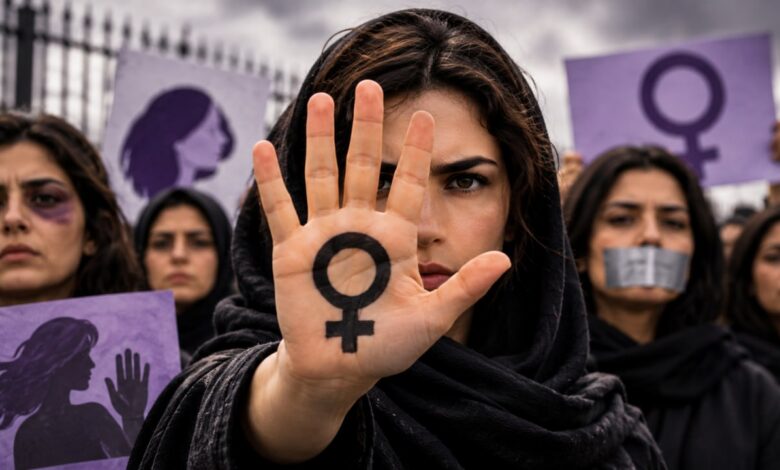
Coinciding with the International Day for the Elimination of Violence against Women, the organization “Christian Activists for Free Iran” released a statement condemning discriminatory laws and systematic oppression of women in Iran, and called for reform of the Islamic Republic’s legal structure, accountability of officials and judges who violate women’s rights, and the establishment of safe asylum pathways for women fleeing violence and oppression. The statement once again draws attention to the situation of women in Iran who, in addition to gender-based discrimination, face restrictions and threats due to their religious beliefs.
“Christian Activists for Free Iran,” comprising clergy, church ministers, and leaders of Christian organizations in various countries, released a statement on November 25, the International Day for the Elimination of Violence against Women, in which it identified the legal and political structure of the Islamic Republic as a factor perpetuating violence and discrimination against women in Iran.
The statement’s authors, citing the “Declaration on the Elimination of Violence against Women” adopted by the UN General Assembly in 1993, recalled that violence against women is not limited to beating or physical assault; rather, any form of physical, sexual, or psychological harm, threats, coercion, and arbitrary deprivation of freedom, whether in the family environment or in the public sphere, constitute violence against women.
This definition extends state responsibility beyond merely refraining from direct violence. States are obligated to protect women from violence, provide safe reporting mechanisms and access to justice, and effectively address perpetrators of violence regardless of their social or governmental status. As a result, the neglect of domestic violence, sexual assault, femicide, and harassment of imprisoned women by responsible institutions is not merely an administrative weakness but can perpetuate cycles of violence and impunity for perpetrators.
A significant portion of the statement addresses deeply rooted discrimination in the Islamic Republic’s laws. The authors believe that the Constitution and legal system based on the government’s official interpretation of Sharia have created conditions for inequality between men and women in various spheres of life.
This criticism aligns with reports by international human rights organizations. Human Rights Watch in its 2026 World Report on Iran noted women’s deprivation of equal rights in marriage, divorce, inheritance, and child custody. Reports on Iran’s laws also show that men’s authority in determining the family residence, restrictions on women’s employment, and exit regulations are among factors limiting women’s legal and economic independence.
In the domains of divorce and child custody, women face serious obstacles. Existing laws in many cases grant greater rights to fathers and automatically transfer child custody to them after a specified age. In matters of guardianship and legal custody, the father’s and paternal grandfather’s status takes precedence over the mother. Such circumstances can place women suffering domestic violence in difficult situations, as the decision to leave an abusive relationship may be accompanied by fears of losing custody of children or difficulty in securing their livelihood.
Another matter referenced in the statement is Article 630 of the Islamic Penal Code. This article provides, under limited circumstances, that if a man witnesses his wife committing adultery with another man and is certain of his wife’s consent, he may kill both. If the relationship occurred under coercion, the article stipulates a different scenario.
Therefore, Article 630 should not be construed as a general license to kill one’s spouse; however, even this limited provision is problematic from a women’s rights perspective, as it grants men a penal privilege in committing fatal violence under specific conditions. Such exceptions, coupled with regulations that result in reduced sentences for perpetrators in some cases of femicide, reinforce concerns that the legal system, rather than providing equal protection for women’s lives and safety, makes distinctions between victims and perpetrators based on gender and familial relationship.
The statement from “Christian Activists for Free Iran” also references the death of Mahsa Amini in police custody; an event that in September 2022 sparked widespread protests under the slogan “Woman, Life, Freedom” and became a symbol of resistance to forced hijab, government control over women’s bodies, and restrictions on personal freedoms.
Despite the passage of several years since those protests, the issue of mandatory hijab and treatment of women who refuse to comply remains a significant manifestation of government interference in women’s daily lives. Judicial prosecutions, fines, vehicle impoundment, closure of businesses, and digital surveillance are tools employed to enforce government policies.
Under such circumstances, violence against women cannot be reduced solely to individual conduct in the family or social environment. When laws restrict freedom of dress, government institutions pressure women for personal choices, and judicial mechanisms fall short of providing effective protection from violence, the issue is elevated to a structural and governmental level.
One of the most significant sections of the statement is devoted to the situation of Christian women and especially women citizens who have converted to Christianity; women who may simultaneously face gender-based discrimination and restrictions arising from their religious beliefs.
The British Home Office’s 2026 report on Christians and Christian citizens in Iran documents the arrest and prosecution of these individuals on charges such as “propaganda against the system,” activities related to evangelical Christianity, and security charges. The report also documents cases of mistreatment of Christian prisoners, physical and psychological torture, deprivation of medical services, and violation of due process principles.
More concerning is that the same report references cases of sexual harassment and assault of women during interrogations. Such conduct, if it occurs, is not merely a violation of a prisoner’s rights; it is an abuse of power and exploitation of an individual’s vulnerability due to her religious beliefs and detention.
The statement from this Christian organization also references accounts of mothers who have faced restrictions or deprivation of custody rights due to their Christian faith. The statement’s authors note that some women, fearing exposure of their religious beliefs and potential consequences, have been forced into concealment and silence; even when experiencing violence within the family.
These accounts must be examined alongside Iran’s legal reality: conversion from Islam to Christianity is not explicitly criminalized in the Islamic Penal Code, but Article 167 of the Constitution allows judges to refer to authoritative Islamic sources and fatwas in cases of legal silence. The British Home Office report also explains that apostasy charges may be raised in certain circumstances, and the activities of converted Christian citizens face vague criminal charges and severe penalties.
Therefore, women’s concerns about the consequences of their religious beliefs being revealed is not merely a matter of belief or family issue; it is linked to the risk of arrest, interrogation, security pressure, and social deprivation. When a woman does not feel safe even within her family and fears religious or judicial consequences when turning to official institutions, seeking help and escaping cycles of violence becomes more difficult.
The final section of this statement concerns the situation of Iranian women refugees. Women who are forced to leave the country to escape domestic violence, family threats, government persecution, or pressures arising from their religious beliefs may face risks such as human trafficking, sexual exploitation, abuse, and violence during migration.
The absence of safe and legal pathways for departure and international protection requests increases the risk that women, fleeing a threatening situation, will resort to informal routes and human trafficking networks. Therefore, “Christian Activists for Free Iran’s” call on world governments to provide safe and legal asylum pathways is part of a broader demand for support for women at risk of violence.
The United Nations, in its 2026 campaign for the International Day for the Elimination of Violence against Women, emphasizes three pillars: “ensuring justice, supporting survivors, and ending impunity for perpetrators of violence.” This campaign calls for establishing safe mechanisms for reporting violence, access to medical and psychological services, legal support, and accountability of institutions falling short in their duties.
“Christian Activists for Free Iran,” in concluding their statement, called for reform of the Islamic Republic’s Constitution, revision of discriminatory legal structures, accountability of officials and judges who violate women’s rights, and the establishment of safe asylum pathways.
The significance of this statement lies in presenting violence against women not merely as a collection of individual acts but as an issue related to law, political power, and state responsibility. Combating violence becomes meaningful when women can make decisions about their lives without fear of punishment, arrest, loss of custody, or religious and social pressure, and when they have access to justice if victimized.
In Iran, this demand takes on more complex dimensions for Christian women; for they may face, in addition to gender-based restrictions, arrest and prosecution due to their religious beliefs. Defending the rights of these women is a defense of freedom of conscience, personal security, and equality of all citizens before the law.
No tradition, law, or religious interpretation should serve as a pretext for denying women’s human dignity. The safety and freedom of women are not governmental privileges but fundamental rights; rights that cannot be realized without legal equality, personal autonomy, and accountability of perpetrators of violence.