Schools as Human Shields: Exposing the Islamic Republic’s Use of Schools and Children in Warfare
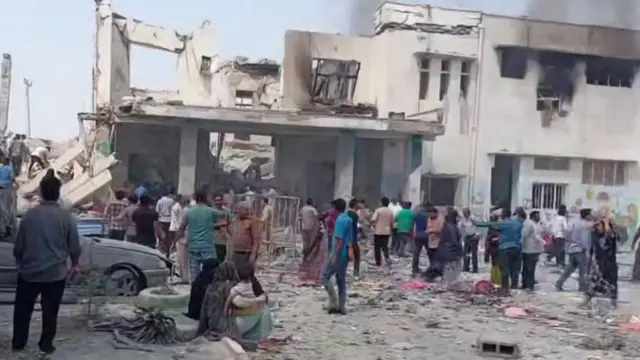
Schools serving as human shields is not merely an accusation; from the tragic bloodshed in Minaab to holding official meetings in classrooms, there is evidence demonstrating how the Islamic Republic uses children and schools as political tools and security shields.
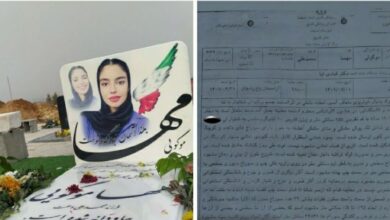
Last week, reports from the United Nations and credible global news agencies reiterated that the attack on a girls’ school in Minaab, Iran, is a horrifying event that demands immediate investigation; an incident that left over 150 innocent students, mostly girls, as primary victims and prompted the world to conduct a more thorough examination of this tragedy.
The UN Human Rights Office, referring to the attack that occurred on the first day of American and Israeli operations against Iran, called on the forces behind the attack to release investigation findings and related information, without naming them. “Ravina Shamdasani,” spokesperson for the UN Human Rights Office, described the incident as “horrifying” and emphasized that the responsibility for investigation lies with the same forces that carried out the attack.
This tragic event occurred as images and videos released from a destroyed school and bloodstained children’s backpacks gained worldwide attention, with international organizations including UNESCO considering it a serious violation of international humanitarian law.
Simultaneously, reactions from American and Israeli officials were also reflected in the media; “Marco Rubio,” U.S. Secretary of State, stated: “American forces do not intentionally target schools” and added that if information shows such an attack occurred, it requires investigation.
On the other side, Israel’s representative to the United Nations said he has seen varying reports, including claims that hold the Islamic Revolutionary Guards Corps responsible for the attack.
However, beyond the debate over direct responsibility for the attack, the political, military, and media consequences of the Minaab school incident have raised profound questions both in Iran and globally: “Is the Iranian government, by using schools not only as educational spaces but as a piece of its political and media puzzle in international crises, exploiting them?”
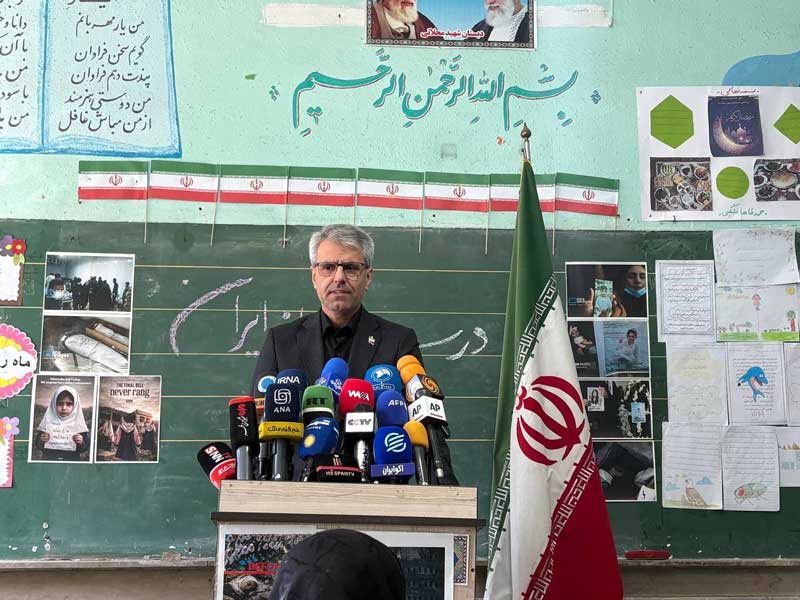
In recent days, images were released showing the presence of the Islamic Republic’s Foreign Ministry spokesman inside a classroom of a school, as the venue for holding a press conference; an event that some analysts have described not only as an attempt to attract international media attention, but also as “incentivizing” military factions to target schools. These criticisms emphasize the point that the Islamic Republic system uses educational spaces and children as political and media shields, a topic that had previously been raised in reports and protests by teachers and human rights activists.
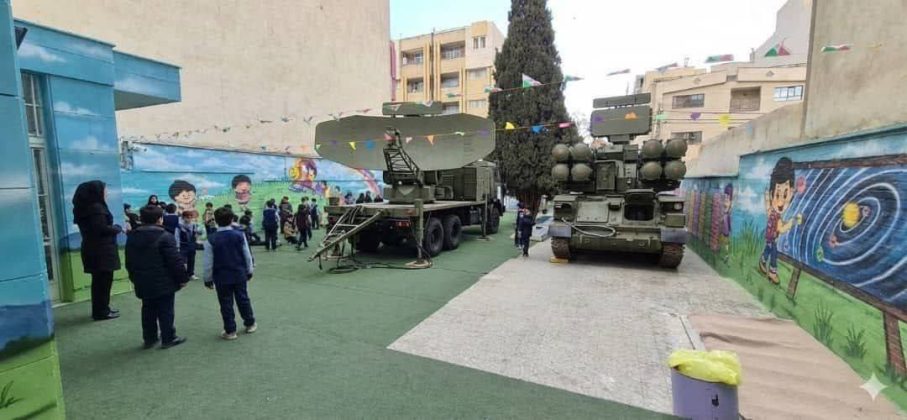
Reports indicate that in several Iranian cities, military forces have been stationed near or even inside schools and hospitals, a matter that critics consider part of the “militarization policy” of schools and their transformation into places of military and propaganda significance.
Earlier, the Coordination Council of Iran’s Teachers’ Professional Associations, by publishing an image of military equipment alongside students in a school in Isfahan, warned that the Islamic Republic has made children and schools “shields for its deadly equipment.”
These events, coupled with the global voice calling for an impartial investigation into the Minaab attack, have become a fundamental question: To what extent have the domestic policies and militarization of the Islamic Republic transformed schools from safe educational spaces into propaganda, military, and political instruments? Are the primary victims of this process not children and the future builders of a society?
It is expected that in the coming days, the international community will increasingly emphasize transparency, accountability, and the protection of children’s rights and schools, and will not allow children and schools to become tools serving as shields for political and military powers, whether on battlefields or in media arenas.