Summons and Detention of Over 20 Iranian Journalists
Following the downing of a Ukrainian passenger aircraft and criticism of how the incident was reported, dozens of Iranian journalists have been summoned, interrogated, or pressured. Reporters Without Borders has issued a warning in this regard.
Reporters Without Borders announced on Thursday, February 6, 2020 in a report that pressure on journalists in Iran by the country’s security agencies has intensified.
According to this report, following the downing of the Ukrainian passenger aircraft and criticism regarding the reporting of this incident, dozens of journalists have been interrogated, summoned, or placed under pressure.
Iranian journalists were forced to cover the lies told by Islamic Republic officials about the cause of the crash of the Ukrainian passenger aircraft for three days. After Iranian officials admitted to downing the aircraft with a missile fired by the Islamic Revolutionary Guard Corps, eighty Iranian journalists responded by publishing a statement criticizing the government media’s falsehoods.
These journalists wrote: “We too are tired of hearing all these lies from official media and are sorry that all newspapers, in coordination with the ‘national media’ (the Islamic Republic’s state television) and without investigating and examining the facts of the incident, proceeded to repeat one big lie, and exposing the truth brought them nothing but shame and disgrace.”
After the publication of this statement, a large number of journalists who signed it were summoned and interrogated. Based on information gathered by Reporters Without Borders, since December 9, 2019, the Islamic Revolutionary Guard Corps’ Intelligence Organization and the Islamic Republic’s Ministry of Intelligence have summoned and interrogated at least 21 journalists in various Iranian cities.
Reporters Without Borders writes: “None of these journalists have been arrested, but they could be arrested at any moment. Some of these journalists have received warnings from their editorial boards for ‘taking positions on social networks.’ Among these, some have been forced to close their accounts on Instagram, Twitter, and Facebook or only post about ‘weather conditions.'”
According to the report, in the past two weeks, the homes and workplaces of some journalists have been searched by the Islamic Revolutionary Guard Corps’ Intelligence Organization, and their computers, mobile phones, books, and manuscripts have been seized. Among them are Maziar Khosravi, former journalist at Shargh newspaper, Yasmin Khalegian, independent journalist, Moloud Hajizadeh, journalist at Taadol magazine, and Yagma Fashkhami, former journalist at Didban news website. The latter two have a history of detention in previous years. Intelligence officers of the Guard Corps have told them to wait for summons.
One of the journalists summoned in Tehran, who requested anonymity, told Reporters Without Borders: “My newspaper’s editor informed me of my summons. I said this method of summons is illegal and I won’t go. That same night someone called me and without greeting started swearing at me. The next day I was forced to go to the location designated by the Ministry of Intelligence. There they accused me of all sorts of baseless and imaginary crimes. I was forced to sign a commitment and close all my social media accounts. They said to wait for a court summons.”
Another journalist from the south of the country said: “The Intelligence Organization of the Islamic Revolutionary Guard Corps summoned me, and all their talk was about my Instagram posts where I had expressed shame about the government’s false coverage of the aircraft. In the end they said: If you don’t want to spend the next ten years in prison, and if you want to stay alive, shut your mouth and close your social media accounts. That’s it. Don’t cooperate with the enemy.”
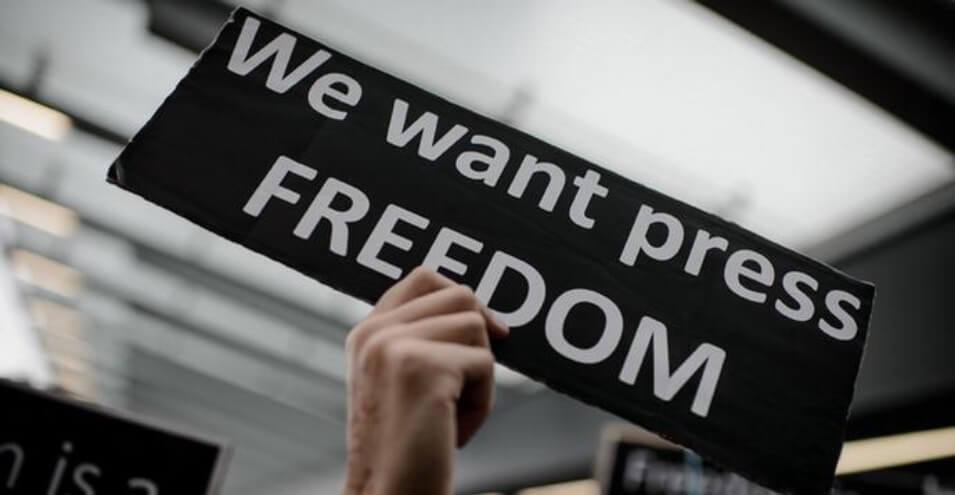
Reporters Without Borders concluded in its report: “The Islamic Revolutionary Guard Corps continues to hunt activists who criticize the regime’s ‘human error’ on social networks or cover the reporting and investigations of journalists and media outside the country. These citizen-journalists are today the center of the struggle for free press in Iran. Over the past two months, at least twenty of them have been arbitrarily summoned or arrested across Iran.”