History repeats itself; this time in the Armenian cemetery of Tehran!
This time, history has repeated itself for the capital's cemeteries, and it makes no difference whether it is in the city of Rey or Tehran; although the custodians of this scenario are different. The endowments and foundations drew up a reorganization plan for the Ibn Babawayh and Imamzadeh Abdullah cemeteries, and... and now, for some time, the same plan has been approved by the city council, this time for the reorganization of the old Armenian cemeteries in Dolab, Tehran.
According to ISNA, these plans have one thing in common: they are supposed to be organized and the surrounding space becomes more orderly. However, in the meantime, old, valuable, and historical tombstones are unknowingly broken, piled up, and eventually, when they no longer have access to old, historical, and sometimes Qajar tombstones, they are forced to replace them with plain marble stones that only bear the name of the deceased and two dates.
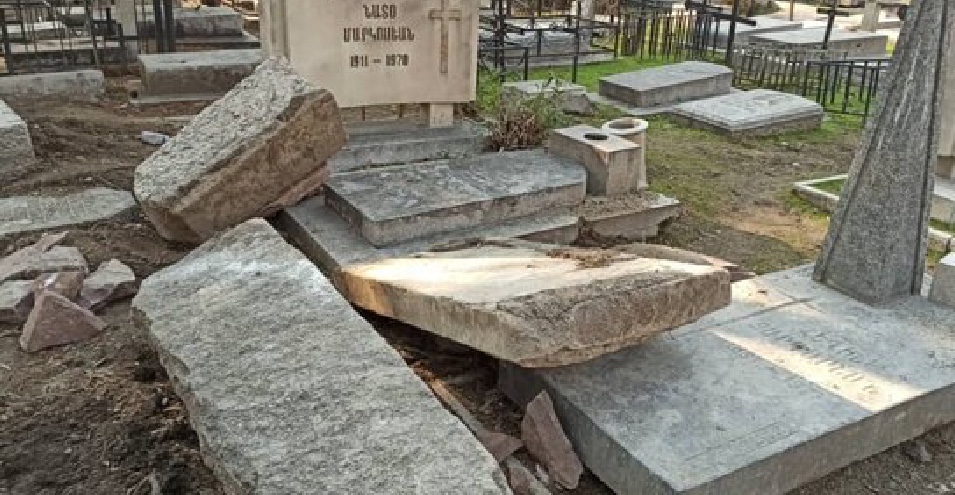
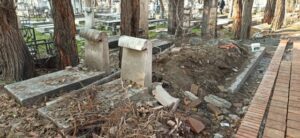
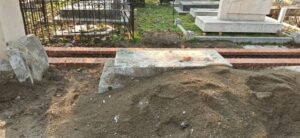
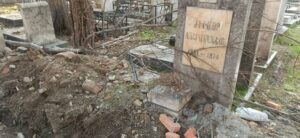
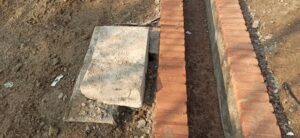
Now, the images released from the Armenian cemetery at Darvaze Dolab have once again brought this same fear and concern to the lives of heritage activists. The images that three Tehran researchers took after visiting the implementation of this project at the cemetery on January 11 and published on their personal Instagram pages, still show the condition of the tombstones as they are.
In one place, a tombstone has been broken, another has been pulled out of place or cracked; these are like signs that contradict what the endowment trustees said during the implementation of their reorganization plan, especially in the Ibn Babawayh Cemetery, when they said that the old tombstones would remain in their places, but they seemed to forget to emphasize the point that "if they are not damaged in the implementation of the plan."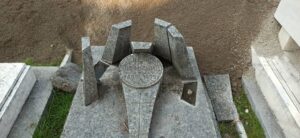
The damage also includes the design of the “Zizernakaberd” (Castle of Swallows) memorial, which is placed on some of the tombstones in these cemeteries to commemorate the martyrs of 1915. (The design features 12 converging columns, representing the 12 provinces where Armenians were killed. A 44-meter-high needle-shaped column is also located next to the columns, representing the rebirth of the Armenian people.)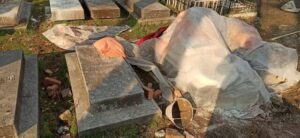
Now history is repeating itself in the organization of old cemeteries in Tehran.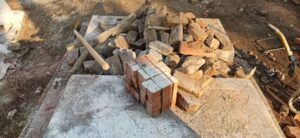
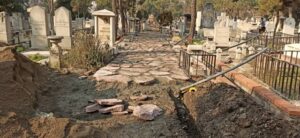
Of course, Morteza Adibzadeh, Deputy Director of Cultural Heritage at the General Directorate of Cultural Heritage, Tourism and Handicrafts of Tehran Province , told ISNA a few days after the project began in the Dolab area of Tehran that "the Dolab tomb complex will be restored and organized by the Behesht Zahra (PBUH) Organization in order to protect Tehran's historical tombs. In this project, the middle passage of the tomb complex, which was previously an asphalt street, will be paved and paved with the approach of creating a tourism base in this area, and all the outer walls of the tombs will be restored."
He also emphasized the interior design of the cemetery: "All the paths for visiting between the graves have been paved with sand, and by restoring the streams and cement and brick channels to their original form, the interior texture will also be organized. At this stage, the improvement of the sanitary facilities and the restoration and organization of the interior walls, benches, and some elements inside the cemetery are underway."
Source: Our Torbat