Mehdi Dibaj: The Priest Whom Prison, Solitary Confinement, and Death Sentence Could Not Separate from Christ
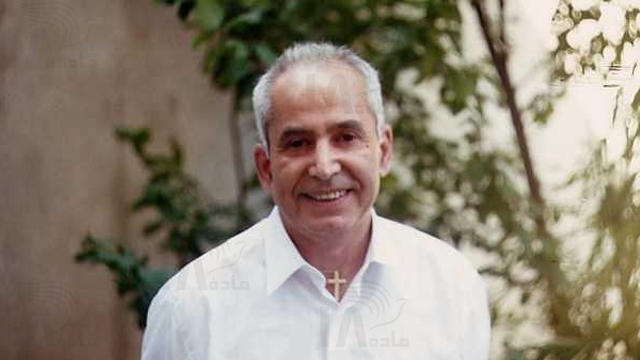
Thirty-two years have passed since the abduction and murder of Mehdi Dibaj, an Iranian Christian leader who, after years of imprisonment, two years in solitary confinement, and a death sentence on charges of “apostasy,” never agreed to deny his faith in Jesus Christ. His release came following widespread international pressure, but months later, while visiting his family, he disappeared, and his body was found bearing signs of severe violence in the outskirts of Tehran; an event that transformed his name into one of the most enduring symbols of the heavy price of freedom of conscience in Iran.
The third of Tir marks one of the most bitter chapters in the contemporary history of Christianity in Iran; the day when Mehdi Dibaj, an esteemed clergy and recognized leader of the Church of Iran, was abducted on his way back to Tehran and never made it home. A few days later, his body was discovered in a wooded area on the outskirts of Tehran. Reports indicated that he had been killed by multiple knife wounds.
Mehdi Dibaj converted to Christianity from his youth and spent many years of his life serving the church, preaching the Gospel, and supporting Persian-speaking Christians. However, following the establishment of the Islamic Republic, his activities gradually faced security and legal pressures. He was arrested in 1983 and, without benefit of fair legal proceedings, remained imprisoned for years. Human rights and international sources reported that he spent two years of his imprisonment in solitary confinement under extremely harsh conditions.
After approximately nine years of imprisonment, the Revolutionary Court in Sari sentenced him to death on charges of apostasy. In the Islamic Republic’s judiciary’s view, his crime was abandoning Islam and converting to Jesus Christ. However, in his historic defense, Dibaj not only did not back down from his beliefs, but explicitly declared that he was willing to suffer for the name of Jesus Christ and even sacrifice his own life. This defense later received widespread coverage in international media and became one of the important documents defending religious freedom in Iran.
Pressure from human rights organizations, church leaders, and Western governments finally compelled the Islamic Republic to release him from prison in December 1993. Amnesty International also confirmed his release, though it warned that the danger still loomed over him and his legal case had not been fully closed.
However, Dibaj’s freedom lasted only a few months. He disappeared in June 1994, and on July 5, 1994, news of his body being found was released. His murder occurred in circumstances when Father Haik Hovsepian-Mehr, a main advocate for Dibaj’s freedom, had previously been killed, and shortly thereafter Father Tateos Michaelian also lost his life. These events raised widespread concerns about the safety of Christian leaders in Iran.
Years later, the name Mehdi Dibaj was mentioned alongside other victims of serial murders; a series of assassinations and political killings in which the role of agents linked to the Islamic Republic’s security apparatus was exposed. Although his murder case was never investigated transparently and independently, many observers and human rights advocates consider his death part of the process of suppressing religious and ideological dissidents in Iran.
Today, three decades after the martyrdom of this Iranian priest, the name Mehdi Dibaj still lives in the memory of Christians in Iran and throughout the world; a man whom prison, torture, solitary confinement, and even a death sentence could not separate from his faith in Christ. His life and death remind us of the reality that freedom of conscience and the right to choose one’s faith has come at a very heavy price for many Iranian Christians.
Let us honor the memory and name of Priest Mehdi Dibaj; a servant who stood firm in his faith to the end and became a symbol of perseverance, freedom of conscience, and faithfulness to Jesus Christ in Iran.