“70 percent of Iranian workers are below the absolute poverty line”
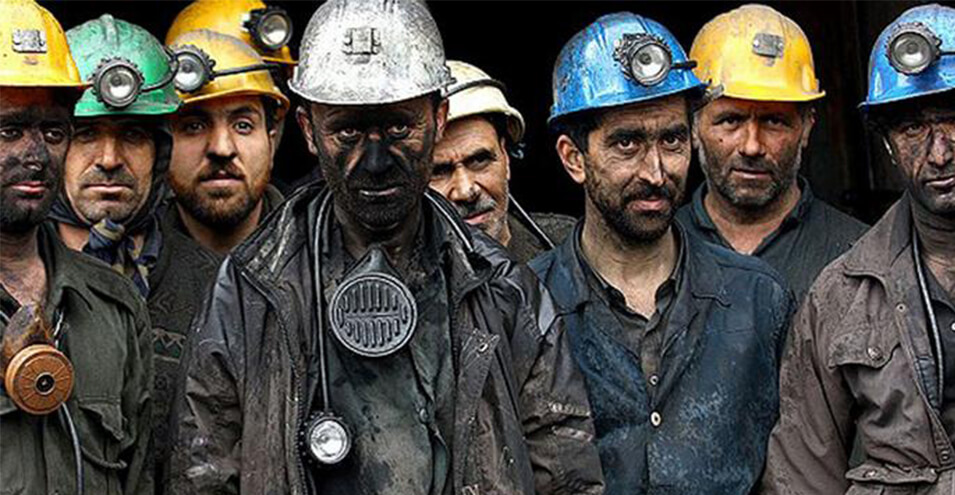
Fariborz Raisdana says that more than 70 percent of workers in Iran are below the absolute poverty line. According to this economist, the minimum wage for workers should not be less than 3 million and 700 thousand tomans. The current minimum wage is less than a third of this proposal.
With the beginning of the meetings of the Supreme Labor Council of Iran to determine the minimum wage in 2019, the debate on this issue, which is one of the main demands of workers and wage earners, has once again become the focus of attention in the mass media and public opinion.
Meanwhile, economists and labor activists emphasize the need to restore workers' purchasing power by increasing their minimum wage, saying that the minimum wage should be able to address the livelihood problems caused by the increasingly deteriorating economic situation for working families.
In an interview with ILNA news agency, the text of which was published today, Wednesday, January 30, economist Fariborz Raisdana considered the minimum wage set for this year (2018) to be “incorrect and unfair,” and said: “In 2018, considering a family of 3.5 people, the absolute poverty line was 3.34 million Tomans, according to my calculations. Taking into account the actual income coefficient, which if we consider it to be 1.6 minimum wage, therefore, the minimum wage should not be less than 2.1 million Tomans. It should be noted that this figure is from when the economic crisis of 2018 had not begun. According to my calculations, this economic crisis caused 30 to 40 percent inflation, and as a result of our calculations, the minimum wage should have reached 2.8 million Tomans. That is, if a wage meeting were held in the middle of the year, the wage should have reached this figure; ultimately, if we also consider the wage increase of 2019, we reach the figure of 3.5 million Tomans to save workers from the absolute poverty line.”
Raisdana added: "If we also include housing costs in the calculations, this figure should reach about 3 million and 400 thousand tomans for a family of 3.5 people, but given that there is widespread unemployment in society, which according to my estimate is 19.5 percent and according to official statistics, the rate is 12 percent, it is clear that even the minimum figure, which was based on 1 million and 111 thousand tomans, could not be achieved."
Some time ago, negotiations on determining the minimum wage for workers entered a new phase with the sending of invitations by the Supreme Labor Council of Iran to representatives of workers and employers. The first meeting of the council on determining the minimum wage was scheduled to begin its deliberations last Monday.
Mohammad Shariatmadari, Iran's Minister of Cooperatives, Labor and Social Welfare, emphasized on Wednesday that "the minimum wage is not enough to provide a living." He had previously said that "the government will bear part of the backlog and the restoration of workers' wages, and the other part must be accepted by employers."
Minimum wage proposal of 3 million and 700 thousand Tomans
Fariborz Raisdana said in another part of his speech: "Despite unemployment and the lack of independent labor organizations, the existence of powerful employer organizations, and the government's tendency to favor employers, according to my calculations, about 70 percent of workers, while the total number of workers reaches 14 million, are below the absolute poverty line (3 million and 334 thousand Tomans)."
The economist emphasized: "Despite the inflation that has been imposed on the Iranian economy, 70 percent of workers and more are below the absolute poverty line. Thus, in the new year, conditions are necessary for these negotiations that can save the lives of the working class, in addition to the economic situation, from this chaos."
"The statistics that governments and statistical centers impose during negotiations [on the minimum wage] are not correct. Workers should have their own representatives, economists, lawyers, and sociologists, who enter the negotiations," Raisdana added.
According to this economist's suggestion, "for a household of 3.5 people (provided that there is serious care so that unemployment does not spill its poison and because employer and government pressures do not cancel these decisions), I believe that conditions should be created where the minimum wage for workers does not fall below 3 million and 700 thousand tomans and the number of deprived workers below the poverty line does not expand further."
According to Raisdana's assessment, the poverty line in Iran for a family of five is four and a half million tomans, which "is approximately 3 and a half million for a household of 3.5 people, which is the statistical scale."
Mohsen Hashemi, the head of Tehran City Council, said on August 13, citing official statistics, that one-third of Iranians live below the poverty line and one-tenth live below the “absolute poverty line.” But in mid-April, economist Hossein Raghfar estimated the “absolute poverty line” for an urban family of four to be around four million tomans, and based on this, he concluded that 33 percent of the Iranian population is in “absolute poverty” and six percent of them live below the “hunger line.” Iranian government officials also admit that more than one and a half million Iranians cannot even afford to buy food.
The “myth” of inflation rising if the minimum wage increases
He continued: "I am not saying that we should speak recklessly, make unscientific statements, and give pretentious figures when discussing raising the minimum wage. But it should be noted that raising the minimum wage will not cause inflation so easily. These myths that various media outlets on both sides are telling people show the inner motivation of those speakers who speak with all their might in defense of profit and capital and the powerful ruling strata in the economy that have brought the economy to its dark days and misery."
Raisdana added: "If the minimum wage is set in such a way that a family of 3.5 people can earn 3.7 million tomans, and unemployment insurance is expanded to include all unemployed people, and powerful labor organizations defend these conditions, such a situation will not cause inflation and runaway inflation."
Fariborz Raisdana finally emphasized: "If the minimum wage set in 2018 is increased by more than double for 2019, and the right to housing and children is implemented, and labor organizations are established, it may cause the inflation rate to rise, but it is very limited. While its positive effect on production and economic prosperity is much higher."
In late March of last year, the Supreme Labor Council of Iran approved a 19.8 percent increase in the minimum wage for workers, bringing it to 1,115,140 Tomans in 2018. This is while the head of the Wage Committee of the Supreme Center of Islamic Labor Councils had announced in late August that the household subsistence basket rate in Iran was "about 5,300,000 Tomans."
Despite the passage of nearly 40 years since the Bahman Revolution of 2018 and the promises of government leaders and heads of various governments of the Islamic Republic to create public welfare, Iranian society continues to struggle with poverty and increasingly deepening class divides.
In Iran, different statistics are published on the state of poverty in society. While it is generally said that between 25 and 35 percent of Iranians live below the “poverty line,” Shahab Naderi, a member of the Islamic Consultative Assembly, said in late March that “80 percent of Iranian society is below the poverty line.”
Many Iranian government officials or their advisors have repeatedly warned of the risk of unrest even more severe than the January 2017 protests due to the dire economic and livelihood situation of the people. Masoud Nili, former special assistant to Hassan Rouhani on economic affairs, was one of them, who said in March last year: “If we continue like this and move forward in this direction, we will be in danger and it is possible that ‘you will not have a chance next time.’” On November 14, the Iranian president accepted Masoud Nili’s resignation.
Source: DW