Open Insult to Jesus Christ and Denial of the Virgin Birth Amid Political Exploitation of Christians
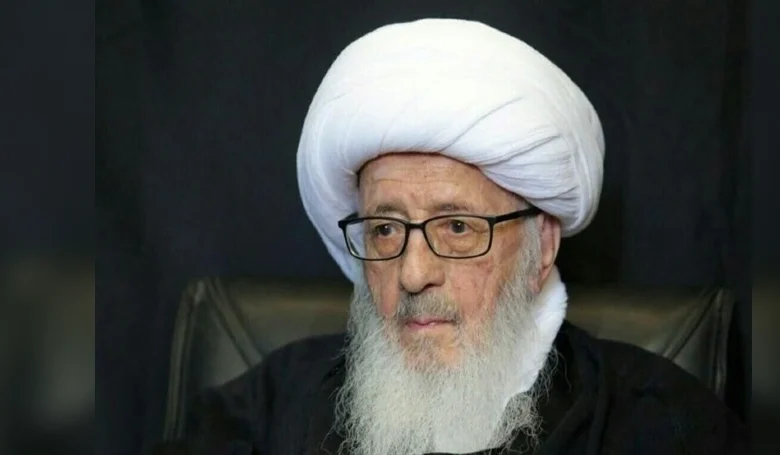
An open insult to Jesus Christ by “Vahid Khorassani,” a Shia marja in Qom, is being raised even as Christians and churches are simultaneously being exploited for political gain and official ceremonies.
Statements made by some religious figures in Iran regarding the status of Jesus Christ and his birth have once again sparked a wave of criticism among Christians and international observers; statements that are not only contested from a theological perspective, but are viewed by many as a clear disrespect toward the fundamental beliefs of Christianity.
In a video dating from the early 1990s but re-circulated on social media following the holding of a ceremony for Ali Khamenei’s fortieth day in a church, where it faced widespread criticism, “Vahid Khorassani,” a Shia marja in the city of Qom, is shown attempting to argue that the credibility of the chastity of the Virgin Mary and the legitimacy of the birth of Jesus Christ can only be proven in light of the Quran. This claim effectively suggests that if the Quran did not exist, the narrative of Christ’s birth would remain shrouded in doubt.
This marja says in the aforementioned video: “An ignorant and unaware Christian priest, if you dare, answer this. You burn the Quran, but you do not understand enough that if the Quran is burned, the result is that Jesus son of Mary becomes illegitimate. It was Muhammad’s Quran that purified Mary’s skirt of adultery and proved the purity of Jesus’s birth. O Pope who remains silent, if you dare, answer this! If this Quran did not exist, by the judgment of the Torah and Gospel that now exist, Jesus son of Mary would be illegitimate, and an illegitimate one is deprived of God’s kingdom. So both the lineage of Jesus and the status of Jesus are by the grace of the breath of the Seal of the Prophets.”
These statements from this marja have been made even as, in Christian tradition, not years but centuries before the emergence of Islam, the subject of virgin birth and the sanctity of Mary had been established in official theological texts. The canonical Gospels, particularly the Gospels of Matthew and Luke, explicitly emphasize this belief, and this matter is considered a cornerstone of Christian faith.
Critics of this viewpoint believe that such statements effectively question the theological independence of Christianity. That the credibility of one of Christianity’s most fundamental beliefs is presented as dependent on another text does not foster interfaith dialogue, but rather reproduces a form of “religious exclusivism.”
In fact, this approach, rather than respecting different religious traditions, places them in a subordinate position; as if truth can only be verified through one particular path and other historical and sacred sources lack independent credibility.
What makes this issue even more sensitive is the behavioral contradiction toward the Christian community in Iran. While such statements are made by certain figures, at the same time in political circles, Christians and churches are being used to advance governmental objectives.
Multiple examples have been reported of church representatives attending official government ceremonies or the use of Christian religious spaces for political programs. In some cases, churches have even been used as venues for government ceremonies, including commemorative events.
This duality raises a serious question: “How can one question or undermine Christian beliefs on one hand, while on the other, exploiting the same community to legitimize political programs?”
Experts believe that the continuation of such an approach not only fails to aid interfaith dialogue, but deepens the rifts. When one religious tradition refuses to recognize the credibility of another, it creates a basis for distrust and tension.
On a global level as well, such statements can create a more negative image of the state of religious freedom and respect for minorities in Iran, especially given that the issue of religious minority rights has always been one of the focal points of criticism by international organizations.
The debate over the status of Jesus Christ and his birth is not merely a historical or theological matter; it is bound up with the identity and faith of millions of Christians around the world.
When such a belief is presented in a way that makes it appear dependent and secondary, it is natural that strong and critical reactions follow.
Ultimately, if the goal is genuine interfaith dialogue, such dialogue can only take shape if mutual respect and acceptance of theological independence are at its center, not denial, insult, and diminishment.